Seven days in Jordan is enough to travel the complete arc of the country’s major sites from north to south - Roman Jerash and Byzantine Amman in the north, the King’s Highway through the historic highland spine, Petra in the south-centre, and then the desert and sea at the country’s southern tip. It is a route that the Jordanian tourism infrastructure handles well: transport links exist, accommodation at all price points is available, and the sites are genuinely world-class rather than regionally significant.
This itinerary runs roughly north to south, ending at the Dead Sea for the return to Amman on the final day.
Before You Go
Timing: March to May and September to November are the most comfortable windows for this itinerary - mild enough to walk Petra all day and cool enough for Wadi Rum afternoons. June to August requires early-morning Petra starts (06:00 at the Siq) and limits Wadi Rum activity to before 09:00 and after 17:00. December to February is quiet and cheap but cold at night in the desert.
Packing: Bring sun protection year-round, sturdy walking shoes for Petra (you will walk 8–15 km per day), and a warm layer for desert nights in Wadi Rum where temperatures drop to 5–10°C even in spring and autumn. Modest clothing (shoulders and knees covered) is respectful outside resort areas.
Cash: Withdraw JOD at Amman airport or city centre ATMs. Bring enough for Wadi Rum where there are no ATMs. Budget approximately JOD 50–100 in cash for camps, tips, and small purchases where cards are not accepted.
The Classic Route
Jordan Pass: Buy online at jordanpass.jo before arrival. The JOD 75 tier (2-day Petra entry) is right for most 7-day visitors. It covers the JOD 40 visa fee on arrival, Petra (2 days), Jerash, and over 40 other sites. Without a Jordan Pass, Petra alone (1 day) costs JOD 50.
Accommodation: Book Petra and Wadi Rum accommodation before arrival, especially in high season (October–April). Amman and Aqaba have ample supply; booking a week ahead is sufficient. If you’re booking tours on short notice, check last-minute tour availability in Jordan before finalising your day plans.
Cash: Withdraw JOD at Amman airport or city centre ATMs. Bring enough for Wadi Rum where there are no ATMs.
Day 1: Arrival in Amman
Most international flights arrive at Queen Alia International Airport, 35 kilometres south of central Amman. The Airport Express Bus (Line 702) runs every 30 minutes and costs approximately JOD 3.3 to central Amman (Abdali or 4th Circle area), taking 45–60 minutes. A taxi costs JOD 20–25 (metered or agreed in advance).
Afternoon, if energy allows: walk the Rainbow Street area in Jabal Amman, the city’s most concentrated area of coffee shops, bookshops, and restaurants. The Jordan Museum (open Tuesday–Sunday) is 10 minutes by taxi from most central hotels and holds the best overview collection of Jordanian history, including Dead Sea Scroll fragments and Neolithic ‘Ain Ghazal statues.
Dinner: Hashem Restaurant in the downtown Balad area - an Amman institution open since the 1950s, serving foul (fava beans), hummus, and falafel for under JOD 5. Long tables, no reservations, always full.
Where to stay in Amman:
- Budget: Jordan Tower Hotel (JOD 20–35/night), close to Rainbow Street
- Mid: Boutique Hotel La Locanda (JOD 65–100/night), Jabal Amman
- Splurge: The House Boutique Suites (JOD 180–280/night), Abdoun district
Search hotels in Amman on Booking.com
Day 2: Jerash Day Trip + Amman Evening
The Roman city of Jerash is 48 kilometres north of Amman - 1 hour by JETT bus from the North Bus Station (Tabarbour) for approximately JOD 1.5 each way, or a taxi for JOD 25–30 one-way.
Arrive early (site opens 8am) to walk the Cardo Maximus before tour groups arrive. Allow 2.5–3 hours for the site: the Oval Plaza, Cardo Maximus (with chariot wheel ruts still visible in the paving), Temple of Artemis, South Theatre (3,000-seat capacity, still used for events), and Hadrian’s Arch. Entry: JOD 10 (Jordan Pass covers this).
Return to Amman by early afternoon. Evening: explore the Amman Citadel (Jabal al-Qal’a) - entry approximately JOD 3, open until 7pm in summer - for the Temple of Hercules, Umayyad Palace, and panoramic views across the city. The Roman Theatre in the downtown Balad area (JOD 2, includes Folklore Museum) is a 10-minute walk from the citadel base.
Dinner: Sufra Restaurant on Rainbow Street - upscale Jordanian cuisine, mains JOD 8–15.
Day 3: King’s Highway Drive to Petra
Today is a full driving day. If using public transport, this segment is easiest with a rented car or private driver (approximately JOD 100–130 for the day including all King’s Highway stops).
Madaba (30 minutes from Amman): St George’s Church contains the 6th-century Madaba Map - the oldest surviving cartographic representation of the Holy Land (entry free; donation welcome). Allow 45 minutes.
Mount Nebo (10 km from Madaba): the biblical site of Moses’ death, with excellent Byzantine mosaics in the memorial basilica and panoramic views to the Dead Sea and Israel. Entry approximately JOD 2. Allow 1 hour.
Karak Castle (90 km south of Madaba): the Knights Hospitaller fortress built in 1142, with the most complete Crusader interior in Jordan. Entry approximately JOD 3. Allow 1.5 hours.
Arrive Wadi Musa (the town serving Petra) by early evening - 90 minutes from Karak. Check in, eat, and sleep early.
Where to stay in Wadi Musa (Petra):
- Budget: Cleopetra Hotel (JOD 25–45/night) - clean, friendly, 5 minutes from Petra gate
- Mid: Mövenpick Resort Petra (JOD 140–220/night) - directly at the Petra entrance, excellent breakfast
- Splurge: Amra Palace Hotel (JOD 180–300/night) - pool, views over the valley
Search hotels in Petra on Booking.com
Day 4: Full Day in Petra
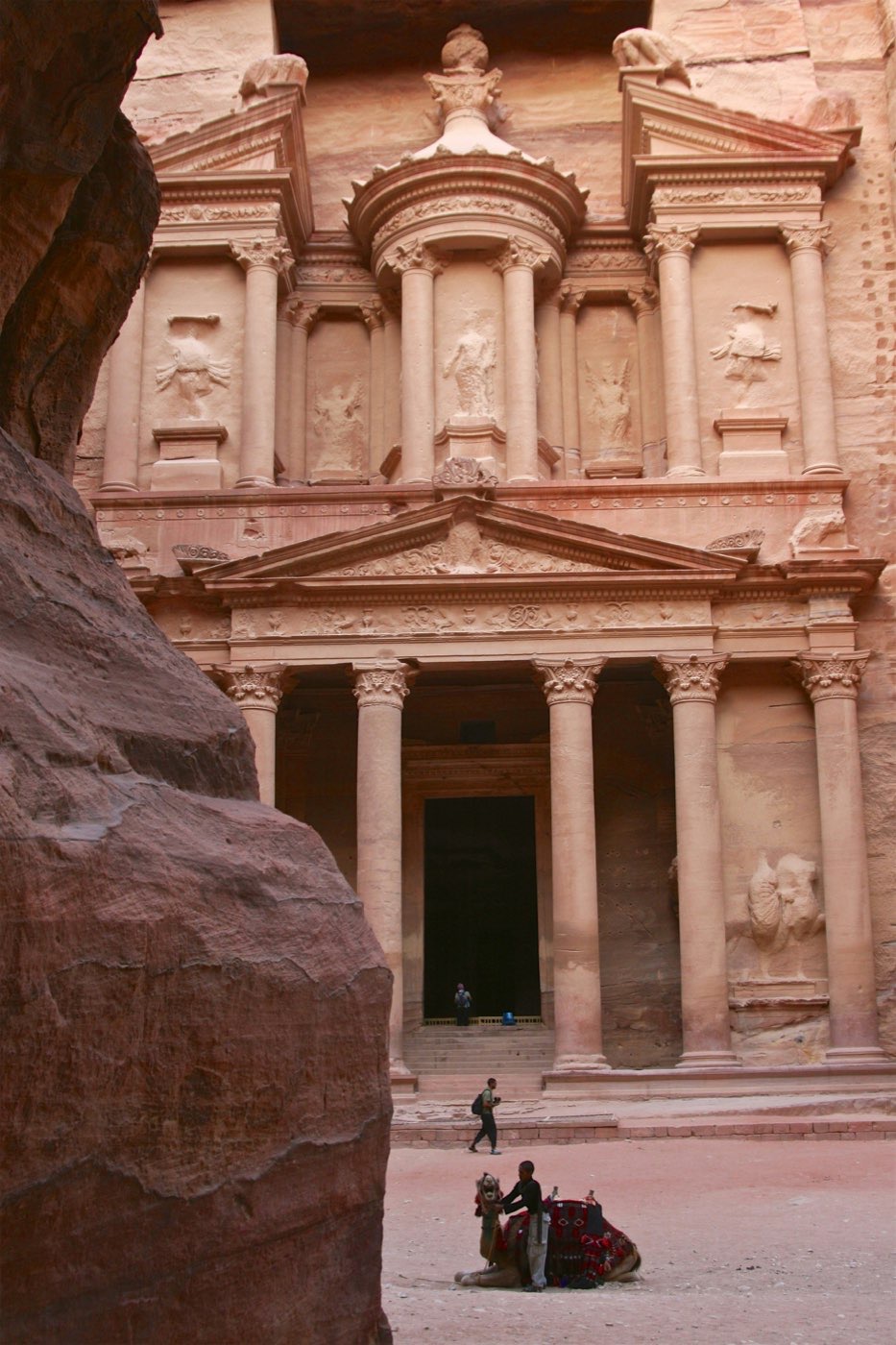
Enter Petra when the gates open at 6am - the Treasury in morning light, before the crowds, is the most frequently cited highlight of the entire Jordan trip.
Morning: Walk through the Siq (1.2 km narrow canyon), reach the Treasury (Al-Khazneh), continue through the Outer Siq to the Street of Facades, the Roman Theatre, the Colonnaded Street.
Midday: The Royal Tombs - Palace Tomb, Corinthian Tomb, Silk Tomb, and Urn Tomb - are carved into the eastern cliff face and deserve a slow walk and a stop inside the Urn Tomb chamber.
Afternoon: The Monastery (Ad Deir) is the most demanding part of a Petra visit - 850 steps cut into the rock, 45–60 minutes of climbing, rewarded by a facade larger than the Treasury with far fewer people. Start no later than 2pm to reach the top with time to rest before descent.
Allow a minimum of 7–8 hours in the site. Bring 2 litres of water minimum; food from the small stalls inside is available but limited. Horses (JOD 10 return) carry visitors from the visitor centre to the Siq entrance; they are not allowed inside the Siq itself.
Entry: JOD 50 (1-day pass) or covered by Jordan Pass.
Petra by Night operates Monday, Wednesday, and Thursday evenings - a candle-lit walk through the Siq to the Treasury, with Bedouin music. Entry approximately JOD 17, runs 8:30pm–10:30pm. Worth attending if the timing aligns with your nights in Petra.
Day 5: Wadi Rum (Jeep Tour + Overnight Camp)
The drive from Wadi Musa (Petra) to Wadi Rum is approximately 1.5 hours south, mostly on the Desert Highway (Highway 15). A taxi from Wadi Musa to Rum Village costs approximately JOD 40–55; arrange with your hotel the evening before.
At Rum Village Visitor Centre, pay the protected area entry fee (JOD 5) and meet your guide or camp transfer.
Afternoon (3–4 hour jeep tour): Standard circuit covers Lawrence’s Spring, Khazali Canyon (Nabataean rock art), the red sand dunes, and Um Fruth Rock Bridge. Cost: included in most overnight camp packages, or approximately JOD 30–40 per person if arranging separately.
Evening: Sunset from a rocky vantage point (your guide will know the best spot), then return to camp for zarb dinner - traditional Bedouin slow-cooked lamb and chicken from an underground pit. After dinner, the stars.
Camp options:
- Budget: Mohammed Mutlak Camp (approximately JOD 30–50/person all-in)
- Mid: Sun City Camp (approximately JOD 80–130/tent for two, includes meals + jeep tour)
- Splurge: Wadi Rum Night Luxury Camp bubble tent (JOD 200–400/night for two, meals included)
Search camps and hotels in Wadi Rum on Booking.com
Day 6: Morning Wadi Rum, Afternoon Aqaba
Wake early for sunrise (the eastern cliffs light up in sequence, starting around 30 minutes before dawn reaches the valley floor). After breakfast at camp, your guide or camp driver returns you to Rum Village.
Drive or taxi to Aqaba - approximately 1 hour from Rum Village. Aqaba is Jordan’s only Red Sea port and its southernmost city.
Afternoon options:
- Snorkelling from the public beach at the south end of the city: mask and fins rental approximately JOD 5/day; the reef starts within 50 metres of shore
- Intro dive at Royal Diving Club (PADI 5-star) - approximately JOD 25 for a guided beginner dive in the lagoon, no certification required
- Aqaba Fort (Mamluk-era, 15th century) - entry approximately JOD 2, interesting in its own right and free of crowds
Where to stay in Aqaba:
- Budget: Bedouin Garden Village (JOD 30–50/night), 5 km from city centre, beachfront
- Mid: Kempinski Hotel Aqaba (JOD 180–280/night), private beach, pool
- Splurge: Movenpick Resort Aqaba (JOD 200–350/night), beachfront, multiple restaurants
Search hotels in Aqaba on Booking.com
Day 7: Dead Sea + Return to Amman
The Dead Sea is 260 kilometres north of Aqaba, roughly 3 hours by car. A JETT bus from Aqaba to Amman (JOD 7, 4 hours) passes through the Dead Sea region; alternatively, book a private transfer via your Aqaba hotel that includes a Dead Sea stop.
The Dead Sea: at 430 metres below sea level, the lowest point on earth. Salt concentration of 34% means effortless floating - the buoyancy is immediate and unmistakable. Mud on the shoreline is used for skin treatments.
Entry options:
- Resort beach (Kempinski, Marriott, or Crowne Plaza): approximately JOD 50–80 day use including locker, towel, fresh shower, and access to resort facilities
- Amman Beach (public, Jordanian government): approximately JOD 20, basic changing facilities, direct beach access
Cautions: do not get water in your eyes (extremely painful - rinse immediately at the freshwater station), limit submersion to 20 minutes at a time, do not shave the day before.
Drive back to Amman (1.5–2 hours from the Dead Sea), drop off rental car, and depart from Queen Alia Airport.
Total Budget Estimates (7 Days, Per Person)
| Category | Budget | Mid-Range | Splurge |
|---|---|---|---|
| Accommodation | JOD 175 | JOD 490 | JOD 1,400+ |
| Food | JOD 70 | JOD 140 | JOD 280 |
| Entry fees (with Jordan Pass) | JOD 75 | JOD 75 | JOD 75 |
| Transport | JOD 60 | JOD 120 | JOD 250 |
| Activities & camps | JOD 80 | JOD 150 | JOD 400 |
| Total approx. | JOD 460 | JOD 975 | JOD 2,400+ |
At mid-range, budget approximately USD 120–150 per person per day as a planning figure, which comfortably covers good hotels, sit-down meals, all activities, and transport. Budget travellers sharing rooms and using public transport can reduce this to USD 60–80 per day.
Approximate USD equivalents: Budget USD 650–895, Mid-Range USD 1,235–1,755, Splurge USD 2,530–3,985 (at JOD 1 = approximately USD 1.41 as of 2026).
Practical Tips
- SIM cards: Purchase a Zain or Orange prepaid SIM at the airport arrivals hall for approximately JOD 5–10 with data. Coverage is good everywhere except deep inside Wadi Rum.
- Tipping: 10% at sit-down restaurants if service is not included. JOD 2–5 per day for drivers and guides. JOD 1–2 for hotel porters.
- Water: Tap water in Amman is treated but most travellers drink bottled. A 1.5-litre bottle costs JOD 0.30–0.50. At Petra, bring at least 2 litres per person per day.
- Dress code: Jordan is relatively liberal, but modest clothing (shoulders and knees covered) is respectful outside resort areas. At Wadi Rum camps, dress casually but warmly for evenings.
- Friday: Many businesses and some sites adjust hours on Friday (the main prayer day). Restaurants in tourist areas stay open. Government offices and banks are closed Friday and Saturday.
- Optional add-on - Wadi Mujib Siq Trail: If you have a flexible schedule on the Amman–Petra leg, detour to the Wadi Mujib Biosphere Reserve (open April–October). The Siq Trail is a 2–3 hour gorge hike through water, costs JOD 21 (not covered by Jordan Pass), and must be booked in advance at the RSCN website as daily numbers are capped. Include it between the Dead Sea and Petra for a memorable active day.
Activity guides for this itinerary: Petra Tours Guide · Petra by Night · Wadi Rum Tours Guide · Wadi Rum Where to Stay · Stargazing in Wadi Rum · Diving in Aqaba · Dead Sea Experience · Wadi Mujib Gorge
City guides covered in this itinerary: Amman · Jerash · Dead Sea · Petra · Wadi Rum · Aqaba
Book Your Trip
- Flights - Find the best fares to Jordan · flights guide
- Travel Insurance - Get covered before you go · insurance guide
- eSIM - Stay connected from landing · eSIM guide
- Airport Transfers - Pre-book your transfer from Amman Queen Alia Airport · airport guide
- Car Rental - Compare prices across providers · car hire guide
- Hotels - Search hotels in Jordan on Booking.com
- Tours & Activities - Browse Jordan tours on GetYourGuide
Compare ready-made options in our guide to Jordan tour packages, from small-group circuits to private tours. For a night under the stars, read our Wadi Rum overnight camps guide for camp types, prices and what is included.