Amman Travel Guide: Citadel, Souks & Rainbow Street
Everything you need to plan a trip to Amman: Roman ruins, downtown souks, top restaurants, hotel options and getting in from the airport.
Guides for Amman
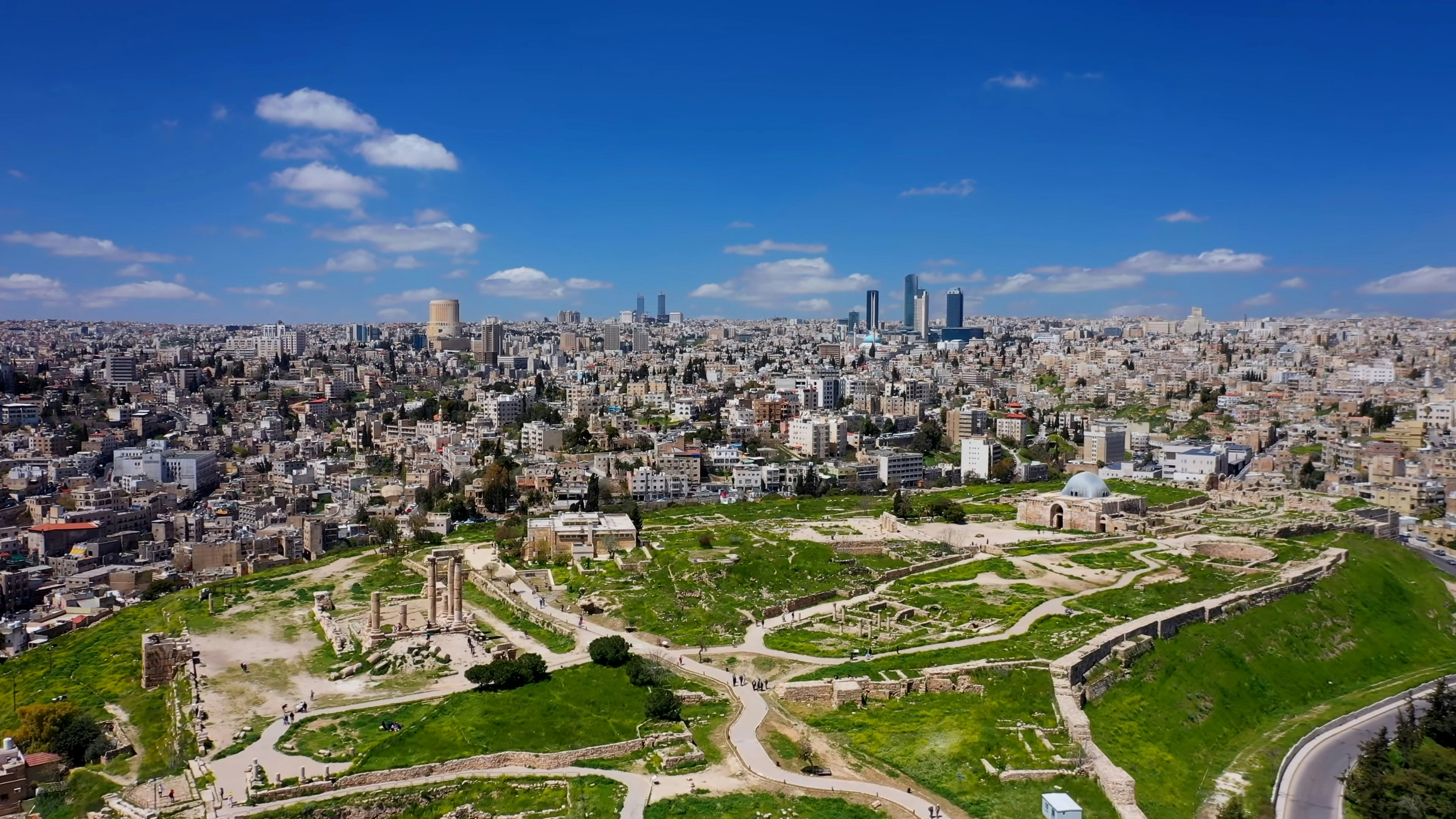
Amman sits across seven - now spread across nineteen - hills, a city that piles Roman columns against Ottoman-era houses and glass towers with little apparent concern for the centuries separating them. It is Jordan’s political and commercial capital, home to roughly four million people, and the arrival point for almost every international visitor to the country. Most travellers pass through quickly on the way to Petra or Wadi Rum. That is a mistake worth correcting.
The Roman Citadel (Jabal al-Qal’a)
The hilltop that dominates central Amman has been occupied continuously for at least eight thousand years. Today the site is known as the Citadel - Jabal al-Qal’a in Arabic - and it holds the most significant concentration of ruins in the city.
The Temple of Hercules dates from the 2nd century AD and retains two standing columns plus a colossal hand fragment that gives some sense of the statue that once stood here. The Umayyad Palace complex covers a far larger footprint and includes a restored audience hall with a distinctive cruciform floor plan. Entry to the Citadel costs approximately JOD 3 (as of 2026). Opening hours are daily 08:00–17:00 in winter and 08:00–19:00 April through October. A Jordan Pass covers admission.
The views from the Citadel across the downtown amphitheatre and out to the white apartment blocks cascading over the surrounding hills are reason enough to visit even if archaeology is not your priority.
Jordan Museum
A ten-minute walk from the Citadel, the Jordan Museum is the best single introduction to the country’s history and should not be skipped. The permanent collection moves chronologically from prehistoric flint tools through the Nabataean period, Roman occupation, Islamic dynasties, and into the modern Hashemite kingdom.
The highlight for many visitors is the collection of the Dead Sea Scrolls - some of the oldest surviving biblical manuscripts - displayed in a dedicated gallery. The copper scrolls recovered from Qumran, which record a list of hidden treasures in enigmatic language, are also here.
Admission is approximately JOD 3 (as of 2026). The museum is open Tuesday to Sunday 10:00–17:00 and is closed on Mondays.
Downtown and Al-Husseini Mosque
Amman’s downtown - the Balad - is centred on a Roman theatre that seats six thousand and still hosts occasional performances. Entry to the theatre is approximately JOD 2 (as of 2026); the adjacent Folklore Museum and Popular Life Museum are included in the same ticket.
The Al-Husseini Mosque fronts the main square. Built in 1924 on the site of a much older mosque, it is one of the oldest surviving religious buildings in the city and an active place of worship. Non-Muslim visitors are welcome outside prayer times; dress modestly and remove shoes at the entrance.
The souks spreading out from the mosque area sell everything from spices and gold to mobile phone accessories. This is the city’s oldest commercial district, and it retains a character that the newer malls have not replicated.
King Abdullah I Mosque
The blue-domed mosque on the edge of the Third Circle is Jordan’s national mosque, completed in 1989 and large enough to accommodate ten thousand worshippers inside plus a further three thousand in the courtyard. Non-Muslim visitors are admitted for approximately JOD 2 (as of 2026) outside of prayer times. Abayas are provided for women at the entrance. The interior is worth the short detour for the scale of the central dome and the quality of the geometric tilework.
Rainbow Street and Jabal Amman
The First to Third Circles area - and Rainbow Street in particular - is where Amman’s cafe culture concentrates. Renovated Ottoman-era houses have become boutique restaurants, independent bookshops, and design studios. The street is most active in the early evening; by 20:00 every seat at the pavement cafes is typically taken.
Abdali District
The newer Abdali development north of the Second Circle represents Amman’s upmarket commercial face - glass towers, the Boulevard pedestrian strip, and a concentration of international restaurants and cinemas. It is worth an evening walk to understand how rapidly the city is changing, though it has less character than the older downtown.
Where to Stay in Amman
Fairmont Amman - The most consistent five-star option in the city, located in the Abdali district. Rates start from approximately JOD 120 per night as of 2026. The rooftop pool and Semsom restaurant are open to non-guests for a fee.
Amman Rotana - Reliable business-class hotel in Shmeisani, well positioned for both the airport and the western residential areas. Rates from approximately JOD 85 per night as of 2026. The in-house dining is strong and the staff are experienced with international guests.
Sydney Hotel Rainbow Street - A small boutique property on Rainbow Street itself, ideal if you want to walk to the city’s best cafes and restaurants without taking a taxi. Rooms are compact but characterful. Rates from approximately JOD 40 per night as of 2026. Book well ahead, as it fills quickly on weekends.
For a full rundown of Amman accommodation by neighbourhood - from Jabal Amman boutique hotels to airport-adjacent business options - see the where to stay in Amman guide.
Search hotels in Amman on Booking.com
Where to Eat in Amman
Sufra - One of the most respected traditional Jordanian restaurants in the city, set in a restored early-20th-century house on Rainbow Street. The mansaf - Jordan’s national dish of slow-cooked lamb in fermented yoghurt sauce - is reliably good here, as are the mezze spreads. Budget approximately JOD 12–20 per person as of 2026.
Hashem Restaurant - A downtown institution operating since the 1950s and a reliable measure of how good very simple food can be. The falafel, hummus, and ful medames are made fresh through the day. Prices run approximately JOD 2–4 per person. It is always busy and does not take reservations; queue at the counter.
Wild Jordan Café - Run by the Royal Society for the Conservation of Nature, this café on the edge of Jabal Amman has terrace views over the city and a menu that emphasises Jordanian ingredients - dried herbs, local olive oils, regional cheeses. Expect to pay approximately JOD 8–15 per person. Profits support conservation projects.
If you follow a plant-based diet, Amman has more options than you might expect - see the guide to vegan eating in Amman for dedicated restaurants, mezze-friendly spots, and supermarket tips.
Getting to Amman
Queen Alia International Airport lies 35 km south of the city centre. Journey time to downtown is 40–50 minutes in normal traffic, extending to over an hour during rush hour.
Options for the transfer:
- Airport Express Bus - runs approximately every 30 minutes, fare approximately JOD 3.3. Drops at Tabarbour station and at 7th Circle.
- Metered or pre-negotiated taxi - approximately JOD 20–25 from the official taxi rank outside arrivals. Always confirm the price before getting in.
- Pre-booked private transfer - Welcome Pickups meets you in arrivals with a name board and a fixed price, avoiding taxi negotiation on a first evening.
- Uber - available from the airport and removes fare negotiation. Typically similar cost to a taxi.
Day Trips from Amman
Jerash - 48 km north, about one hour. The most complete Roman provincial city outside Italy, with standing columns, theatre, and paved streets. Entry approximately JOD 10; covered by the Jordan Pass. Combine with Ajloun Castle for a full-day northern Jordan itinerary.
Dead Sea - 60 km west, about one hour. The lowest point on earth; floating requires no effort. The resort strip has public and hotel beaches. Best combined with Madaba and Mount Nebo for a full southern day. To book a guided Amman city tour or a day trip from Amman, browse Amman tours and excursions - or check last-minute tours in Jordan if you’re planning close to your travel dates.
Getting Around Amman
Amman has no metro system. The most practical options for visitors are Uber or the local equivalent Careem, which operate throughout the city and are consistently cheaper than unmetered taxis. Downtown is compact enough to walk once you are there, but the hills between neighbourhoods make walking between districts more demanding than most city maps suggest.
When to Visit Amman
Spring and autumn are the most comfortable seasons. March and April bring mild temperatures (15–22°C) and make outdoor sightseeing on the Citadel and at Jerash genuinely enjoyable. October and November are equally pleasant and significantly less crowded than the spring peak. May is the last comfortable month before summer heat arrives; temperatures can reach 30°C by mid-afternoon.
Summer (June–August) is warm in Amman by regional standards - 30–35°C - though far less brutal than Petra or Wadi Rum in July. February is the coldest month, with occasional frost overnight; the city can feel quiet and grey but hotels are significantly cheaper. December and January offer similar conditions - good for museum-heavy days and the Jordan Museum without queues.
More in Amman
- Things to Do in Amman
- Best Hotels in Amman
- Food to Try in Amman
- Day Trips from Amman
- Amman Food Scene: Where to Eat
- Vegan Eating in Amman
- 3 Days in Amman Itinerary
- Jordan History: Byzantine Mosaics
Compare ready-made options in our guide to Jordan tour packages, from small-group circuits to private tours.
Upcoming Events in Amman
Amman Jazz Festival 2026
Amman Jazz Festival 2026 runs 22–25 October - four nights of jazz, fusion, and contemporary music in one of the Arab world's few dedicated jazz events.
Jordan International Marathon 2026
Jordan International Marathon 2026, 6 November in Amman. Full marathon, half marathon, and 10K, with thousands of local and international runners.
Book an experience
Top experiences in Amman
Explore the best tours and activities in Amman , with instant confirmation and free cancellation on most bookings.
Frequently Asked Questions
- How many days do you need in Amman?
- Two full days covers the main sights comfortably - the Citadel, Jordan Museum, downtown, and Rainbow Street. Budget a third day if you want to explore the Abdali district or take a day trip to Jerash.
- Is Amman safe for tourists?
- Amman is generally considered one of the safest capitals in the Middle East. Normal city precautions apply - keep an eye on bags in busy souks and use metered taxis or ride-hailing apps rather than negotiating fares.
- What is the best way to get from Queen Alia Airport to central Amman?
- The Airport Express bus runs every 30 minutes and costs approximately JOD 3.3. A taxi to the city centre runs JOD 20–25 (agree the fare before getting in) and takes 40–50 minutes. Uber is also available and removes the negotiation element.
- Do I need cash in Amman?
- Many hotels and larger restaurants accept cards, but smaller local eateries, street stalls, and souk vendors are cash-only. ATMs are plentiful in central areas; withdraw Jordanian dinars (JOD) on arrival.