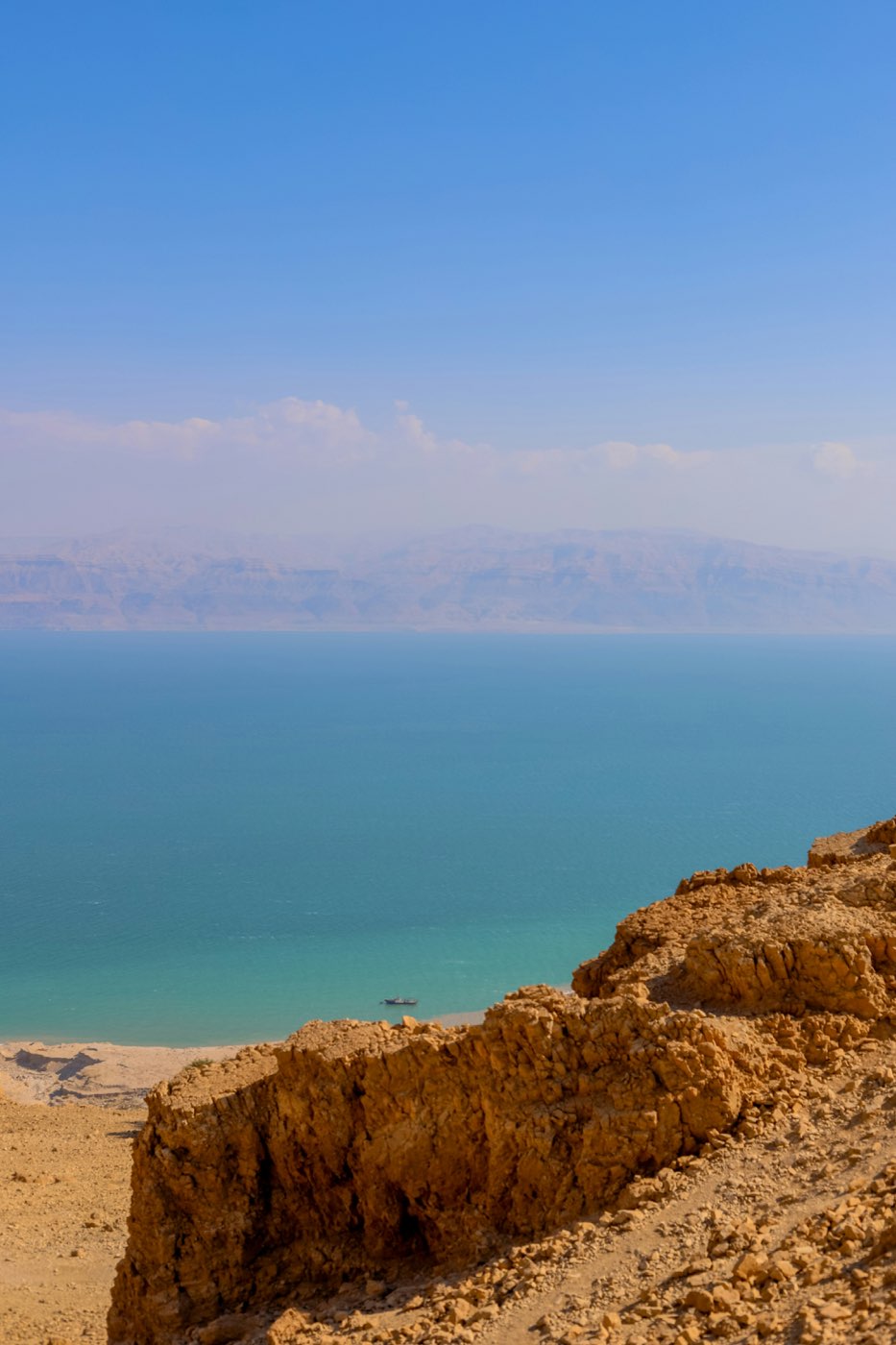
The Dead Sea is the lowest point on the surface of the earth. That fact alone - standing at 430 metres below sea level in the Jordan Valley, surrounded by the Moab mountains to the east and the Judean hills to the west - is worth pausing on. The altitude is negative. The horizon is defined by mountains on both sides. The water is not actually a sea but a landlocked salt lake with no outflow, and its concentration has reached the point where nothing lives in it except certain extremophile microorganisms.
What visitors come for is the floating. The buoyancy produced by 34% salt concentration is immediate, involuntary, and genuinely strange: lie back in the water and you rise to a position roughly half out of it, legs and torso bobbing above the surface. Reading a newspaper in the Dead Sea is a photograph that has been taken millions of times. It never entirely loses its absurdity.
Book a Dead Sea Tour
| Tour | Duration | From | Book |
|---|---|---|---|
| Dead Sea Half-Day Tour from Amman (transport + beach access) | 6 hrs | $62/person | Book → |
| Dead Sea Full-Day with Madaba and Mount Nebo | 10 hrs | $90/person | Book → |
| All Dead Sea tours | - | - | Browse on GYG |
Prices verified from TripAdvisor / GetYourGuide as of 2026. Resort day-use entry (approx JOD 40–70) is extra unless stated; most organised tours include transport only.
How the Dead Sea Works
The Dead Sea’s salinity is the result of a geological process that has concentrated minerals over millions of years in a closed basin with no outlet to the ocean. Water flows in from the Jordan River (historically) and from rainfall; it exits only through evaporation, leaving the minerals behind. The concentration has been rising over the lake’s history and is currently approximately 10 times that of the ocean.
The primary dissolved minerals are sodium chloride (table salt), magnesium chloride, calcium chloride, and potassium chloride. The specific combination affects buoyancy differently than plain salt water - the density of the water is approximately 1.24 g/cm³ compared to 1.025 g/cm³ for seawater. The difference is what produces the extreme floating effect.
The minerals also have recognised effects on skin: magnesium and bromide are absorbed through the skin and have documented anti-inflammatory and skin-condition benefits. The black mineral mud at the shoreline is collected and sold globally as a cosmetic product; applying it free of charge at the shore and then rinsing it off is one of the standard activities of a Dead Sea visit.
Choosing Where to Go
Resort Beaches (Recommended for Comfort)
The main resort hotels on the Jordanian Dead Sea shore offer day use packages that include access to their beach, fresh showers, changing facilities, pool, and restaurant. The beach areas themselves are generally better maintained than the public alternatives, with properly graded entry into the water and freshwater rinse stations near the shore (essential for rinsing salt before it dries on your skin).
Kempinski Hotel Ishtar Dead Sea: The most extensive resort on the Jordanian shore, with a beach extending to a private pool section and multiple restaurants. Day use costs approximately JOD 50–80 per person as of 2026 (rates vary by season and day of week; weekends are higher). The day use typically includes use of the pool, changing facilities, beach, and sometimes a food and beverage credit.
Marriott Dead Sea Resort: Similar standard and price range - approximately JOD 55–70 day use. The beach is well-maintained and the freshwater facilities are good.
Crowne Plaza Dead Sea: Slightly more modest in scale but well-run and with the same essential facilities. Day use approximately JOD 45–65. This is often the most affordable of the major resort options.
How to book resort day use: Call or email directly to confirm current pricing and availability - resort day use fills on weekends (Friday–Saturday in Jordan) and during Jordanian public holidays. Turning up without booking on a busy day risks being turned away or paying a premium. Dead Sea day experiences and ticket options are also bookable in advance via Tiqets or Klook.
Amman Beach (Public Option)
Amman Beach is a government-operated public beach on the Dead Sea shore, approximately 55 kilometres southwest of Amman. Entry costs approximately JOD 20 per person as of 2026. The facilities are more basic - changing rooms that are functional but not resort quality, a small cafeteria, and beach access with the same Dead Sea water.
The beach itself is less manicured than the resort options, and the entry into the water can be less well-maintained (rocky sections, less regular cleaning of the algae that forms at low-water marks). For budget-conscious travellers, or those who simply want the Dead Sea experience without paying for resort facilities they won’t use, Amman Beach is a reasonable choice.
Getting there from Amman: By car, Amman Beach is approximately 55 kilometres from central Amman, about 1 hour via the Dead Sea Road (Highway 65). JETT runs buses from Amman’s South Station to the Dead Sea area; confirm current timetable at the terminal. A private taxi from Amman costs approximately JOD 25–35 one-way.
Critical Cautions
Eyes: Getting Dead Sea water in your eyes is described by everyone who has experienced it as among the more unpleasant sensations available. The salt concentration causes immediate, intense burning that takes several minutes of freshwater rinsing to resolve. Every resort beach has freshwater stations at the water’s edge for this reason - know where they are before entering. Wear goggles if you are prone to splash or have children who might roll over.
Cuts and shaving: Do not shave the day before a Dead Sea visit. Salt water in fresh cuts is uncomfortable in ordinary concentrations; at Dead Sea concentrations it is very painful. Any open wound, scratch, or chafed skin will make itself known within seconds of contact with the water.
Time limits: The recommended maximum immersion is 20 minutes at a stretch. The extreme salt concentration draws moisture from the skin and has a dehydrating effect on the body. After 20 minutes, exit, rinse with fresh water, rest, rehydrate, and allow 30–45 minutes before returning. Most visitors do two or three short sessions rather than one extended immersion.
Sinkholes: The receding Dead Sea shoreline leaves behind underground cavities as freshwater layers dissolve the salt formations exposed by the retreating waterline. These cavities can collapse suddenly, forming sinkholes that have swallowed cars, trees, and sections of beach on the Jordanian shore. Stay on marked paths and beach areas at all times. The resort beaches and Amman Beach are monitored and maintained to minimise sinkhole risk; wandering onto unmarked shoreline sections is genuinely inadvisable.
Best Time to Visit
October through April offers the most comfortable conditions. Daytime temperatures are 15–25°C - warm enough to be in the water and dry off comfortably, without the extreme heat that makes outdoor activity at the Dead Sea miserable in summer.
May through September is hot - midday temperatures regularly exceed 38°C at the Dead Sea elevation (below sea level, the air temperature is measurably higher than in Amman). Early morning (before 9am) and late afternoon (after 4pm) are the only practical outdoor windows in summer. The water temperature itself is warmer and pleasant in summer, but the surface experience is uncomfortable.
Golden hour photography: The Dead Sea’s position between mountain ranges on both sides produces dramatic early morning and evening light on the water surface. The Moab mountains to the east catch the sunrise first; the light on the western Judean hills is the last to fade at sunset. Photography is significantly better at these hours than in the flat midday light.
Nearby Day Excursions
Zara Ma’in Hot Springs
Approximately 3 km inland from the Dead Sea shore, the Zara Ma’in hot springs cascade down a gorge from cliffs above the valley floor. The water reaches temperatures between 40°C and 63°C, fed by underground thermal sources. The Evason Ma’In Hot Springs resort manages access to the springs - day visitors can use the facilities for approximately JOD 40–50 as of 2026, including access to pools fed by the thermal water. It is worth combining with a Dead Sea visit if you are staying in the area for more than one day.
Dead Sea Panoramic Complex
On the ridge above the Dead Sea, the Panoramic Complex offers the most dramatic aerial view of the lake and the Jordan Valley. Entry to the viewpoint is free. A small museum on-site covers the geology and ecology of the rift valley; there is a cafe with good coffee and the best view table in the region.
Mount Nebo and Madaba
Mount Nebo, Moses’s reputed burial place, is 30 km northeast of the Dead Sea - around 30 minutes by car. On clear winter days the view extends to Jerusalem and the Mediterranean. Entry is approximately JOD 2 as of 2026. It pairs naturally with Madaba, which is 9 km further east and home to the famous Byzantine mosaic map of the Holy Land.
Combining the Dead Sea with a Jordan Itinerary
The Dead Sea sits 55–60 kilometres southwest of Amman and 250 kilometres north of Aqaba on the Dead Sea Road. The logical position in a Jordan itinerary is either:
Arriving from Amman: as a day trip from the capital (easy) or as a stop between Amman and the King’s Highway drive south toward Petra.
On the return route: most commonly as the final day before returning to Amman airport, coming north from Aqaba via the Dead Sea Road. This is the sequence used in the 7-day Jordan itinerary - you spend the morning floating and using resort facilities, then drive 1.5–2 hours north to Amman for the airport. The Dead Sea is a good final memory before departure.
A private driver from Aqaba to the Dead Sea and then to Amman airport costs approximately JOD 80–100 and eliminates the logistical pressure of managing public transport connections on a travel day. You can compare Dead Sea resort day passes and guided experiences to find the right option before you arrive.
If you’re still deciding on activities, our last-minute tours page lists same-day and next-day options with live availability across Jordan.
See also: Best Hotels at the Dead Sea · Wadi Mujib Gorge - Nearby Canyon Hike · Wadi Rum vs Dead Sea · Dead Sea: Jordan vs Israel