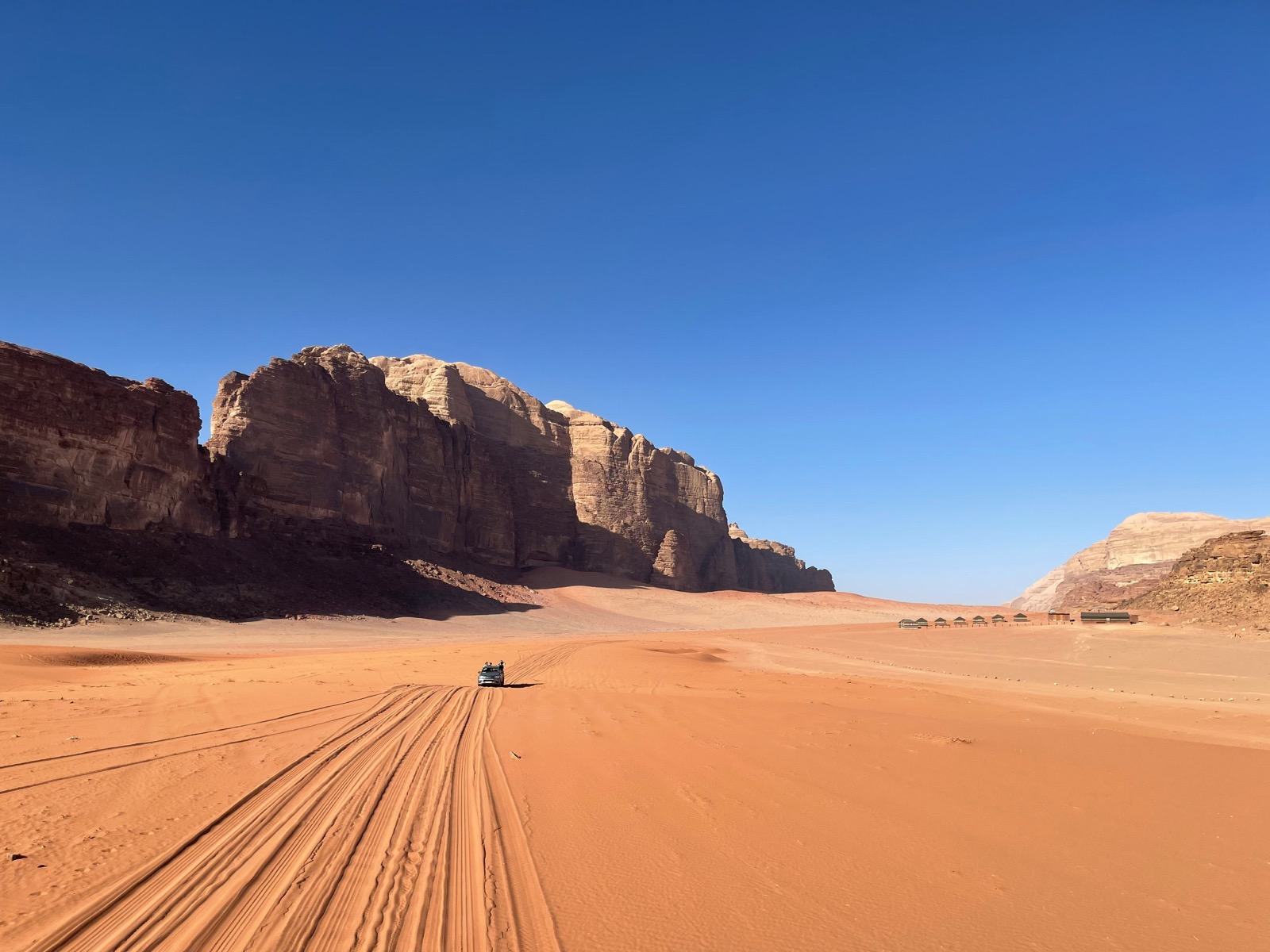
Ten days in Jordan gives you the time to go beyond the headline sites and into the country’s quieter corners - the forested hills around Ajloun, the sandstone canyons of the King’s Highway, the hiking trails of the Dana Biosphere Reserve, and the Red Sea coast at Aqaba. This itinerary moves north to south, ending at the sea, with the option to fly or bus back to Amman on the final day.
Before You Go
Flights: Book early - Queen Alia International Airport is well connected via Royal Jordanian, Ryanair, and easyJet. Search flights to Jordan to compare fares and check current availability.
Jordan Pass: Buy the JOD 75 tier (2-day Petra entry) or JOD 80 tier (3-day Petra) at jordanpass.jo before your flight. It covers the JOD 40 visa on arrival, Petra entry, Jerash, Ajloun, and over 40 other sites. For this 10-day itinerary, the pass saves approximately JOD 30–40 compared to buying entries individually.
Car hire vs. buses: This itinerary works best with a rental car for Days 4–7 (Dead Sea → King’s Highway → Dana → Petra). Hire from Amman airport for approximately JOD 25–40 per day (full insurance recommended at JOD 10–15 extra). Return the car in Wadi Musa or Aqaba if the agency allows one-way drops. Without a car, use JETT buses for the long legs and taxis for the gaps. Airport transfers on arrival can be pre-booked to eliminate taxi negotiation on your first evening.
Day 1: Arrive in Amman - Downtown Exploration
Arrive at Queen Alia International Airport. Transfer to central Amman by Airport Express Bus (Line 702) for approximately JOD 3.3 (45–60 minutes) or taxi for JOD 20–25.
Afternoon: Walk the Amman Citadel (Jabal al-Qala’a), open daily 8:00–18:00, entry included with Jordan Pass. See the Temple of Hercules, Umayyad Palace, and the panoramic viewpoint over downtown. Descend to the Roman Theatre (2nd century, 6,000 seats, Jordan Pass included), then walk through the downtown souks - gold, spice, and fabric markets radiating from the theatre.
Dinner: Hashem Restaurant in the Balad area - foul, hummus, and falafel for under JOD 5 per person. No reservations, communal seating.
Tours from Amman: Prefer a guided arrival day? Browse Amman city tours and day-trip packages covering the Citadel, Roman Theatre, and downtown markets.
Where to stay in Amman:
- Budget: Jordan Tower Hotel (from JOD 20–35/night as of 2026)
- Mid-range: Boutique Hotel La Locanda (from JOD 65–100/night), Jabal Amman
- Splurge: The House Boutique Suites (from JOD 180–280/night), Abdoun
Day 2: Amman - Jordan Museum and Rainbow Street
Spend the morning at the Jordan Museum (JOD 5 entry, closed Mondays), the country’s flagship museum holding Dead Sea Scroll fragments, 9,000-year-old ‘Ain Ghazal statues, and a comprehensive timeline from prehistoric to modern Jordan. Allow 2–3 hours.
Walk to Rainbow Street for lunch at Books@Cafe (JOD 8–12 per person for sandwiches, salads, and coffee) - Amman’s original independent bookshop-cafe with a balcony over the Jabal Amman hillside.
Afternoon: Explore the Jabal Amman neighbourhood, visit the Darat al-Funun contemporary art galleries (free entry, closed Fridays), and browse the antique shops along Rainbow Street. If time allows, taxi to Wild Jordan Center (RSCN headquarters) for sunset views over the city from the terrace restaurant.
Dinner: Sufra Restaurant on Rainbow Street - traditional Jordanian cuisine (mansaf, musakhan, fatoush) in a restored Ottoman house. Approximately JOD 12–20 per person.
Day 3: Jerash and Ajloun Castle Day Trip
Drive or taxi to Jerash (48 km north, 1 hour). A taxi costs approximately JOD 25–30 one way; the JETT bus from Tabarbour runs for approximately JOD 1.5 each way. Entry is included with the Jordan Pass (JOD 10 without it). The site opens daily 8:00–18:00 in summer.
Spend 3–4 hours walking the Oval Forum, the 800-metre Cardo Maximus colonnade, the Temple of Artemis, the South Theatre, and the Nymphaeum. Jerash is arguably the most complete Roman provincial city outside Italy.
After lunch near the entrance (the Lebanese House serves mezze and grills for approximately JOD 8–12), drive 25 kilometres west to Ajloun Castle (Qal’at ar-Rabad). This 12th-century Ayyubid fortress was built by Saladin’s forces to control the iron mines and counter Crusader expansion. Entry is included with the Jordan Pass (JOD 3 without it), open daily 8:00–18:00. The rooftop offers views across the forested Ajloun highlands toward the Jordan Valley.
Return to Amman by late afternoon. Dinner: Fakhr El-Din in Jabal Amman - Lebanese-Jordanian fine dining in a 1920s villa, approximately JOD 15–25 per person.
Day 4: Dead Sea and Ma’in Hot Springs
Check out of Amman and drive to the Dead Sea (65 km west, approximately 1 hour). Stop en route at Mount Nebo, where Moses is said to have viewed the Promised Land - the viewpoint on a clear day stretches across the Jordan Valley to the West Bank hills. Entry is approximately JOD 2 (as of 2026).
Spend the morning floating at Amman Beach (entry approximately JOD 20, includes pool and changing facilities) or via a day pass at the Kempinski Hotel Ishtar (from JOD 30–50).
Afternoon: Drive 30 minutes south to Ma’in Hot Springs (Hammamat Ma’in). The hot springs cascade down basalt cliffs into pools at approximately 40–60°C. The Ma’in Hot Springs Resort charges approximately JOD 20–25 for day use of the pools (as of 2026). A therapeutic soak after the Dead Sea mud is a logical pairing.
Where to stay:
- Mid-range: Dead Sea Spa Hotel (from JOD 80–120/night)
- Splurge: Kempinski Hotel Ishtar (from JOD 200–350/night)
- Budget: Mosaic City Hotel in Madaba (from JOD 30–50/night, 30 minutes from Dead Sea)
Day 5: King’s Highway to Dana Nature Reserve
This is the most scenic driving day of the trip. Take the King’s Highway (Route 65) south from the Dead Sea through the highland spine of Jordan. The road passes through Madaba (home to the 6th-century mosaic map of the Holy Land in St. George’s Church, entry approximately JOD 1), Karak (Crusader castle, Jordan Pass included, open daily 8:00–16:00), and the dramatic Wadi Mujib canyon crossing.
The King’s Highway is approximately 230 kilometres from the Dead Sea to Dana and takes 4–5 hours with stops. It is single-lane in places and passes through villages - this is not highway driving, it is slow-paced and scenic.
Arrive at the Dana Biosphere Reserve by late afternoon. Dana is Jordan’s largest nature reserve, covering 320 square kilometres of sandstone cliffs, wadis, and Mediterranean-to-desert ecosystems.
Where to stay at Dana:
- Budget: Dana Hotel in Dana Village (from JOD 25–40/night), a simple guesthouse at the edge of the escarpment
- Mid-range: Dana Guesthouse run by RSCN (from JOD 60–85/night), the main reserve accommodation with valley views
- Splurge: Feynan Ecolodge (from JOD 130–200/night), candlelit solar-powered lodge at the bottom of the Wadi Araba - one of the most distinctive hotels in Jordan. Access by 4x4 transfer from Dana village (arranged by the lodge)
Day 6: Dana Hiking, Then Petra
Spend the morning on one of Dana’s hiking trails. The Wadi Dana Trail (14 km, 5–6 hours, moderate–difficult) descends from Dana village to Feynan at the valley floor - arrange a 4x4 pickup at the bottom if you are not staying at Feynan. The shorter Rummana Mountain Trail (2.5 km loop, 1–2 hours) offers canyon views without the full commitment. Trail permits are arranged through the RSCN visitor centre (approximately JOD 7–10 per person as of 2026).
After hiking, drive south to Wadi Musa (approximately 1.5 hours from Dana), the town that serves as the gateway to Petra.
Dinner: Al-Wadi Restaurant in Wadi Musa town centre - Jordanian home cooking for JOD 8–12 per person. Or walk to the Petra Kitchen for a cooking class experience (approximately JOD 25 per person, must book in advance) where you prepare your own Jordanian meal.
Where to stay in Wadi Musa:
- Budget: Rocky Mountain Hotel (from JOD 25–40/night)
- Mid-range: Petra Moon Hotel (from JOD 60–90/night), 5-minute walk to Petra entrance
- Splurge: Mövenpick Resort Petra (from JOD 150–250/night), directly opposite the Visitor Centre
Day 7: Petra - Treasury, Monastery, Royal Tombs
Enter Petra at opening (6:00 in summer, 6:30 in winter). Entry is covered by your Jordan Pass. Walk the 1.2-kilometre Siq to the Treasury (Al-Khazneh). Continue past the Street of Facades, the Theatre, and into the city centre with the Colonnaded Street, Great Temple, and Qasr al-Bint.
After lunch at the Basin Restaurant (approximately JOD 15–20 buffet, the only sit-down option inside Petra), climb the 800 steps to the Monastery (Ad-Deir). Guided Petra tours are worth booking in advance - licensed guides know the shaded routes and the best photography timing at the Treasury. The ascent takes 40–50 minutes. The facade is 50 metres wide and sees a fraction of the Treasury’s crowds.
On the descent, detour to the Royal Tombs - the Urn Tomb, Silk Tomb, and Corinthian Tomb catch afternoon light beautifully from across the valley. Plan 7–9 hours inside Petra for this full day.
Dinner: The Cave Bar at Petra Guest House - drinks and light food inside a 2,000-year-old Nabataean cave tomb. Small plates from JOD 5–8. A unique setting.
Day 8: Petra Morning, Then Wadi Rum
Use the morning for anything missed on Day 7 - the High Place of Sacrifice viewpoint (45-minute climb from the main trail), the lesser-visited Wadi Farasa tombs, or a return to the Treasury when the tour groups have cleared (usually by 15:00, but morning light is better).
Depart for Wadi Rum after lunch (approximately 110 km, 1.5 hours by car). A taxi from Wadi Musa costs approximately JOD 35–45. Check in at the Wadi Rum Visitor Centre (entry JOD 5, covered by Jordan Pass) and transfer into the desert with your camp.
Afternoon/evening jeep tour (2–3 hours, typically included with camp booking or from JOD 25–35 separately) covering the Seven Pillars of Wisdom, Khazali Canyon inscriptions, the Um Fruth Rock Bridge, and Lawrence’s Spring. Compare Wadi Rum jeep tours and overnight packages to book a camp that matches your budget and style before you arrive.
Where to stay in Wadi Rum:
- Budget: Wadi Rum Bedouin Camp (from JOD 35–50/night), traditional tents, meals included
- Mid-range: Rahayeb Desert Camp (from JOD 60–90/night), private bathrooms
- Splurge: Sun City Camp (from JOD 120–200/night), geodesic dome tents with transparent panels
Dinner is communal zarb - meat and vegetables cooked underground in a fire pit - followed by stargazing. Wadi Rum has minimal light pollution and is one of the clearest night skies in the Middle East.
Day 9: Wadi Rum Full Day, Then Aqaba
Spend the morning on a deeper desert activity:
- Camel trek (2–3 hours, approximately JOD 20–35 per person) through the quieter southern valleys
- Scrambling/bouldering on Jebel Burdah rock bridge (guide required, approximately JOD 30–50, 4–5 hours round trip)
- Extended 4x4 tour to remote sites including the Burdah and Um ad-Dami (Jordan’s highest peak at 1,854m)
After lunch at the camp or the visitor centre, drive to Aqaba (approximately 70 km, 1 hour south). Aqaba is Jordan’s only coastal city, sitting on the Red Sea with views across to Egypt and Saudi Arabia.
Where to stay in Aqaba:
- Budget: Arab Bridge Hotel (from JOD 25–40/night), central location
- Mid-range: DoubleTree by Hilton Aqaba (from JOD 60–100/night), near the marina
- Splurge: Al Manara Luxury Collection Hotel (from JOD 180–300/night), beachfront with reef access
Dinner: Ali Baba Restaurant on the Aqaba corniche - fresh grilled fish and seafood for approximately JOD 12–18 per person.
Day 10: Aqaba, Then Return to Amman
Morning: Snorkel or dive at the Aqaba Marine Park reefs. The south beach area has accessible coral directly from shore. Snorkel gear hire costs approximately JOD 5–10 per day from shops near the marine park entrance. A two-dive trip with a local operator like Sindbad Diving costs approximately JOD 55–70 including equipment (as of 2026).
Alternatively, visit the Aqaba Fort (Mamluk-era, Jordan Pass included) and walk through the town’s fish market and souk area.
Return to Amman: JETT bus runs Aqaba to Amman daily (approximately JOD 7, 4 hours, book in advance). A flight with Royal Jordanian from Aqaba to Amman takes 45 minutes and costs approximately JOD 50–80 one way if booked early. If returning a rental car to Amman airport, the Desert Highway drive takes approximately 3.5 hours.
Budget Summary (Per Person, 10 Days)
| Category | Budget | Mid-Range | Splurge |
|---|---|---|---|
| Accommodation (10 nights) | JOD 250–380 | JOD 650–950 | JOD 1,600–2,600 |
| Food | JOD 150–200 | JOD 250–380 | JOD 400–600 |
| Transport | JOD 80–140 | JOD 180–300 | JOD 350–550 |
| Jordan Pass (2-day Petra) | JOD 75 | JOD 75 | JOD 75 |
| Activities | JOD 60–90 | JOD 80–120 | JOD 120–200 |
| Total | JOD 615–885 | JOD 1,235–1,825 | JOD 2,545–4,025 |
Approximate USD equivalents: Budget USD 870–1,250, Mid-Range USD 1,740–2,575, Splurge USD 3,590–5,675 (at JOD 1 = approximately USD 1.41 as of 2026).
Practical Notes
- Driving the King’s Highway: The road between Karak and Tafila involves steep descents into wadis and sharp switchbacks. Drive during daylight hours only. Fuel stations are spaced every 30–50 kilometres.
- Dana Reserve bookings: The RSCN lodges (Dana Guesthouse, Feynan Ecolodge) fill up in spring and autumn. Book 2–4 weeks ahead at wild.jo.
- Aqaba duty-free: Aqaba is a special economic zone with no sales tax. Fuel, electronics, and imports are cheaper here than in Amman.
- Wadi Rum cash: There are no ATMs in Wadi Rum. Withdraw enough JOD in Aqaba, Wadi Musa, or Amman before arriving.
- Friday adjustments: Many businesses adjust hours on Friday. Tourist-facing restaurants and sites remain open, but government offices and banks close Friday and Saturday.
- Travel insurance: Arrange cover before departure - Jordan’s medical facilities are competent but costs are high without insurance. Compare travel insurance for Jordan from policies that cover Middle East itineraries.
- eSIM: An international eSIM means you have data from the moment you land. Get a Jordan eSIM via Airalo - activate before your flight and skip the airport SIM queue.
Booking late? Our last-minute tours page lists Jordan activities with confirmed same-day and next-day availability - useful when individual days open up unexpectedly.
Activity guides for this itinerary: Petra Tours Guide · Dana Biosphere Reserve Hiking · Wadi Rum Tours Guide · Wadi Rum Where to Stay · Stargazing in Wadi Rum · Diving in Aqaba · Hiking the Jordan Trail
City guides covered in this itinerary: Amman · Jerash · Ajloun · Dead Sea · Dana · Petra · Wadi Rum · Aqaba
Book Your Trip
- Flights - Find the best fares to Jordan · flights guide
- Travel Insurance - Get covered before you go · insurance guide
- eSIM - Stay connected from landing · eSIM guide
- Airport Transfers - Pre-book your transfer from Amman Queen Alia Airport · airport guide
- Car Rental - Compare prices across providers · car hire guide
- Hotels - Search hotels in Jordan on Booking.com
- Tours & Activities - Browse Jordan tours on GetYourGuide