Wadi Rum: Jeep Tours, Bedouin Camps & Lawrence of Arabia
Plan your Wadi Rum trip: camp categories, getting there from Amman and Petra, best season to visit, entry fees, and what to expect when you arrive.
Guides for Wadi Rum
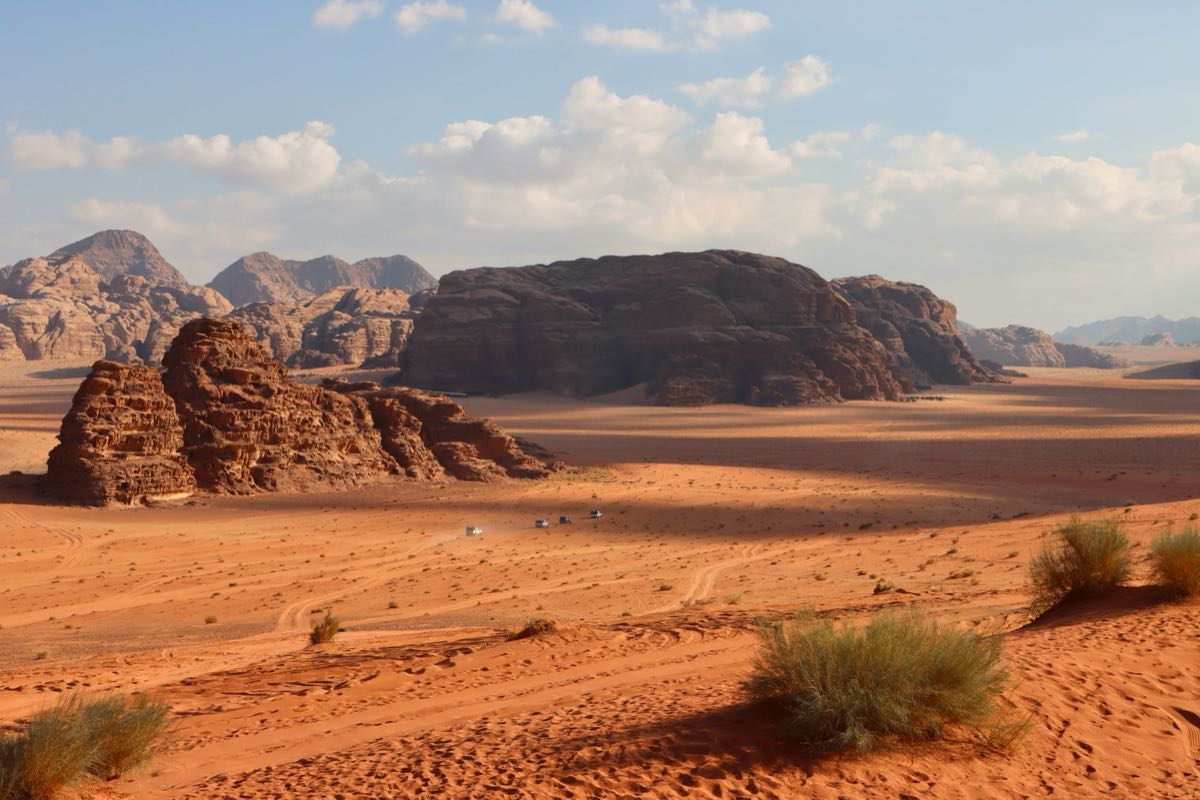
Wadi Rum is a protected desert valley in southern Jordan, roughly 60 km east of Aqaba. It covers around 720 square kilometres and is designated a UNESCO World Heritage Site for both its natural landscape and its concentration of rock inscriptions and petroglyphs. The valley floor sits at about 900 metres elevation; the sandstone and granite massifs that rise from it - Jebel Rum reaches 1,754 metres - shift in colour from pale cream through orange to deep red across the day.
The area has been occupied by Bedouin tribes for generations and carries traces of settlement going back to the Neolithic period. It was known internationally through T.E. Lawrence’s accounts of the Arab Revolt, and several sites named for him are standard stops on jeep tours. For detail on the specific sites, hiking routes, and activity options, see the Wadi Rum activities guide.
Entry and the Visitor Centre
All visitors enter through the visitor centre at Rum Village. The Protected Area entry fee is approximately JOD 5 per person as of 2026, payable at the gate. This covers access to the protected zone but not any activities. The Jordan Pass does not cover Wadi Rum entry. The visitor centre has a small geological exhibition, clean toilets, and a café.
If you are staying at a camp, your operator will typically meet you at the visitor centre and transfer you into the desert from there. Most camps are 20–45 minutes in by 4WD.
Best Time to Visit
March to May and September to November offer the most comfortable conditions - daytime temperatures of 20–28°C and cool nights. These are the peak seasons; the better camps fill 2–4 weeks ahead. See the monthly guides for March, April, May, September, October, and November for specific conditions and what else is happening in Jordan that month.
June to August: Daytime temperatures regularly exceed 40°C. Outdoor activity is difficult between 09:00 and 17:00. The site is quieter and booking last-minute is easy, but the heat substantially limits what you can do. Visits should start before 08:00 and wrap up by mid-morning.
December to February: Cold - nights regularly approach or drop below 0°C. Clear winter skies produce excellent stargazing. The landscape after rare winter rain has a brief flush of greenery on the valley floor. Heavy down jacket essential. Full conditions for December, January, and February in the monthly guides.
Where to Stay in Wadi Rum
Accommodation in Wadi Rum falls into three broad tiers. All camps are inside or adjacent to the Protected Area and most include dinner and breakfast.
Wadi Rum Night Luxury Camp - The best-known high-end option, offering transparent bubble tents that give a view of the night sky from bed. The landscape setting is carefully chosen and the service is consistent. Rates run approximately JOD 200–400 per night, all-inclusive as of 2026, covering dinner, breakfast, and standard jeep transport from the visitor centre. The bubble tents book up months ahead in peak season.
Mohammed Mutlak Camp - A traditional Bedouin camp with goat-hair tents, communal dinner around a fire, and sleeping either in tents or under the stars on mattresses in the open. Run by a local Bedouin family whose knowledge of the area is extensive. Rates approximately JOD 30–50 per person as of 2026, including dinner and breakfast. A good choice if you want to understand something of how people lived in this landscape rather than simply being comfortable in it.
Sun City Camp - A middle-tier option with private tented cabins that have en-suite bathrooms, a central communal area with good food, and reliable jeep tour arrangements. Rates approximately JOD 80–130 per night as of 2026, including meals. The camp name is more aspirational than descriptive - it is built into the rock, not in the middle of the flat desert.
For a fuller review of camps across all price tiers - including which offer bubble tents, which are family-run Bedouin operations, and how to book - see the where to stay in Wadi Rum guide.
Search hotels in Wadi Rum on Booking.com
Activities
Jeep tours are the primary way to cover ground in Wadi Rum. A half-day tour (3–4 hours) covers the main sites - Lawrence’s Spring, Khazali Canyon, sand dunes, Um Fruth Bridge - and costs approximately JOD 25–40 per person depending on group size, as of 2026. Full-day tours extend to the more remote areas including Burdah Bridge and the far southern dunes. Book through your camp or at the visitor centre; both are reliable. You can also browse Wadi Rum jeep safaris and overnight camps to compare and book in advance.
Hot air balloon flights operate at dawn and typically run for around an hour over the desert valley. The view of the rock formations from altitude is extraordinary. Prices run approximately USD 180–220 per person as of 2026. Flights are weather-dependent and can be cancelled at short notice; operators typically contact guests the evening before to confirm.
Camel rides are offered by many camps and at the visitor centre. A one-hour ride on the desert floor costs approximately JOD 10–20 per person as of 2026. Longer multi-hour routes can be arranged. Camels in Wadi Rum are working animals and their condition varies between operators; ask to see the animals before committing.
Climbing - Wadi Rum has been a serious rock climbing destination since the 1980s. Routes range from single-pitch beginners’ climbs on the sandstone to multi-day big wall routes on the granite faces of Jebel Rum. Guides and gear hire can be arranged at the village. This is specialist terrain; do not attempt technical routes without proper equipment and experience.
Getting to Wadi Rum
From Petra (Wadi Musa): The most direct route south takes approximately 1.5 hours by road. Shared minibuses run this route but schedules are infrequent; a private taxi from Wadi Musa to the Wadi Rum visitor centre costs approximately JOD 25–35. Hiring a car from Amman gives the flexibility to drive the King’s Highway south and arrive at your own pace. Most camps can arrange pick-up from Petra for a similar price if arranged in advance.
From Amman: The distance is approximately 320 km south on the Desert Highway. The JETT bus runs to Aqaba (journey time approximately 4.5 hours, fare approximately JOD 7) and you can arrange a taxi from Aqaba to Wadi Rum for approximately JOD 25–30. A direct shared minibus from Amman to Wadi Rum is also sometimes available through guesthouses; ask your accommodation to check current options. By private taxi from Amman, expect to pay approximately JOD 80–100 one-way.
From Aqaba: The Red Sea port city is around 60 km west of Wadi Rum. A taxi runs approximately JOD 25–30 and takes under an hour. Aqaba has the closest airport to Wadi Rum, served by Royal Jordanian and a handful of low-cost carriers.
Practical Notes
The desert climate swings considerably between day and night. Even in summer, evenings cool rapidly after sundown. In winter (December–February) night temperatures regularly approach or drop below 0°C, and a heavy down jacket is not excessive. Daytime in spring and autumn is typically 20–30°C - the most comfortable range for walking.
Carry significantly more water than you think you will need - 3–4 litres per person for a half-day outdoor tour in warm weather. Most camps provide water but the Protected Area itself has no facilities once you leave the visitor centre.
Mobile signal is patchy throughout the Protected Area. Download offline maps before you arrive if you plan to hike independently.
More in Wadi Rum
- Things to Do in Wadi Rum
- Wadi Rum Jeep Tour Guide
- Getting Around Wadi Rum
- Day Trips from Wadi Rum
- Food to Try in Wadi Rum
- Best Camps and Hotels in Wadi Rum
- Stargazing in Wadi Rum
- Hot Air Balloon Over Wadi Rum
- Lawrence of Arabia and Wadi Rum
- 3-Day Petra and Wadi Rum Itinerary
If you want a sealed, star-view stay, see our Wadi Rum bubble hotels guide for how they compare with traditional camps. For a night under the stars, read our Wadi Rum overnight camps guide for camp types, prices and what is included.
Book an experience
Top experiences in Wadi Rum
Explore the best tours and activities in Wadi Rum , with instant confirmation and free cancellation on most bookings.
Frequently Asked Questions
- Do you need a guide or jeep to explore Wadi Rum?
- Independent hiking within the Protected Area is permitted, but the landscape is large, trails are unmarked, and shade is almost nonexistent. Most visitors book a half-day or full-day jeep tour through their camp or through an operator in the village - this is strongly recommended. A GPS device or offline map is essential if you do go independently.
- What is the entry fee for Wadi Rum Protected Area?
- The Wadi Rum Protected Area charges an entry fee of approximately JOD 5 per person as of 2026. This is payable at the visitor centre on arrival. Jordan Pass does not cover Wadi Rum entry.
- When is the best time to visit Wadi Rum?
- March to May and September to November offer the most comfortable temperatures - warm during the day, cool at night. Summer (June–August) daytime temperatures regularly exceed 40°C, which makes daytime activities difficult. Winter nights can drop to near freezing, so bring warm layers for the evening whatever time of year you visit.
- Can you visit Wadi Rum as a day trip from Petra?
- Yes - it is roughly 1.5 hours from Wadi Musa by road, and many visitors do a half-day jeep tour before continuing south to Aqaba. However, staying overnight changes the experience substantially: sunset and the desert night are the parts most people remember most strongly.