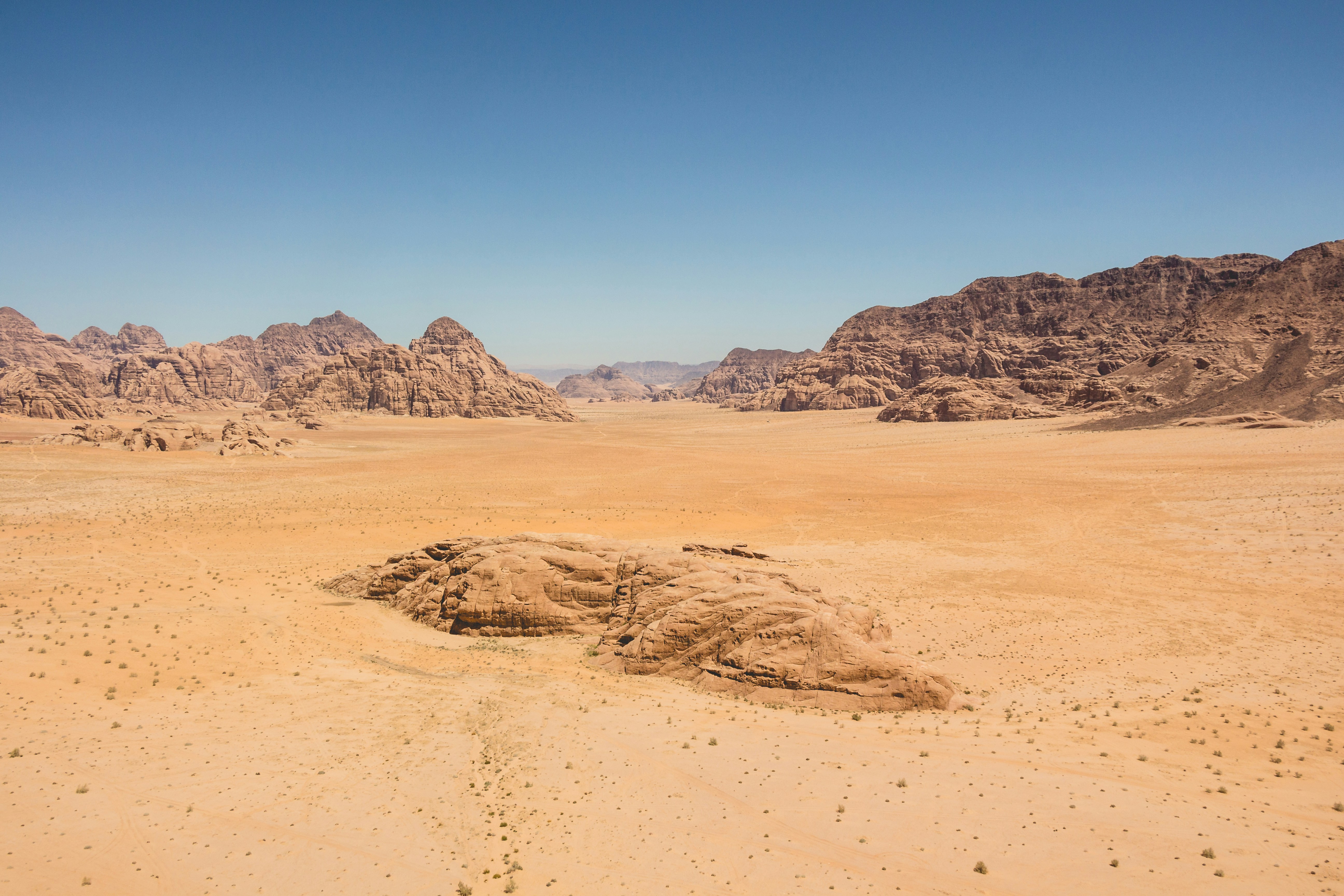
The Jordan Trail is a 650-kilometre long-distance footpath running the full length of Jordan from Umm Qais on the Syrian border in the north to Aqaba at the Red Sea in the south. Completed as a planned route in 2017, it was designed to connect the country’s existing hiking areas - the Ajloun Forest Reserve, the Dibeen Forest, the Dana Biosphere Reserve, Petra, and Wadi Rum - into a single continuous trail that could be walked in sections or, for committed hikers, as a 40-day thru-hike.
The trail passes through terrain that ranges from Mediterranean oak forest in the north to highland escarpments, canyon systems, and open desert in the south. At its best - which is mostly the Dana to Petra section and the approach through Wadi Rum - it is among the finest multi-day hiking in the Middle East.
The Trail in Numbers
- Total distance: 650 kilometres
- Stages: 36 (varying from 10km to 28km per stage)
- Full thru-hike duration: approximately 36–42 days
- Elevation range: from the Dead Sea shore (lowest point on earth, -430m) to highland ridges at 1,500m+
- Highest point: approximately 1,750 metres in the southern highlands between Dana and Petra
Best Sections for Shorter Trips
Most visitors to Jordan walk one or two consecutive sections of the trail rather than attempting the full thru-hike. The sections that consistently attract the most hikers - for their scenery, logistical accessibility, and the quality of the experience - are the following.
Dana to Petra (Stages 22–29, approximately 3–5 days)
This is the section most hiking guides refer to when they describe the Jordan Trail in general terms. It begins at Dana Village, descends 1,200 metres through the Dana Biosphere Reserve, crosses the Wadi Araba (the rift valley), and climbs back through increasingly dramatic sandstone terrain before reaching Petra from the south via the back entrance - the approach via Little Petra (Beidha) and the ridge above the city.
The terrain is genuinely varied over 4–5 days: juniper and Mediterranean scrub at Dana, canyon systems through the limestone escarpment, open desert floor crossings, and the pink sandstone formations that build toward Petra. Wildlife sightings throughout this section include Nubian ibex (most commonly at dawn and dusk on the cliff edges), sand cats (rare), and Jordan’s resident raptors - Bonelli’s eagle and long-legged buzzards are regularly spotted above the canyons.
Logistics: Dana Village is accessible by car from the King’s Highway (approximately 3 hours from Amman or 2 hours from Petra via the King’s Highway south of Karak). Accommodation at Dana Village: the Dana Guest House (operated by the Royal Society for the Conservation of Nature, JOD 25–40/person with meals) and several private guesthouses. A guide is required for several sub-sections; the RSCN office in Dana can arrange this for approximately JOD 60–80 per day.
Entry to Dana Biosphere Reserve: approximately JOD 10 per person (as of 2026), paid at the RSCN visitor centre in Dana Village.
Petra to Wadi Rum (Stages 29–33, approximately 2–3 days)
This section connects Petra’s back entrance with the Wadi Rum protected area, crossing exposed desert plateau and canyon systems that see far fewer hikers than the Dana–Petra segment. The route is more demanding in terms of water management - carry minimum 3–4 litres, with resupply at Rajif village.
The approach to Wadi Rum from the north - coming down from the plateau into the valley with the sandstone pillars appearing progressively - is reportedly the most dramatic entry to the protected area available.
Guides are required for the Wadi Rum section of this route (Wadi Rum protected area regulations). The Jordan Trail Association can connect you with Bedouin guides from the Rum Village community who are familiar with the trail entry points.
Ajloun Forest Reserve Day Hikes
In northern Jordan, the Ajloun Forest Reserve (managed by the RSCN) has a network of marked day hiking trails that form part of the Jordan Trail’s northern stages. These are accessible without a guide and are among the best maintained and most clearly marked hiking paths in the country.
The White Trail (5 km, 2–3 hours) is the most popular route through the reserve’s oak and pine woodland. The Soap House Trail (9 km, 4 hours) connects through to an artisan soap production cooperative - an unusual combination of hiking and craft tourism. Trail maps are available at the Ajloun reserve visitor centre.
Entry to Ajloun Forest Reserve: approximately JOD 7 per person, including access to the trail network.
Wadi Rum Section (Stages 34–36)
The final stages of the Jordan Trail cross the Wadi Rum protected area from north to south over 2–3 days. Walking rather than jeeping through the desert gives an entirely different experience of the landscape - the silence and scale are more present on foot than from a vehicle.
Water is the primary planning concern in this section. Springs exist along the route but cannot be relied upon - carry enough for a full day (3–4 litres minimum in cooler months, 5–6 litres in spring) and brief a Bedouin guide on source locations before departure. All hikers in Wadi Rum must be accompanied by a registered guide; this is both a safety requirement and a community economic measure.
Water and Logistics
The Jordan Trail’s mid-section has the most reliable water availability - springs, village tap water, and RSCN facilities cover most of the highland stages. The desert sections (southern Dana stages, Petra approaches, Wadi Rum) require careful planning:
- Carry minimum 3 litres per person at all times in desert sections
- Treat spring water before drinking (iodine tablets or filter - both lighter than carrying excess water)
- Plan resupply points around villages shown on the GPX track - the Jordan Trail Association’s website lists current reliable water sources for each stage
- Desert summer temperatures make this section non-viable June–September; carry 5–6 litres if hiking March–May spring shoulder season
Guides and Booking
The Jordan Trail Association (jordantrail.org) is the primary coordination body. Their website has:
- Free GPX files for all 36 stages
- Stage-by-stage descriptions with elevation profiles
- A guide directory organised by region
- Accommodation options along each stage
- An organised group hiking programme for those who prefer not to self-organise
Guide costs vary by section and duration: approximately JOD 60–100 per day for a certified trail guide, which is typically shared across a group. For the Dana–Petra section specifically, the RSCN office in Dana arranges guides who know the specific trail conditions well. Guided options are also listed under Dana tours and Petra tours.
Day Hike Options
For visitors who want a taste of Jordan Trail terrain without committing to multi-day logistics:
Dana White Trail (5 km, 2–3 hours): From Dana Village down through the canyon system to the wadi floor, with views across the Wadi Araba to the Saudi mountains. This is the most accessible serious day hike in Jordan - dramatic landscape, manageable distance, no guide required. Local hotels and guesthouses are on Booking.com.
Ajloun Forest trails (5–9 km): Accessible from Jerash as a half-day add-on, or from Ajloun town (30 minutes from Jerash by local bus). Marked, guided optional, excellent for forest walking in a landscape that feels completely different from the desert Jordan most visitors see.
Wadi Mujib Siq Trail (2 km, RSCN managed): The Dead Sea Highway passes the Wadi Mujib reserve, where a gorge walk through a stream-filled canyon leads to a waterfall at the end. Entry approximately JOD 21 (includes mandatory life jacket - the walk involves wading). Open March–October. This is not part of the main Jordan Trail but is the most dramatic short walk accessible to visitors on the Dead Sea–Amman–Petra route.
If you prefer to join an organised group for sections of the trail, you can browse guided Jordan hiking and trekking tours from operators who cover the Dana-to-Petra and Wadi Rum stages.
See also: Dana Biosphere Reserve Trekking · Dana City Guide · Ajloun City Guide · Wadi Mujib Gorge · 10 Days in Jordan Itinerary