Where to Stay in Wadi Rum: Bedouin Camps, Glamping, and Bubble Tents
Contents
- The Camp Tiers Explained
- Basic Bedouin Camps (Budget: 15–35 JOD per person per night)
- Mid-Range Private Tent Camps (50–100 JOD per tent per night)
- Luxury Glamping (100–200 JOD per tent per night)
- Bubble Tents and Martian Domes (150–300+ JOD per night)
- Named Camps to Consider
- Wadi Rum Night Luxury Camp
- Memories Aicha Luxury Camp
- Sun City Camp
- Mohammed Mutlak Camp
- Bedouin Directions Camp
- Rahayeb Desert Camp
- Captain's Desert Camp
- What is Typically Included in the Price
- What to Bring
- Getting to the Camps
- Booking Advice
Staying overnight in Wadi Rum is the right decision. The late afternoon light on the red sandstone mountains, the silence after all the day-trippers leave, and the star field after dark — these are what make Wadi Rum memorable. A morning drive back to Petra or Aqaba is a perfectly manageable next-day plan. Browse Wadi Rum tours and camp options to compare operators and tent types before committing to a booking.
The choice of accommodation is wide: basic shared Bedouin tents at 15 JOD per person, mid-range private tents with private bathrooms at 50–80 JOD per night, transparent bubble domes for stargazing at 120–200 JOD, and multi-room luxury glamping properties above that. This guide breaks down each tier, names the camps worth knowing, and explains what is — and is not — included in typical quotes.
The Camp Tiers Explained
Basic Bedouin Camps (Budget: 15–35 JOD per person per night)
The entry-level experience: a fabric tent or goat-hair Bedouin tent on a raised wooden platform, shared bathrooms (often simple but functional), and communal meals — typically chicken or lamb with rice, served on the ground in the traditional Bedouin style. Dinner and breakfast are almost always included at these camps.
What you get at this level: authentic atmosphere, genuine Bedouin hospitality, and close-to-the-ground desert contact. What you may not get: hot water that is reliably hot, private toilet facilities, air conditioning (the desert is genuinely cold at night from October to March), and reliable electricity.
For travellers comfortable with basic conditions, this is a valid and characterful option. For everyone else, the mid-range tier offers meaningfully better comfort without sacrificing the desert atmosphere.
Bring a sleeping bag liner or lightweight sleeping bag regardless of season. The blankets provided at basic camps are often thin, and the fire goes out around midnight. After that, the temperature in an open tent drops to ambient air temperature — which in winter is cold.
Mid-Range Private Tent Camps (50–100 JOD per tent per night)
The most common category and where most visitors will be happiest. Private safari-style tents with real beds, en-suite bathrooms (shower, flush toilet), some form of heating or cooling, and communal dining under a stretched Bedouin tent. Dinner and breakfast are typically included. Many camps at this level also include a jeep sunset tour in the package.
Tents are spaced apart with desert views, and the overall feel is that of a comfortable base camp rather than a luxury resort. The cooking is reliably good — Zarb (meat and vegetables slow-cooked underground in a sand oven) is a common dinner offering.
Luxury Glamping (100–200 JOD per tent per night)
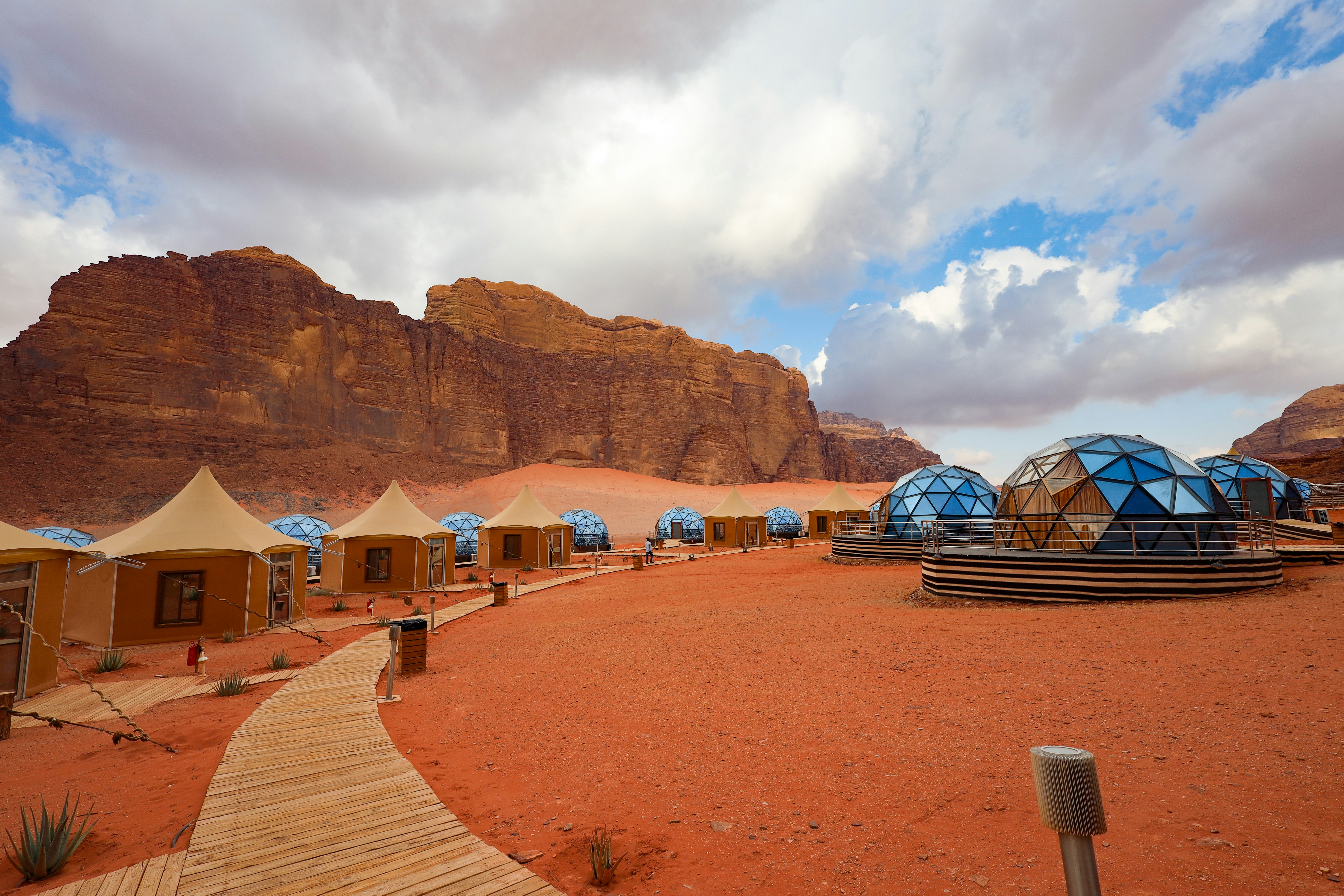
At this level, the camp design becomes part of the experience. Geodesic dome tents, oversized canvas structures with air conditioning and proper hotel-grade beds, private outdoor terraces, and sit-down restaurant-style dining. Some camps add a small plunge pool or a private viewing platform. The level of finish approaches boutique hotel standard.
Bubble Tents and Martian Domes (150–300+ JOD per night)
The premium category that has made Wadi Rum widely photographed in recent years. Transparent or semi-transparent dome structures positioned for maximum sky viewing, most with retractable sections or full glass ceilings. Interior comforts are hotel-grade. The experience of lying in bed looking at the Milky Way directly overhead is genuinely extraordinary and worth the price for many visitors.
One important note: inside the dome, there is subtle ambient light from electronics and the dome material itself. If you step outside at 2am, you will get the full silence and darkness of the open desert. Both are extraordinary — just different experiences.
Demand for bubble dome accommodation significantly outstrips supply at peak season (March–May and October–November). Book at least two to three months ahead for these dates.
Named Camps to Consider
Wadi Rum Night Luxury Camp
One of the most established luxury camps in the protected area, Wadi Rum Night Luxury Camp offers both standard private tents and transparent bubble tents (marketed as “Martian Tents”). The positioning deep in the protected area gives strong isolation from day-visitor activity. As of 2026, standard private tent packages including dinner and breakfast start from approximately 85–110 JOD per person per night; the Martian Tent units are priced higher, from approximately 150–200 JOD per person. The camp includes jeep tours as part of most packages. Past guests consistently highlight the food and sunset jeep tour as highlights. The camp runs on solar power — no generator noise. Book direct or via major booking platforms.
Memories Aicha Luxury Camp
A well-regarded mid-to-upper tier camp in a quiet location within the Wadi Rum protected area, Memories Aicha focuses on the Zarb dinner experience and comfortable private tents. The camp is smaller than Wadi Rum Night Luxury Camp, which translates to more personal service. As of 2026, packages including dinner and breakfast are priced from approximately 80–120 JOD per person, depending on tent type and season. The owners are a Bedouin family with deep knowledge of the desert, and the guided aspects of the stay reflect this.
Sun City Camp
Sun City is among the most photographed camps in Wadi Rum due to its distinctive bubble dome units and strong social media presence. The “Bubble Rooms” here are transparent cylindrical structures positioned on a hillside for maximum panoramic views. As of 2026, bubble rooms are priced from approximately 150–220 JOD per person per night including dinner and breakfast. Standard tented accommodation is also available at lower rates. The camp fills well in advance for peak season — book three to four months ahead if you want a bubble unit in spring or autumn.
Mohammed Mutlak Camp
Among the most consistently well-regarded traditional camps in Wadi Rum, Mohammed Mutlak Camp is operated by a family that has been hosting travellers here for decades. Prices run approximately JOD 30–50 per person including dinner, breakfast, and a half-day jeep tour as of 2026. The camp sits in a good position in the valley with clear sightlines for stargazing and is a strong choice for travellers who want a genuinely traditional Bedouin experience.
Bedouin Directions Camp
A more affordable mid-range option run by a local family, Bedouin Directions Camp offers private tents with bathroom facilities and includes the standard dinner and breakfast. As of 2026, rates start from approximately 50–70 JOD per person. The camp’s location in a quieter corner of the protected area means fewer day-trippers passing through.
Rahayeb Desert Camp
A solid mid-range option with a good reputation for food, Rahayeb Desert Camp sits at a similar price point (from approximately 55–75 JOD per person as of 2026). The Zarb dinners here are particularly well-reviewed. Tent standards are good for the price level, with private bathrooms that work reliably.
Captain’s Desert Camp
A long-standing option on the Wadi Rum backpacker circuit for simple, honest accommodation at low prices. Rates from approximately JOD 20–35 per person per night as of 2026, including dinner and breakfast. Shared bathroom facilities are basic but maintained, and the camp has been operating long enough that the staff understand what independent travellers want. The surrounding rock faces also catch the last light well for photography.
What is Typically Included in the Price
At almost all camps above the most basic budget level, the price per person includes:
- Dinner (typically a generous spread or Zarb)
- Breakfast the following morning
- Tea and coffee throughout the stay
- Basic jeep tour (often a short sunset or sunrise drive)
At mid-range and luxury camps, the jeep component is often more substantial — a 2-hour sunset tour or a full 4-hour morning tour. Clarify what is included before booking, as camps vary.
Not typically included: alcohol (some camps can arrange beer or wine, but Jordan is largely alcohol-free in the desert setting), transfers from Aqaba or Petra, or additional jeep tours beyond the included one.
What to Bring
Cash: There are no ATMs in Rum Village. Bring sufficient Jordanian dinars from Aqaba, Petra, or Amman. Most camps do not accept cards; some accept them for the initial booking but request cash for extras.
Warm layers: The minimum viable outfit for any camp in any tier is long trousers, a fleece or mid-weight jacket, and socks — even in summer, when the desert night temperature can drop 15–20°C below the daytime high. In winter (November–February), bring a proper insulated jacket and a hat. Traditional and mid-range camps are colder than the thermometer suggests because the tents are not sealed.
Torch or headlamp: Camp lighting goes off at some point in the night at most traditional and mid-range camps. A headlamp is essential for navigating to bathroom facilities in the dark.
Sunscreen and a hat: The desert sun is intense even in winter at this latitude. Reapplication is necessary after any jeep tour stop.
Getting to the Camps
Wadi Rum Village is the entry point for the protected area. The visitor centre is here, and a brief permit process occurs before you enter. Most camps will arrange pickup from the visitor centre if you give arrival details in advance.
From Aqaba: approximately 70 km northeast, 1 hour by car. Taxis from Aqaba to Wadi Rum Village cost approximately 25–35 JOD as of 2026. JETT buses from Aqaba are an option but less convenient for reaching camps directly.
From Petra (Wadi Musa): approximately 70 km south, 1 hour by car. Taxis cost approximately 30–40 JOD as of 2026.
From Amman: approximately 290 km south via the Desert Highway, 3–3.5 hours. Private car, hired car, or JETT bus to Aqaba with a transfer to Wadi Rum.
Booking Advice
- Book directly with the camp when possible — this gives you the most flexibility to ask questions about what is included and to request specific tent positions. WhatsApp booking is the norm for smaller Bedouin camps; find the camp on Google Maps which lists contact details.
- All major booking platforms list Wadi Rum camps, but prices are sometimes higher with platform fees added. The advantage of platforms is payment protection and a clearer cancellation policy.
- For bubble tents at peak season (March–May, October–November), book months ahead. Last-minute availability at this tier is rare.
- Confirm the check-in time — most camps ask guests to arrive before sunset (roughly 5–6pm from October to March, 6–7pm in summer) to allow the jeep tour to conclude before dark.
- Night temperatures in Wadi Rum can drop to 5–10°C between November and February. Confirm the camp provides adequate bedding or bring a sleeping bag liner.
- Cancellation for most camps: free cancellation up to 48–72 hours before arrival. Clarify before paying any deposit.
See also: Wadi Rum city guide · Things to Do in Wadi Rum · Wadi Rum Tours · Top Luxury Camps in Wadi Rum
While you're there
Things to do while you're there
Sorted your stay? Browse the top-rated activities and day trips from here.
Frequently Asked Questions
- Do all Wadi Rum camps include dinner and breakfast?
- Almost all camps include dinner and breakfast in the overnight price. Dinner is typically a zarb (a traditional Bedouin slow-cooked meat and vegetable dish prepared underground) or a BBQ spread. Breakfast is usually bread, hummus, labneh, tomatoes, olives, and tea. Budget camps may serve simpler versions of these meals, but the inclusion of both meals is standard across all tiers.
- What is a zarb dinner?
- Zarb is a traditional Bedouin cooking method where seasoned meat (usually chicken and lamb) and vegetables are placed in a large metal rack, lowered into a pit filled with burning coals, and covered for 2–3 hours. The result is tender, smoky, and deeply flavoured. Most camps serve zarb as the main dinner — it is one of the genuinely distinctive food experiences of a Jordan trip.
- Are luxury bubble tents actually comfortable in the desert?
- The better bubble tent camps are genuinely comfortable — private bathroom, air conditioning or heating, proper beds. The glass ceiling means direct stargazing from bed without going outside, which is the main appeal. The cost is significantly higher (JOD 200–400 per night for two) and the experience is fundamentally more resort-like than traditional camping. That is either an advantage or a disadvantage depending on what you are looking for.
- Is it safe to sleep in an open Bedouin tent?
- Yes. Traditional Bedouin tents have canvas or goat-hair walls and roof, with open or semi-open sides. The main concern is temperature: desert nights can drop below 5°C in winter and the blankets provided are sometimes inadequate. Bring a warm sleeping bag or extra layers if visiting November–February. Scorpions exist in the desert but encounters in camp areas are uncommon.
Sorted your stay?
Here's how to get there — and get around once you arrive.
Airport Transfer
Fixed-price airport pickup — driver meets you at arrivals, no haggling.
Book a Transfer →Car Hire
Compare rates from local and international suppliers — 90-day price lock included.
Compare Cars →Same price as booking direct — we earn a small commission at no extra cost to you.