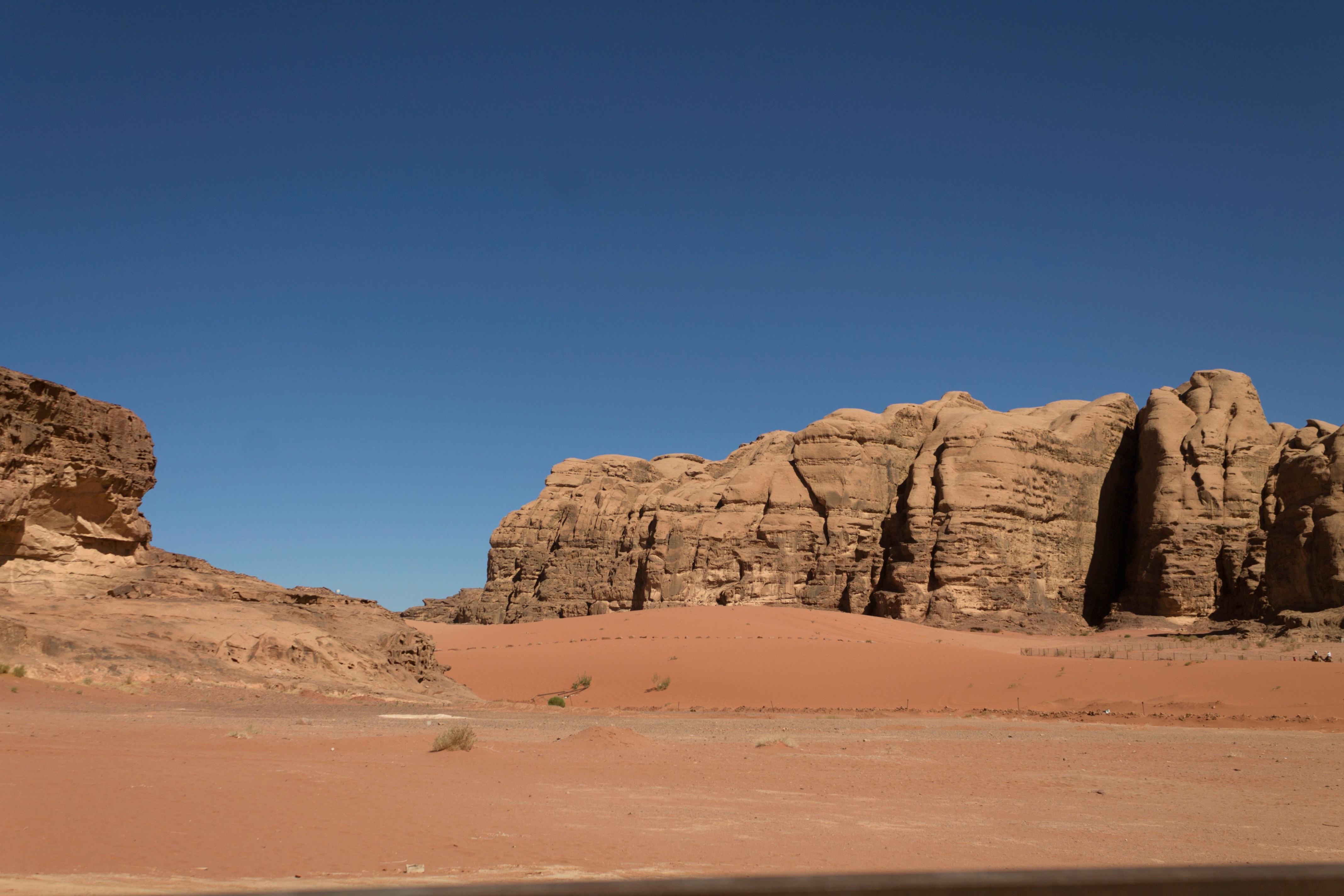
January is Jordan’s deepest low season and one of the most rewarding months to visit if you know what to expect. The summer crowds are long gone, hotel prices are at their annual low, and the light over Petra and Wadi Rum has a clarity that the harsh summer haze strips away. The trade-off is cold nights in Amman and the northern highlands, occasional rain, and a small chance of snow.
Cold Wadi Rum Nights, Mild Petra Days, and Warm Aqaba Sun in January
| City | Avg High °C | Avg Low °C | Conditions |
|---|---|---|---|
| Amman | 12 | 4 | Cool, occasional rain, possible frost |
| Petra | 11 | 3 | Cold nights, rare snow possible |
| Wadi Rum | 14 | 2 | Dry and sunny by day, very cold nights |
| Aqaba | 21 | 12 | Warm and dry, minimal rain |
| Dead Sea | 20 | 11 | Mild, calm, excellent for floating |
Amman’s average high of 12°C makes January the coldest month of the year. Rain falls on around 8–10 days across the month and can be heavy in the north. Wadi Rum sees almost no precipitation but night temperatures regularly drop close to freezing - desert camps supply blankets but check what’s included before booking.
Aqaba, at sea level on the Red Sea coast, is in a different climatic zone entirely. Daytime temperatures of 21°C and near-zero rainfall make it the most reliably comfortable destination in Jordan during January.
Orthodox Christmas in Madaba and Low-Season Quiet Across All Sites
Orthodox Christmas - Madaba and Mount Nebo (7 January) Jordan’s Christian communities, which make up a significant minority of the population, celebrate Christmas according to the Orthodox calendar on 7 January. The churches of Madaba - particularly the Greek Orthodox Church of St George, home to the famous 6th-century mosaic map - hold services that are open to respectful visitors. The atmosphere in Madaba on Orthodox Christmas is warm and genuinely welcoming.
New Year carry-over The first week of January occasionally features live music and cultural events at venues in Amman’s Jabal Amman and Rainbow Street areas, though nothing on the scale of neighbouring countries. Check local listings on Visit Jordan’s official website.
January Accommodation: Low-Season Rates in Amman, Wadi Rum Camps Quiet and Good Value
Amman The Bristol Hotel Amman (3rd Circle, Jabal Amman) offers comfortable rooms from approximately JOD 60 per night in January, well below its shoulder-season rate. The location puts you close to Rainbow Street and the major downtown sights. For dinner, Hashem Restaurant in Downtown Amman is the essential introduction to Jordanian street food - falafel, hummus, ful medames - and costs under JOD 5 per person. It opens at dawn and doesn’t close until well past midnight.
Aqaba If you want warm January sun, Kempinski Hotel Aqaba Red Sea has January rates from around JOD 110 per night and direct beach access. For a more local meal, Ali Baba Restaurant on the Aqaba corniche serves grilled fish and seafood dishes for JOD 8–15 per person - straightforward, consistent and very popular with Jordanians.
Search hotels in Jordan on Booking.com
Empty Petra Siq, 30–50 Percent Off Peak Rates, and Clear Winter Light
- Lowest hotel rates of the year - savings of 30–50% versus April peak
- Petra and Jerash essentially free of tour groups; you walk the Siq with almost no one else
- The light is excellent for photography - long golden hours with no summer haze
- Wadi Rum desert camps have capacity; easier to book good camps. Wadi Rum jeep tours and overnight packages are available at short notice in January.
- Flights to Amman from Europe tend to be cheapest in January
Cold Amman Evenings, Slippery Petra Steps After Rain, and Short Days
- Cold evenings and nights across Amman, Petra, and the northern highlands - not suitable for those who find 4°C uncomfortable
- Some outdoor restaurants and cafés in Amman run reduced hours
- Wadi Rum sunrise is extremely cold; temperatures below 5°C are common at 6am
- Petra’s Treasury steps can be slippery after rain
- Daylight hours are shortest - roughly 10 hours of light
Dana Biosphere Reserve and Petra Monastery Trail Without the Summer Crowds
The cooler temperatures make January excellent for hiking the Dana Biosphere Reserve and the Jordan Trail northern sections. The Ajloun forest trails are best avoided after rain (paths become muddy) but are otherwise pleasant. The Petra Archaeological Park’s longer trails - the High Place of Sacrifice, the Monastery (Ad Deir) route - are all manageable in January, and the crowds that make the Monastery climb miserable in April simply don’t exist.
Visa Reminder
Most Western nationalities receive a visa on arrival at Queen Alia International Airport for JOD 40 (single entry, 30 days, as of 2026). If you’re visiting Petra as part of your trip, the Jordan Pass (from JOD 70) covers the visa fee provided you spend a minimum of three nights in Jordan. January’s short days mean it’s worth arriving a day before your planned Petra visit so you don’t lose time settling in.
What to Pack for January: Thermals for Wadi Rum Nights, Waterproofs for Amman Rain
- Warm mid-layer (fleece or down jacket)
- Waterproof outer shell
- Thermals for Wadi Rum desert camp nights
- Walking shoes with grip (Petra’s stone paths get slick)
- Light clothes for Aqaba (you won’t need the jacket there)
- Sunscreen - UV levels remain significant even in winter
- Lip balm and moisturiser - the air in the highlands is dry
Plan your trip: Search flights to Jordan · Travel insurance for Jordan · Jordan eSIM via Airalo · Tours in Jordan on GetYourGuide
Other months: February · March · April · October · November · December
Useful guides for a January visit: Stargazing in Wadi Rum · Wadi Rum Where to Stay · Dead Sea Experience · Hiking the Jordan Trail · Dana Biosphere Reserve Hiking · Jordan Packing List
Plan Your Trip
January is Jordan’s quietest month and its cheapest - no advance-planning pressure needed. Flights can be booked within a week of travel at low fares, and Wadi Rum traditional camps run genuine off-season rates (JOD 60–80 including dinner and breakfast). The key preparation is packing properly: Wadi Rum nights drop to 5°C and Amman can feel cold and wet. The payoff is Petra almost to yourself - the Siq in January winter light, with no tour groups ahead of you, is a genuinely different experience to April. The Jordan Pass (JOD 70+) covers both the visa fee and Petra entry if you spend three or more nights; it pays for itself in January even more than in peak season.
✈️ Book your flights to Jordan 🛡️ Get travel insurance 📱 Stay connected with an eSIM 🚗 Rent a car