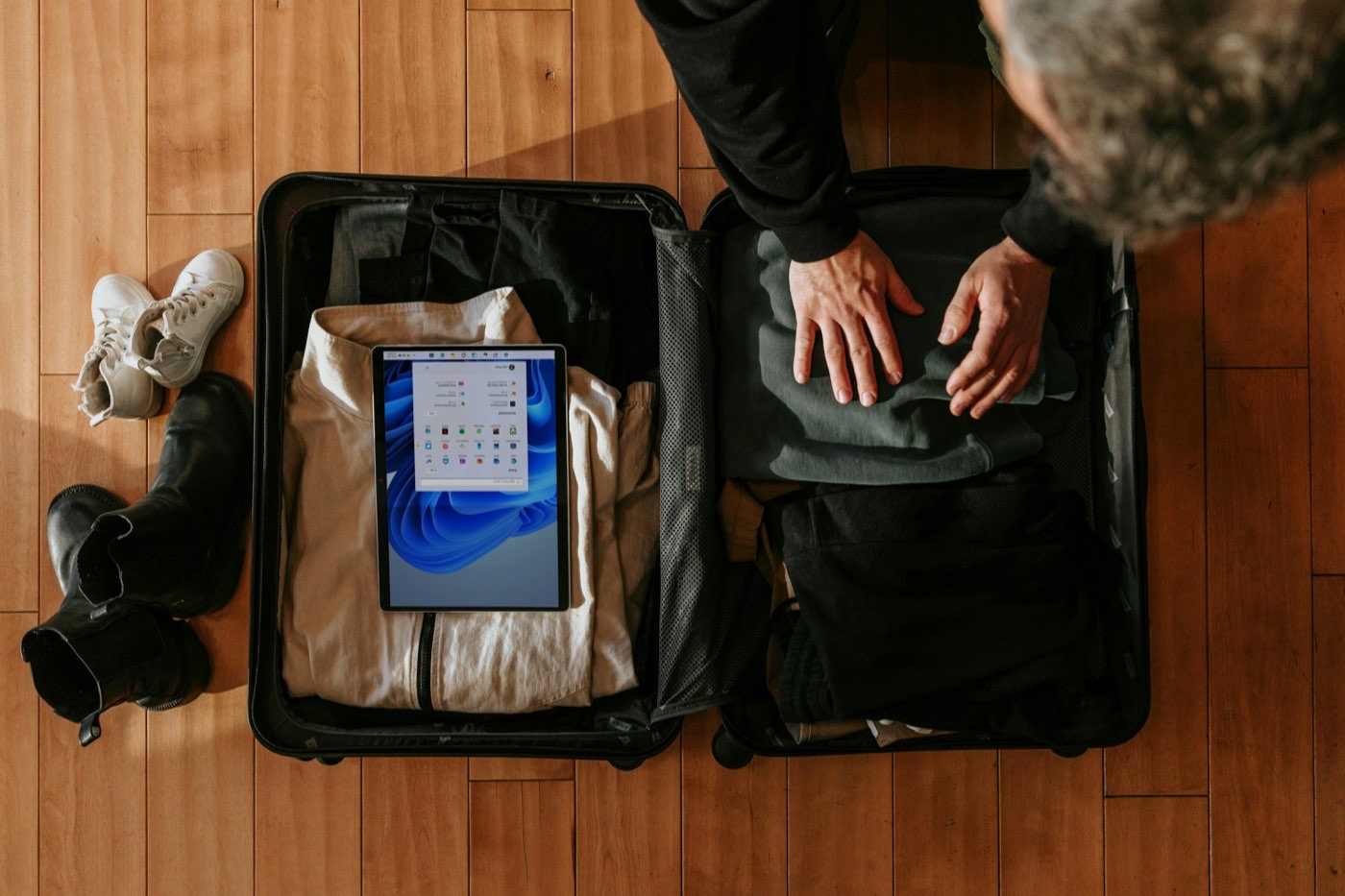
Jordan combines urban culture, ancient sites, desert trekking, Red Sea diving, and religious heritage in one itinerary. What you pack needs to work across all of these - modest enough for mosques, robust enough for Petra’s rough terrain, and light enough for Aqaba’s heat. Here is a specific, practical list.
Clothing - The Basics
For both men and women:
Jordan requires a degree of modesty in dress that beach destinations do not. The rule of thumb: shoulders covered, knees covered when you are in traditional towns, souks, religious sites, or anywhere outside a beach/resort context. This applies both in Amman and in the rural areas around Petra and Madaba.
- Lightweight long-sleeved shirts (2–3): A loose linen or technical fabric long-sleeved shirt covers both the modest dress requirement and sun protection at Petra. One or two is not enough - you will sweat and need to change.
- Lightweight trousers or full-length skirts (2–3): Jordan’s climate means these are comfortable for most of the year. Avoid linen in very hot months as it creases and stays damp. Lightweight cotton or technical travel trousers work better.
- T-shirts for layering (2–3): Under shirts in cooler months, and as the base layer at beach and resort areas.
- Modesty layer for women: A lightweight scarf or wrap that can cover shoulders and hair (for mosque entry) takes minimal space and is needed repeatedly.
For specific contexts:
- Swimwear: Essential for Aqaba, the Dead Sea, and resort hotel pools. Bring two sets if you are spending several days at the beach - damp swimwear in high humidity is unpleasant.
- Modest cover-up for the Dead Sea: Many Dead Sea resorts are family-oriented and conservative; a sarong or light dress over a swimsuit is advisable outside the direct pool/beach area.
- Shorts: Acceptable for men in beach areas and hotel environs, not in traditional areas or religious sites.
Footwear
Petra walking shoes: This is the single most important packing decision for a Jordan trip. The Treasury is 1.2km from the entrance via the Siq - smooth underfoot. Beyond, the paths deteriorate rapidly into rough cobbles, loose stones, carved rock steps, and dry riverbeds. The Monastery (Ad Deir) involves 800 carved stone steps with significant elevation gain. Worn-out trainers or flat-soled shoes will cause blisters and increase fall risk. Pack walking shoes or light hiking boots with a good grip sole. You will wear these for several hours across multiple days.
- Flip-flops or sandals: Useful for accommodation, beach areas, and the Dead Sea (where the caustic water and rough salt crust make footwear advisable even in the water). Not for Petra trails.
- Casual shoes for Amman evenings: Amman’s restaurants and social scene are relaxed but smart-casual is the standard at nicer venues. A pair of trainers or simple leather shoes covers this without adding weight.
Sun and Heat Protection
- SPF 50+ sunscreen: Jordan’s UV index is high year-round. At Petra, the enclosed Siq reflects heat and light. Reapply every two hours. Bring more than you think you need - buy locally as a backup (available in all pharmacies), but local brands may have lower SPF than stated.
- Wide-brim hat: A hat with a full brim protects face, ears, and neck - a baseball cap does not do this. Petra’s walk from the Treasury onwards is largely unshaded.
- Sunglasses with UV protection: The glare off Petra’s sandstone and Wadi Rum’s desert floor is intense.
- Rehydration sachets/electrolyte tablets: You sweat more than you expect in dry desert heat. Rehydration sachets are small and light - pack a strip of them. Dehydration and the associated headache are among the most common issues at Petra.
Medical Essentials
- Blister treatment: Petra will test your feet. Compeed or similar hydrocolloid blister plasters are the most effective treatment - stock up before you go, as the local equivalent is less reliable.
- Ibuprofen and paracetamol: Both available in Jordan, but having your own supply means not hunting for a pharmacy when you need them.
- Antihistamines: Useful for seasonal allergies (spring wildflowers and desert dust both trigger reactions), insect bites, and general travel kit.
- Stomach remedies: Loperamide and oral rehydration sachets are useful. Traveller’s diarrhoea from dietary changes is more common in the first 2–3 days than any food safety issue. Drink bottled water only.
- Travel insurance documents: Carry a printed copy of your policy number and the emergency contact. Amman’s hospitals (Jordan Hospital, Islamic Hospital) are well-equipped but require payment or insurance documentation before treatment.
Electronics and Power
Socket type: Jordan uses Type C and Type G sockets - the same as the UK (three-pin rectangular). Voltage is 230V, 50Hz, matching UK and EU standards. Travellers from North America (110V, Type A/B plugs) need both a plug adapter and a voltage converter (or devices that auto-switch to 110–240V, which most modern electronics do - check the label).
- Universal travel adapter: Covers you across multiple socket types within Jordan and for transit through other countries.
- Portable power bank: Essential for a full Petra day. Navigation apps, photography, and messaging drain phones quickly. A 10,000mAh bank provides roughly two full phone charges.
- Offline maps downloaded: Google Maps allows offline download of Jordan before departure. Mobile data can be patchy in Wadi Rum and the Dana reserve. Download your maps before leaving your hotel.
Money
Currency: Jordanian Dinar (JOD). 1 JOD = approximately USD 1.41 (as of 2026 - exchange rates fluctuate; verify before travel). Jordan uses a non-decimal currency - 1 JOD = 1,000 fils.
Cash vs card: Most hotels and upscale restaurants accept cards. Street food vendors, local restaurants, local taxis, small souvenir shops, and market stalls are cash-only. The Petra visitor centre accepts cards for tickets; individual vendors inside the park are cash-only.
ATMs are plentiful in Amman and at the airport. In Wadi Musa (Petra’s village), there are a few ATMs but they can run short of cash during peak season - withdraw JOD in Amman before heading south.
Carry JOD 40–60 in cash at all times for daily expenses. A Jordan eSIM is worth adding to your kit - it activates before you board and covers data without needing a local SIM swapped at the airport.
What NOT to Bring
- Drones: Require advance permits from CARC; leave them at home unless permits are pre-arranged
- Excessive jewellery: Not a safety issue, but not culturally aligned in most of Jordan
- Tight or revealing clothing for general use: Save this for Aqaba’s beach areas and resort hotel pools
- Large amounts of alcohol: Jordan sells alcohol in licensed restaurants and hotels, but importing alcohol is not advisable and carries duty requirements at customs
- Cannabis or narcotics: Possession carries serious legal penalties regardless of home country laws
Packing by Season
| Season | Key Additions |
|---|---|
| Dec–Feb | Warm jacket, thermals for Wadi Rum nights, waterproof layer |
| Mar–May | Light layers, wildflower season rain jacket, comfortable hiking shoes |
| Jun–Aug | Extra sunscreen, electrolytes, cooling towel, minimal heavy clothing |
| Sep–Nov | Transitional layers, light jacket for evenings, hiking gear for canyons |
Related guides: First Time in Jordan · Jordan on a Budget · Getting Around Jordan · Jordan Visa Guide
Plan Your Trip
✈️ Book your flights to Jordan 🛡️ Get travel insurance 📱 Stay connected with an eSIM 🚗 Rent a car