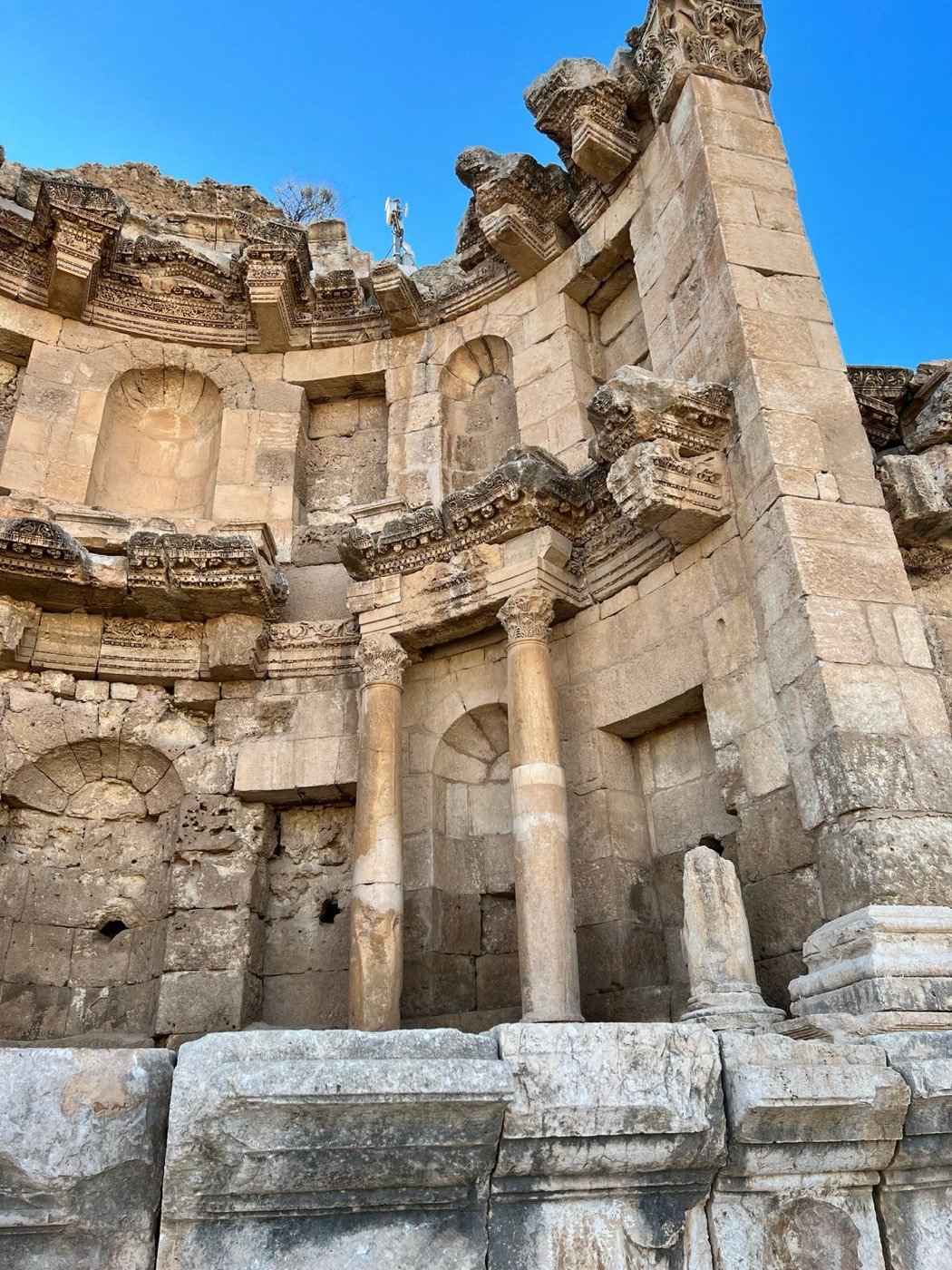
Jordan’s best historical sites are Petra, Jerash, the Baptism Site, Madaba’s Byzantine mosaics, Karak Castle, Umm ar-Rasas and As-Salt. Between them they span Nabataean, Roman, Byzantine, Crusader and Ottoman history, and four are UNESCO World Heritage Sites. Entry runs from free to about JOD 50, and most sit within two hours of Amman (prices as of 2026).
1. Petra
The rose-red capital of the Nabataeans, carved into cliffs from roughly the 4th century BCE as they grew rich on the incense trade. The Treasury is the famous facade, but the Colonnaded Street, Royal Tombs and Monastery matter just as much. UNESCO lists it on its World Heritage List.
- Cost: approximately JOD 50 for one day (as of 2026), or included in the Jordan Pass
- Getting there: about 3 hours from Amman by road; JETT runs one daily bus
- Best time: spring and autumn, entering at 6am opening
Our Petra history guide explains how the city worked, and the Petra hub covers where to stay. Petra tours include small-group and private guide options.
Local tip: Petra by Night runs Sunday to Thursday for JOD 30, with tickets sold at the visitor centre only.
2. Jerash
Jerash (ancient Gerasa) is one of the best-preserved Roman provincial cities anywhere. Hadrian’s Arch, built in 129-130 CE, leads to the Oval Plaza with its 56 Ionic columns, then the 800 m Cardo Maximus where chariot ruts still mark the paving.
- Cost: included in the Jordan Pass; check the gate for the current single entry fee
- Getting there: 48 km north of Amman, about an hour by car
- Time needed: half a day
Read the Jerash Roman city guide, the Jerash hub and our Jerash day trip plan. For guides, see Jerash tours.
Local tip: arrive at opening to see the site before the tour buses.
3. Madaba and Its Byzantine Mosaics
Madaba is home to the 6th-century mosaic map of the Holy Land inside St George’s Church, thought to have used around two million tesserae. Workers uncovered it in 1894 during construction of the present church, and about a third survives.
- Cost: St George’s Church is free, with donations welcome
- Getting there: about 30 km south of Amman
- Also see: the Madaba Archaeological Park, five minutes away on foot
Our Byzantine mosaics guide links the Madaba sites to Mount Nebo and beyond, and Madaba tours cover them in a half-day.
4. Baptism Site (Al-Maghtas)
On the east bank of the River Jordan, about 9 km north of the Dead Sea, Al-Maghtas is the site identified by the Vatican as the likely place of Christ’s baptism. UNESCO inscribed it in 2015 (listing). Visitors see Byzantine church foundations, excavated baptism pools and Tell Mar Elias.
- Getting there: by car or tour from Amman or the Dead Sea resorts
- Visits: by guided shuttle tour from the visitor centre
Read the Baptism Site guide before you go, and consider Dead Sea tours that include it.
5. Karak Castle
A Crusader fortress built from 1142 by the Hospitallers, on a plateau 900 m above sea level. This is where Reynald de Châtillon was based, and Saladin besieged it in 1183 and 1184 before it fell in 1189. The vaulted lower galleries are the highlight.
- Cost: approximately JOD 3, open daily 8am to 5pm (as of 2026)
- Getting there: 120 km south of Amman; JETT buses run from the South Bus Station (JOD 2.5)
- Time needed: around two hours
See our Crusader castles guide, the Karak hub and Karak tours.
6. Umm ar-Rasas
Jordan’s quiet UNESCO site (listing, inscribed 2004) sits in farmland south-east of Madaba. The Church of St Stephen has a mosaic dated by inscription to 785 CE, and a roughly 14 m stylite tower stands to the north.
- Cost: around JOD 3 has been quoted; confirm locally
- Getting there: about an hour from Madaba, so a car or driver helps
- Time needed: 1.5 to 2 hours
Our Umm ar-Rasas guide has the full visit plan.
Local tip: the mosaic is under a protective shelter with a raised walkway, so look closely at the figures, since many were deliberately damaged.
7. As-Salt
A living Ottoman-era hill town, 30 km north-west of Amman, listed by UNESCO in July 2021. Merchants’ houses, Hammam Street and the old bazaar are the draw, along with Abu Jaber House, which now holds the historical museum.
- Cost: walking the town is free; museum fees vary, so confirm locally
- Lunch: simple restaurants near the bazaar run roughly JOD 4-8 per person (as of 2026)
Read our As-Salt guide for the route.
Local tip: start early in the bazaar and work uphill so the climb comes while you are fresh. Withdraw cash in Amman first, as card payment is patchy.
How to Combine These Sites
Jordan is small enough that a week of sightseeing can cover more than 2,000 years of history without long transfers. Fees change, so confirm them at the gate, and carry small JOD notes for entry, tea and taxis. Wear good shoes, because most sites involve uneven stone, and bring water and sun protection in every season but winter.
Group by direction. Jerash and As-Salt suit day trips north from Amman. Madaba, Umm ar-Rasas and the Baptism Site form a western-southern loop. Karak and Petra lie on the King’s Highway. The Jordan Pass guide shows what saves money, and the Jordan Tourism Board lists official opening details. Browse Jordan tours for multi-site packages.