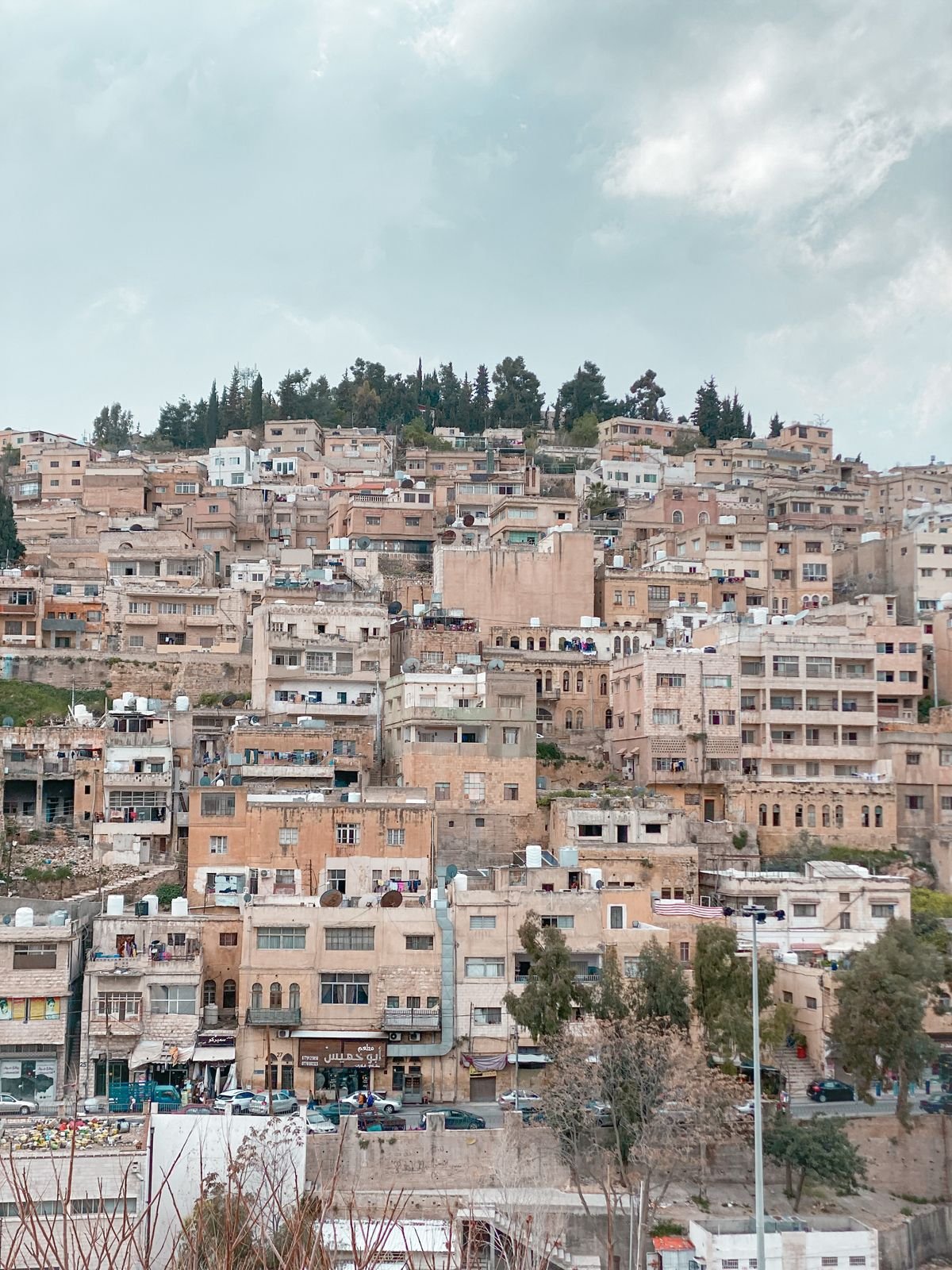
As-Salt is the town most visitors to Jordan drive past on the way to somewhere else. It sits on three hills about 30 km north-west of Amman, and since July 2021 it has been a UNESCO World Heritage Site, listed as “As-Salt: The Place of Tolerance and Urban Hospitality”. That long title describes the town well. This is not a ruin or a museum piece; it is a living town of around 100,000 people whose late Ottoman centre survives almost intact, and it makes one of the easiest half-day trips from the capital.
What UNESCO Actually Protected
The listing covers the old core, roughly 650 buildings, mostly dating from about 1860 to 1930. In that period As-Salt was the main trading hub between the Jordan Valley, the eastern desert and the cities of Nablus and Damascus. Merchant families from Nablus and Damascus settled here alongside local Bedouin and Christian and Muslim Salti families, and they built the houses that now define the skyline: pale yellow limestone, tall arched windows, shaded courtyards and flat roofs that step down the slope so that no house blocks its neighbour’s view.
UNESCO’s reasoning is partly architectural and partly social. Churches and mosques stand within a short walk of each other, merchants’ houses opened onto shared stairways, and the town built a reputation for hosting travellers. Official information is on the Jordan Tourism Board As-Salt page.
What to See
Hammam Street and the old bazaar. The lower town is a working market. Walk Hammam Street for the best concentration of Ottoman facades, then browse the covered lanes for sweets, spices and household goods. This is where locals shop, so prices are fair and nobody is selling souvenirs.
Abu Jaber House and the Salt Historical Museum. One of the grandest merchant houses, built in the late 19th century, now holds the town’s historical museum. The rooms show how a wealthy Salti family lived, with period furniture, photographs and tools. The Jordan Pass is reported to cover entry at some Salt museums; confirm current admission locally, as fees and coverage change.
Salt Archaeological Museum. A smaller collection of finds from the Balqa region, useful for context before you climb the town.
The stair streets. As-Salt is a town of staircases. Climb from the bazaar towards the upper quarters for views across the roofs and the valley beyond. Wear flat shoes; the stone steps are polished and steep.
The hilltop citadel site. Little remains of the medieval fortress, but the summit gives the clearest view of how the town fills the valley between its hills.
Why As-Salt Feels Different
Many Jordan sites ask you to imagine the past. As-Salt asks you to walk through it while the present carries on around you. Children play on the steps of merchant houses, bakers open at dawn, and church bells and the call to prayer share the same afternoon air. That everyday coexistence is exactly what UNESCO meant by tolerance and hospitality, and it is the best reason to come here rather than simply tick off another heritage listing.
The wealth came from trade. Salti merchants controlled routes between the Jordan Valley and the interior, and the town was the main administrative centre of the region before Amman rose in the 1920s. When the Hejaz railway and later the new capital shifted power east, As-Salt stayed largely unchanged, which is why so many houses survive. Restoration work since the 2000s, including the rehabilitation of the Hammam Street facades, helped secure the UNESCO listing.
Tips for Visiting
Start early in the bazaar and work uphill, so the climb comes while you are fresh. Carry small notes in JOD for sweets and coffee. Ask before photographing people, especially women and shopkeepers, and use the rooftop cafes for a break from the stairs. Wi-fi and card payment are patchy in the old town, so withdraw cash in Amman. In winter the hills can be wet and cool, so bring a light jacket.
Food and Pauses
Salt is known across Jordan for its sweets and for traditional mansaf, and local cafes around the main square serve strong coffee and tea. Plan lunch here rather than in Amman: simple restaurants near the bazaar serve grilled meat, hummus and fresh bread for roughly JOD 4 to 8 per person as of 2026. For a wider look at the cuisine, see our Jordanian food guide.
Getting There and Timing
- From Amman: about 30 km, 30 to 45 minutes by car. Minibuses leave from the Abdali area for well under JOD 1; ask for “Salt”. A taxi costs approximately JOD 8 to 12 one way.
- By rental car: a rental car lets you pair As-Salt with the Dead Sea, Madaba or Jerash in a single day. Parking near the bazaar fills early; use the lots on the lower edge of town.
- Guided option: if you want the family stories behind the houses, book a guided tour from Amman that includes As-Salt, or arrange a local walking guide on arrival.
- Where to stay: most visitors base themselves in the capital; browse hotels in Amman and day-trip out.
Combining As-Salt With Other Stops
As-Salt pairs naturally with the Dead Sea on the same route, with the Baptism Site in the Jordan Valley, or with the Roman ruins at Jerash. For a full list of options from the capital, see day trips from Amman. Dress modestly, particularly around churches and mosques, and expect friendly curiosity from locals rather than a tourist scene.