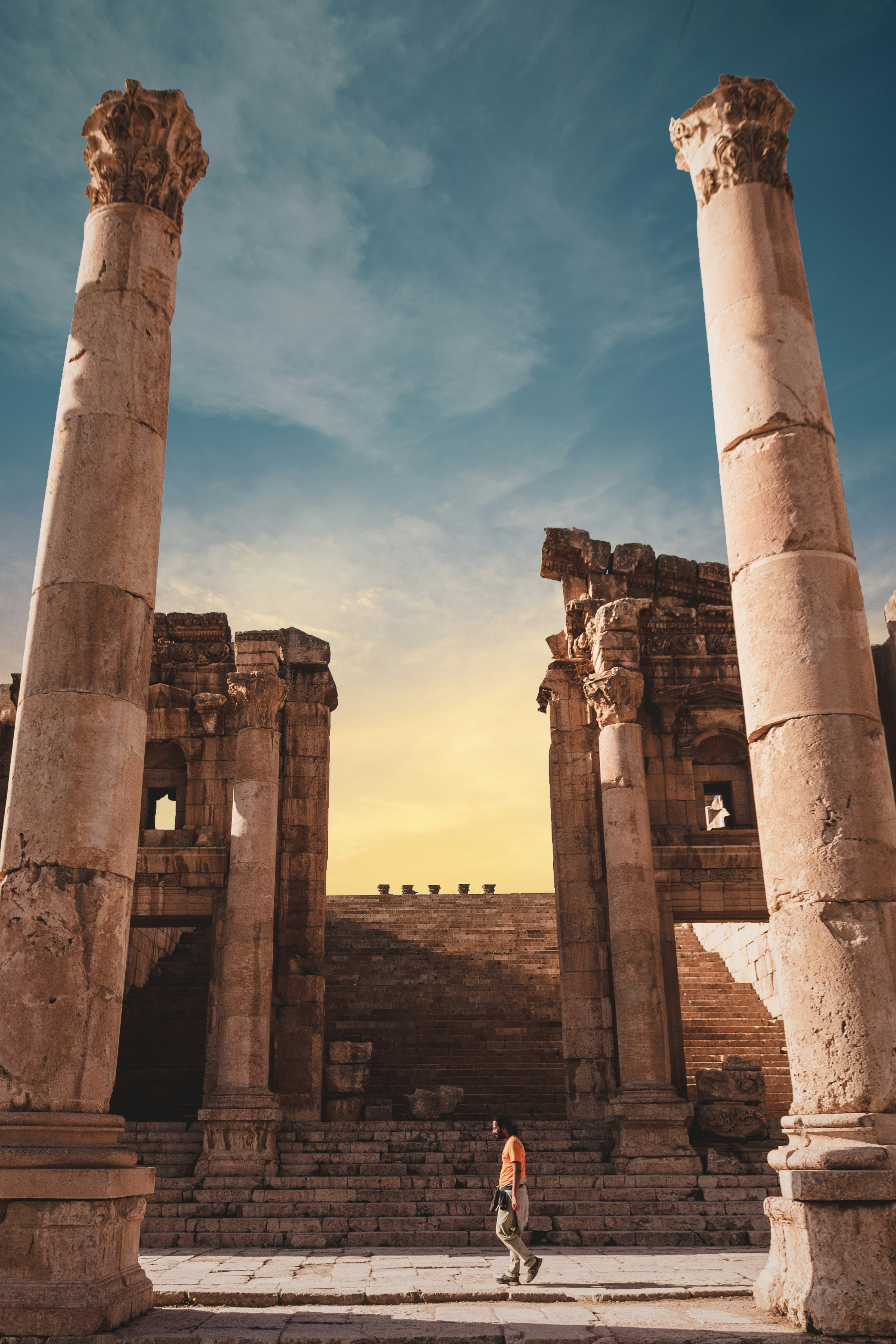
Jerash sits 50 km north of Amman and holds one of the most intact Roman provincial cities outside Italy. The site covers nearly 800 acres and includes two theatres, a hippodrome, several temples, colonnaded streets, and forum plazas — all substantially standing and walkable. A day trip from Amman is straightforward, costs relatively little, and delivers a full archaeology day without the distances involved in reaching Petra or Wadi Rum.
Book a Jerash Tour
| Tour | Duration | From | Book |
|---|---|---|---|
| Jerash Half-Day Tour from Amman (transport + guide) | 5 hrs | $63/person | Book → |
| Jerash + Ajloun Castle Full-Day Tour | 8 hrs | $50/person | Book → |
| All Jerash tours | — | — | Browse on GYG |
Prices verified from TripAdvisor / GetYourGuide as of 2026. Jerash entry (approx JOD 10) included in most guided tours; confirm when booking.
For a guided experience that handles transport and commentary, tours to Jerash from Amman are available from around USD 35 per person including entry.
Getting from Amman to Jerash
By taxi or private car: The most convenient option. A return taxi from central Amman (including 2-3 hours waiting time at the site) typically costs JD 25-35 (approximately USD 35-50) depending on your negotiation. Agree the total price before departing. Ride apps including Careem and Uber are active in Amman; request a vehicle with a driver willing to wait.
By JETT or public bus: Buses to Jerash depart from Amman’s North Bus Station (Tabarbour), reachable by taxi from central Amman. The fare is approximately JD 0.70 per person (around USD 1) each way. Buses run frequently through mid-morning and tail off in the afternoon, so plan to catch an outbound bus by 9:00 and a return bus no later than 15:00 to be safe. Journey time is 1 hour to 1 hour 15 minutes.
By organised tour: Most Amman hotels and tour operators offer Jerash day trips, often combined with Ajloun Castle. Prices start at around USD 35-55 per person for a guided group tour including entry and transport.
By rental car: The drive from Amman to Jerash on Highway 35 is uncomplicated. Parking is available near the main entrance. Car hire from Amman starts at approximately USD 25-35 per day; see car hire options for Jordan.
Entry Fees and Opening Hours
- Entry fee (non-Jordanian adults): JD 10 per person (approximately USD 14) as of 2026
- Jordan Pass holders: Jerash entry is included — no separate ticket needed
- Jordanian nationals: JD 1
- Children under 12: Free
Opening hours:
- April to September: 08:00 to 18:00 (last entry 17:30)
- October to March: 08:00 to 17:00 (last entry 16:30)
The site is open daily, including public holidays. Arrive early in summer — the colonnaded streets offer little shade and midday heat between June and August is intense. Mornings from 08:00 to 11:00 are cooler and less crowded.
What to See and in What Order
The main entrance is near Hadrian’s Arch and the Hippodrome. A logical walking route from the southern end to the northern end and back covers the main monuments without backtracking.
Hadrian’s Arch
The triumphal arch built for Emperor Hadrian’s visit in 129 AD stands just south of the main entrance. At 13 metres high it is one of the most photogenic structures on the site. Start here before entering the main ticket gate.
South Gate and Oval Plaza
The Oval Plaza (Forum) is the first major structure inside the entrance — an elliptical colonnaded space roughly 90 by 80 metres, unique in the Roman world for its unusual shape. The Ionic columns around the perimeter are largely intact. This is the main gathering point for tour groups; arrive early to photograph it without crowds.
Cardo Maximus (Colonnaded Street)
The main north-south street of ancient Gerasa runs for nearly 600 metres and is lined by column bases, some with their capitals still in place. The paving stones show deep wheel ruts from Roman-era carts. This is the spine of the site — most of the major monuments branch off from it.
South Theatre
A well-preserved Roman theatre seating approximately 3,000 spectators. The stage wall (scaenae frons) is substantially complete. Climb to the upper tiers for a view across the site. The acoustics are excellent; local vendors sometimes demonstrate this for visitors.
Temple of Zeus
Set on a high podium above the Oval Plaza, the Temple of Zeus dates to the 2nd century AD. The views from the terrace across the forum and the surrounding hills are among the best on the site.
Nymphaeum
A large decorative public fountain on the Cardo, built around 191 AD. The two-storey facade retains much of its original detail. It supplied water to the city from an aqueduct system.
Temple of Artemis
The most commanding structure on the site — a large temple dedicated to the patron goddess of Gerasa. Six of the original twelve Corinthian columns are still standing, some over 12 metres tall. The slight sway visible in the columns on windy days is due to their drum construction rather than instability.
North Theatre
Smaller than the South Theatre, seating around 800 people. Better preserved in some areas, with original marble seating sections surviving. Less visited than the South Theatre and worth the walk north.
Byzantine Churches
Several Byzantine-era churches occupy the central part of the site, including the Cathedral and the Church of St Theodore. Mosaic floors are visible in several churches — the quality is inconsistent, but the context (Roman temples converted or built over by Christian structures) illustrates the long occupation of the site.
2 Hours vs Half Day vs Full Day
2 hours: Oval Plaza, Cardo Maximus, South Theatre, Temple of Zeus, a partial walk up the Cardo to the Nymphaeum. You will not reach the Temple of Artemis or North Theatre. This schedule suits visitors arriving late or combining with another site (such as Ajloun Castle, 45 minutes further northwest).
Half day (3-4 hours): All of the above plus Temple of Artemis, North Theatre, and the Byzantine churches. This is the standard tourist visit and covers everything that most people photograph. Adequate time without exhaustion.
Full day (5+ hours): Includes the Jerash Archaeological Museum at the site (small, free with entry), the South Decumanus, remaining church complexes, and time to sit and absorb the scale of the place. The Hippodrome at the southern entrance hosts chariot racing re-enactments at specific times — check the schedule at the ticket office.
Practical Notes
Food and water: A cafe and several small food stalls operate near the south entrance and within the site. Prices are tourist-level (approximately JD 3-5 for a main). Carry at least 1.5 litres of water per person in warm months. Midday temperatures in July and August regularly reach 32-36 degrees Celsius.
Shade: Limited within the site. A sun hat is strongly recommended from April through October.
Footwear: The Cardo cobblestones are uneven and some sections require stepping over rubble. Closed-toe shoes with grip are better than sandals.
Crowds: Busiest on Fridays (local visitors) and on days when cruise groups visit from Aqaba. Least crowded Tuesday to Thursday mornings.
Combined trips: Ajloun Castle (a 12th-century Islamic fortification) is 45 minutes northwest and makes a logical afternoon addition to a Jerash morning. Umm Qais, another Roman site near the Syrian border, is 1 hour further north and too far for most day-trip combinations.
Accessibility: The Oval Plaza and lower Cardo are manageable for visitors with limited mobility. The Temple of Artemis and North Theatre involve steeper climbs on uneven surfaces and are not wheelchair accessible.
Jerash is the most complete ancient city in Jordan and one of the better-preserved Roman sites in the Middle East. At JD 10 entry and under an hour from Amman, the effort-to-reward ratio is among the best of any single-day excursion in the country.