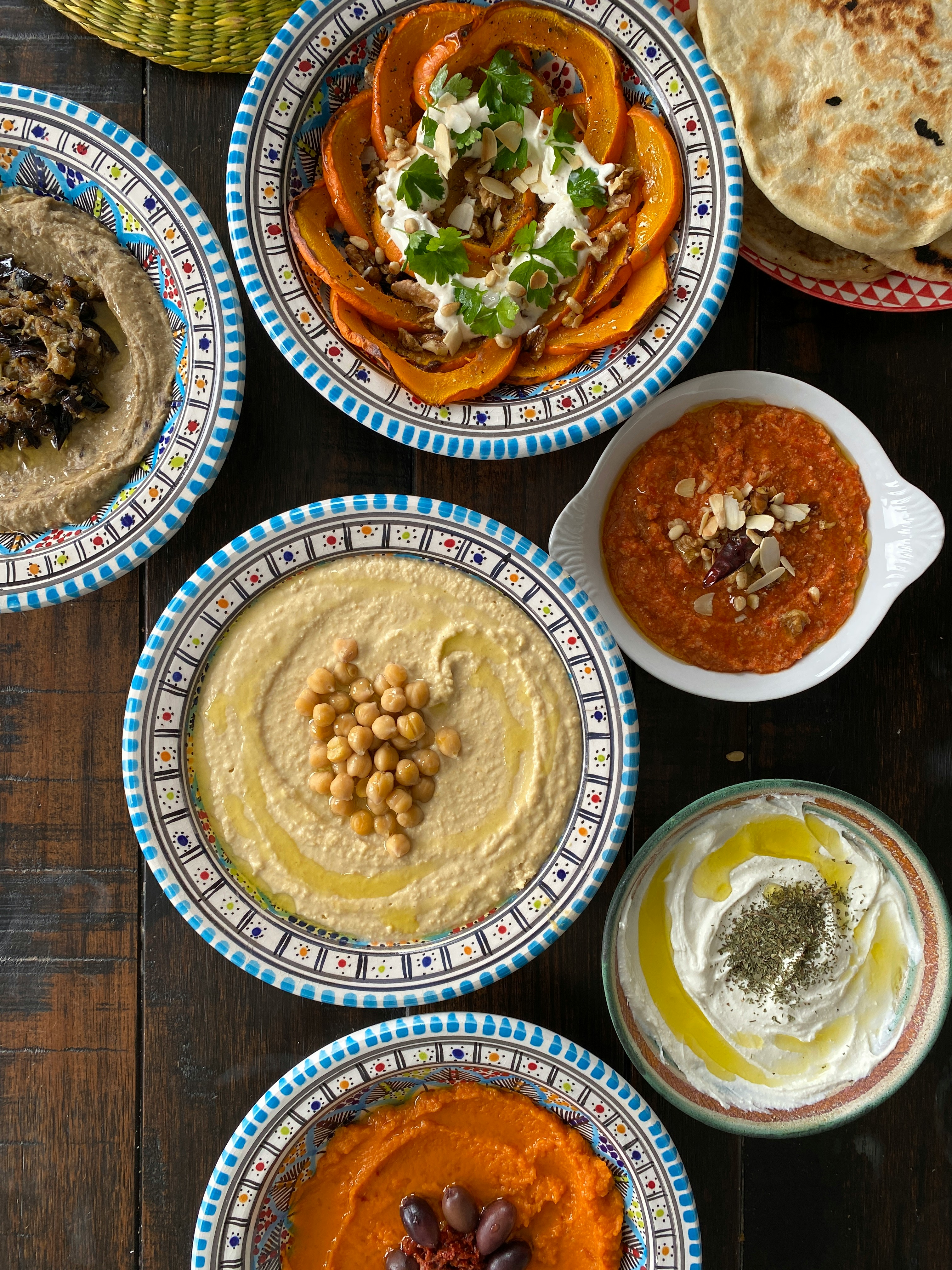
Amman’s food scene is the most varied in Jordan and, by regional standards, genuinely interesting. The city draws on Palestinian, Levantine, and Bedouin cooking traditions while absorbing influences from the large expat communities - Iraqi, Syrian, Egyptian, and increasingly Western - that have made it their home. The result is a capital where a meal at a legendary downtown falafel counter and a reservation at a creative modern Jordanian restaurant can both be justified on the same trip, and both justify their price.
How Jordanians Eat
Understanding the rhythms of eating in Amman helps you fit into the city rather than fight it. Breakfast is taken seriously. The full Jordanian spread - falafel, hummus, labneh, za’atar, eggs, and bread - is a proper morning meal eaten in cafes and at home. Most local breakfast spots open by 07:00 and are busy by 08:30.
Lunch is traditionally the main meal, taken around 13:00–15:00 and often a larger, more elaborate affair than dinner. Family lunches on Fridays in particular can run for hours. Many mid-range restaurants offer better-value set lunches than their evening menus.
Dinner in restaurants tends to run late by Northern European standards - arriving at 20:00 is considered a normal dinner time; 21:00 is not unusual. Cafes and street food operate until late, often well past midnight in central areas.
Downtown: Cheap, Historic, and Worth It
Hashem Restaurant - the most famous address in Amman’s food history - has operated in the same downtown location since 1952. The menu has not changed meaningfully in that time: falafel, hummus, ful medames (slow-cooked fava beans), and flatbread. The falafel is made fresh throughout the day, and the hummus is better than the majority of what passes for hummus in the city’s more expensive restaurants. Expect to pay approximately JOD 2–4 per person as of 2026. No reservations, no menu, no nonsense. Find a seat when one opens and order at the counter.
Al-Quds Restaurant, a short walk from Hashem, runs a close parallel - similar menu, similar prices, similarly long history. Worth trying if Hashem has a queue too long to join.
Reem Cafeteria is the downtown standard for shawarma - chicken or meat, fresh off the spit, in flatbread with garlic sauce and pickles. A wrap costs approximately JOD 1–2.50 as of 2026. Good for a quick lunch between the Citadel and the museum.
Habibah Sweets, near the King Hussein Mosque, is the most famous knafeh source in Amman. The shop prepares large rounds of the dessert continuously through the day and serves it hot, in portions, at approximately JOD 1.50 as of 2026. There is usually a queue; it moves quickly.
Rainbow Street and Jabal Amman: The Main Restaurant District
The First to Third Circles area, and Rainbow Street in particular, is where Amman’s most consistent mid-range and upscale restaurants are concentrated.
Sufra is set in a restored early-20th-century stone house and is the most recommended traditional Jordanian restaurant in the city. Mansaf is prepared properly, with jameed sauce made from genuine dried fermented yoghurt. Mezze are well-executed. Grilled meats are consistently good. Budget approximately JOD 12–20 per person as of 2026. Reservations are recommended on Thursday and Friday evenings, when the place fills quickly.
Fakhreldin is a longer-established Lebanese-Jordanian restaurant in the Jabal Amman area, serving the city’s professional and diplomatic community for decades. The mezze spread is extensive and reliable; grilled whole fish and kebbeh dishes are the kitchen’s strengths. Prices run approximately JOD 15–25 per person. More formal in atmosphere than Sufra.
Wild Jordan Café is operated by the Royal Society for the Conservation of Nature. The menu uses Jordanian ingredients - locally sourced olive oils, dried herbs from the Dana nature reserve, regional cheeses - and the terrace has one of the better city views available at this price range. Prices run approximately JOD 8–15 per person. Good for a working lunch or a light dinner.
Beit Sitti offers a cooking class combined with dinner in a traditional house in the Jabal al-Weibdeh neighbourhood. Guests prepare a full Jordanian meal together and eat it at a communal table. The experience costs approximately JOD 35–45 per person as of 2026 and needs to be booked in advance. More engaging than a standard restaurant visit. For guided food tours and culinary experiences, browse Amman food tours and day trips.
Abdali District: Modern and International
The Abdali Boulevard development has attracted a concentration of international and modern restaurants. Quality varies, but the area is useful for:
- International fast food chains for familiar fallbacks
- Lebanese chains (Leila, Casper & Gambini’s) that serve reliable regional food
- Hotel restaurants in the Fairmont and adjacent properties, which run to JOD 30–50 per person
Abdali dining is more expensive than Rainbow Street for equivalent quality and lacks the neighbourhood character of the older districts.
Coffee Shops for Working
Books@Café at the top of Rainbow Street is the most atmospheric working space in the city - books, a terrace, good coffee, and a clientele that makes noise but not the aggressive kind. Flat whites and Americanos run approximately JOD 3–4. Serves food and alcohol. Open until late.
Rumi Café in Jabal al-Weibdeh is quieter and more concentrated on coffee - Turkish-style and filter - with a small food menu. Good Wi-Fi and a neighbourhood feel.
Darat al-Funun café (in the arts centre of the same name on the hill above downtown) is an underused option - good coffee in a garden surrounded by art, with one of the more distinctive settings of any cafe in the city. Open during gallery hours.
Market Shopping
Souk Jara runs on Friday mornings from approximately May to October along Rainbow Street. Independent vendors sell organic vegetables, prepared foods (breads, dips, pickled goods), honey, herbs, and handmade crafts. Busy and social; arrive by 10:00 for the best produce.
For regular grocery shopping, Safeway (5th Circle) and Cozmo (multiple branches in West Amman) are the most reliable supermarkets for imported products, fresh produce, and specialty ingredients including plant milks. Downtown markets sell cheaper fruit and vegetables but with less consistency.
Price Guide
| Setting | Cost per person (as of 2026) |
|---|---|
| Street food / falafel stand | JOD 1–3 |
| Local cafe breakfast | JOD 3–6 |
| Downtown sit-down restaurant | JOD 4–8 |
| Mid-range Rainbow Street restaurant | JOD 10–20 |
| Upscale restaurant (Abdali / hotel) | JOD 25–40 |
| Cooking class experience | JOD 35–45 |
Ramadan Practicalities
During Ramadan, most downtown restaurants and cheap cafes close during daylight hours. Larger restaurants in West Amman and hotel restaurants typically remain open for non-fasting guests, though hours may be reduced. The iftar meal at sunset is the most communal eating experience in the Jordanian calendar - restaurants that are open for iftar are often busy and festive, and many serve special seasonal dishes not available at other times of year.
Book an Amman Food Tour
Amman has more dedicated food tour operators than any other city in Jordan, and a guided circuit covers ground in two to three hours that would take an independent visitor most of a day to find. Operators typically move between Hashem Restaurant in the old downtown for the falafel counter, Habibah Sweets for fresh knafeh, a neighbourhood hummus café, and a street shawarma vendor - with a guide providing context on how each dish fits into daily Jordanian life and pointing you toward the vendors that most visitors walk straight past. Browse food tours and walking experiences in Amman for current operators and prices.
Plan Your Jordan Trip
Before leaving, pick up a Jordan eSIM from Airalo - set up before arrival, no SIM swapping at the airport. VisitorsCoverage travel insurance covers medical emergencies, trip cancellation, and evacuation for Jordan trips.
See Also
- Where to Eat in Amman: Best Restaurants and Street Food
- Jordanian Cuisine: A Guide to the National Dishes
- Vegan Eating in Amman
- Best Places to Stay in Amman
- Things to Do in Amman
- Amman City Guide
- 3 Days in Amman Itinerary
Plan Your Stay
Find hotels in Amman - search accommodation across all budgets in Amman.