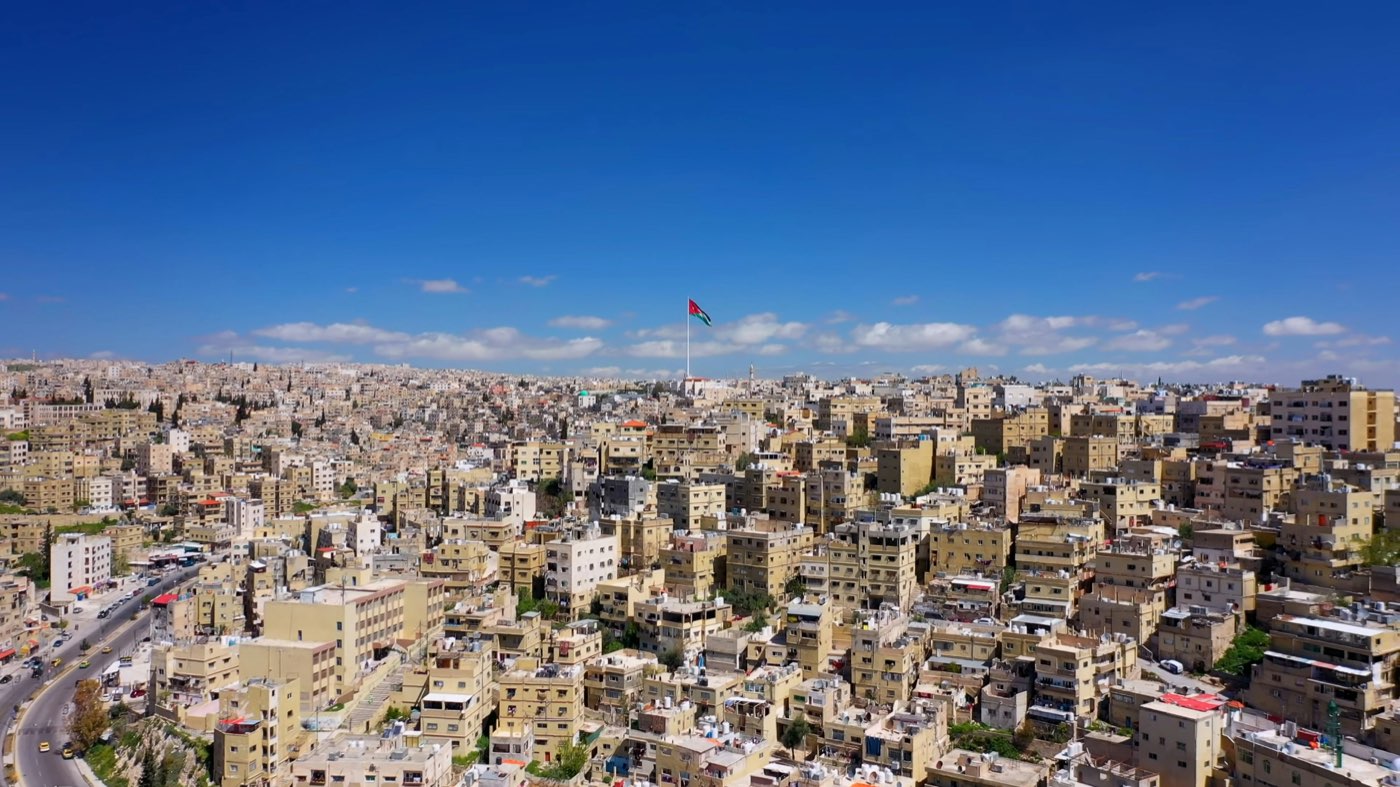
Amman has more to offer than most visitors allow for. The city functions primarily as an arrival hub for travellers heading to Petra and Wadi Rum, which means the citadel hill is often quieter than it deserves to be, and the cafe-lined streets of Jabal Amman rarely overcrowded. Two full days is the minimum needed to cover the main sights; three days gives you time to breathe.
Book an Amman Tour
| Tour | Duration | From | Book |
|---|---|---|---|
| Amman Downtown Walking & Food Tour | 3–4 hrs | $25/person | Book → |
| Amman City Tour (Citadel, Roman Theatre, Souks) | 5 hrs | $46/person | Book → |
| Amman + Jerash Full-Day | 10 hrs | $79/person | Book → |
| All Amman tours | - | - | Browse on GYG |
Prices verified from TripAdvisor / GetYourGuide as of 2026. Entry fees (Citadel ~JOD 3, Roman Theatre ~JOD 3) are typically separate unless stated.
Roman Citadel (Jabal al-Qal’a)
The hill that rises above downtown Amman has been continuously occupied for at least eight thousand years. Today the site is open to visitors and holds the most concentrated collection of ruins in the city.
The Temple of Hercules, built during the reign of Marcus Aurelius in the 2nd century AD, retains two standing columns and a colossal stone hand - all that remains of what was once a statue estimated at around 13 metres tall. The scale of the hand alone is striking. The Umayyad Palace complex spreads across a larger footprint and includes a restored audience hall with a cruciform floor plan and a reconstructed dome. Walking between the two reveals how thoroughly different civilisations layered their presence on the same hill.
Entry costs approximately JOD 3 as of 2026. Opening hours are daily 08:00–19:00 in summer (April through October) and 08:00–17:00 in winter. A Jordan Pass covers admission and saves money if you are visiting Petra.
The views from the ramparts - across the Roman theatre below and out over the apartment-covered hills in every direction - are among the best in the city.
Jordan Museum
A ten-minute walk from the Citadel, the Jordan Museum is the strongest single introduction to Jordanian history available anywhere in the country. The permanent collection moves chronologically from prehistoric tools through Nabataean civilisation, Roman occupation, Byzantine Christianity, the Islamic dynasties, and into the modern Hashemite kingdom.
The standout exhibits are the Dead Sea Scrolls - some of the oldest surviving biblical manuscripts - displayed in a dedicated gallery, and the copper scrolls recovered from Qumran, which record an enigmatic list of hidden treasures. Both require time to read carefully; the museum does not rush you through.
Entry costs approximately JOD 3 as of 2026. Open Tuesday to Sunday 10:00–17:00, closed Mondays. Allow two to three hours minimum.
Downtown: The Roman Theatre and Al-Husseini Mosque
The Roman theatre at the heart of downtown Amman seats six thousand and still hosts occasional concerts and events. Entry is approximately JOD 2 as of 2026 and includes the Folklore Museum and Popular Life Museum in the adjacent buildings.
The Al-Husseini Mosque, built in 1924 on the site of a much earlier mosque, fronts the central square. It is one of Amman’s oldest surviving religious buildings and remains an active place of worship. Non-Muslim visitors are welcome outside the five daily prayer times. Dress modestly - loose-fitting clothing covering arms and legs - and remove shoes at the entrance. Entry is free.
The souks surrounding the mosque are worth an hour of unstructured wandering: spice merchants, gold shops, shoe stalls, and mobile phone repair kiosks occupy the same narrow lanes they have for generations. This is the oldest commercial district in the city and has a density and texture that the newer Abdali malls cannot replicate.
National Gallery of Fine Arts
Located in the Shmeisani neighbourhood, the National Gallery holds a permanent collection of modern and contemporary art from across the Arab and Islamic world. The building itself - a converted Ottoman-era villa - is attractive, and the ground floor cafe is a pleasant place to sit. Entry is approximately JOD 3 as of 2026. Open Tuesday to Sunday 09:00–17:00.
Rainbow Street and Jabal al-Weibdeh
Rainbow Street runs along the ridge of Jabal Amman, lined with independent cafes, bookshops, clothing boutiques, and restaurants in renovated early-20th-century stone houses. The street is most active from around 18:00 onward, when local residents take their evening stroll and every cafe fills up. Books@Café at the top of the hill is a well-established meeting point - liberal in atmosphere, with a terrace view over the city and a good selection of books and magazines alongside its drinks menu.
Jabal al-Weibdeh, the adjacent hill, has developed into Amman’s gallery district. Several small independent art spaces occupy former residential buildings here; most are free to enter and have irregular hours depending on current exhibitions. The neighbourhood has a quieter, more residential feel than Rainbow Street and is worth an afternoon walk.
Wild Jordan Nature Shop and Café
Run by the Royal Society for the Conservation of Nature, Wild Jordan is located on the edge of Jabal Amman with a terrace that overlooks the city valley. The café serves food and drinks made with Jordanian ingredients - local dried herbs, regional olive oils, za’atar, and seasonal produce. Prices run approximately JOD 8–15 per person. The attached shop sells fair-trade products from Jordan’s nature reserves, including soap, dried food, and handmade goods. Profits go directly to conservation.
Nightlife
Amman’s nightlife is quieter than most Western capitals but more active than popular perception suggests. Books@Café on Rainbow Street has a late-evening crowd and serves wine and spirits alongside coffee. Copas y Tapas, a wine bar on the First Circle, is a reliable choice for drinks in a low-key setting with a good selection of regional wines. Most venues close between midnight and 01:00; the city is not a late-night destination.
Day Trips from Amman
Jerash - 50 km north, approximately 1 hour by car or a 45-minute minibus from Tabarbour station. The most complete Roman city in the Middle East outside Italy, with intact colonnaded streets, temples, and theatres. Entry approximately JOD 10 as of 2026.
Dead Sea - approximately 60 km west, 1 hour by car. The beach resort areas are best accessed with your own vehicle or a private taxi (agree the fare in advance, expect JOD 20–30 round trip). Public minibuses run to the Sweimeh area.
Madaba - 30 km south, approximately 40 minutes. Known for the 6th-century Byzantine mosaic map of the Holy Land set into the floor of St. George’s Church. Entry approximately JOD 2. Easy to combine with a visit to Mount Nebo (a further 10 km). To join a guided Amman city tour or book a day excursion to Jerash or the Dead Sea, browse Amman tours and day trips.
Search hotels in Amman on Booking.com