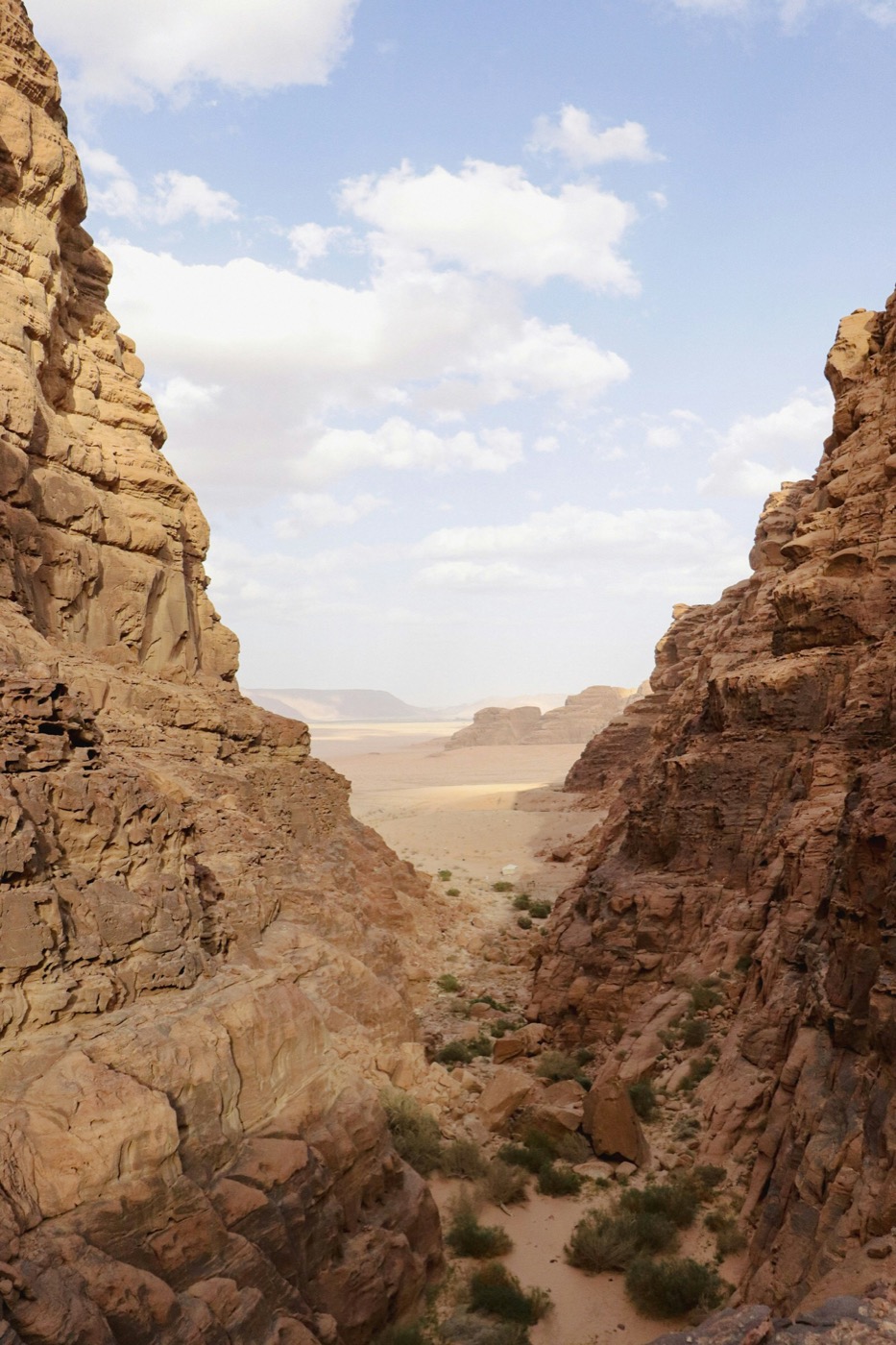
On 19 July 1917, a column of Arab irregular fighters and their British liaison officer rode into Wadi Rum after capturing the port of Aqaba from the Ottoman forces that had held it. The British officer, Thomas Edward Lawrence - then 29 years old, a former Oxford archaeologist turned military intelligence operative - had been in the Hejaz desert for nine months. He described what he found in the valley in language that has attached itself to the landscape ever since: “vast, echoing and God-like.”
The Arab Revolt of 1916–1918 was one of the stranger military campaigns of the First World War. It was fought largely by camel across terrain that conventional military analysis considered impassable, directed by a combination of Hashemite Arab leadership and a handful of British and French advisors operating with significant autonomy from their respective high commands. Wadi Rum was not the campaign’s only base or its most strategically important location, but it was the one Lawrence wrote about most vividly, and it has become inseparable from the story of the revolt as a result.
The Arab Revolt: Context and Strategy
The Hashemite Sharif Hussein bin Ali, ruler of Mecca and custodian of the Islamic holy cities, launched his revolt against Ottoman rule in June 1916. The decision was partly driven by British promises - made in the Hussein-McMahon correspondence - of support for an independent Arab state in exchange for military cooperation against the Ottomans, who were at that point allied with Germany and Austro-Hungary against Britain, France, and Russia.
The strategic logic of the revolt from the British perspective was to tie down Ottoman forces in the Arabian Peninsula and Syria, disrupt the Hejaz Railway (the logistical lifeline connecting Damascus to the Ottoman positions in Arabia), and support a general advance by General Allenby’s Egyptian Expeditionary Force northward through Palestine.
Lawrence’s role evolved from intelligence liaison to something closer to operational planner and propagandist. He moved with Faisal bin Hussein’s forces, advised on targeting priorities, and participated directly in demolition raids on railway bridges and tracks. His talent for cross-desert movement - travelling by camel across routes that Ottoman commanders considered impractical - and his rapport with Bedouin fighters made him unusually effective as an irregular warfare coordinator.
Wadi Rum as a Military Base
Wadi Rum’s military utility in 1917–1918 was straightforward: it provided water (multiple springs, including what would later be named Lawrence’s Spring), grazing for camels, shade in the rock overhangs and cave systems of the sandstone massifs, and - critically - invisibility. The valley’s entrance from the desert is not obvious. Ottoman aerial reconnaissance, in its infancy, struggled to detect columns moving in the shadow of the rock pillars.
After the capture of Aqaba in July 1917 - achieved by attacking overland from the east, the direction Ottoman defences were not designed to resist - the Arab forces used Wadi Rum as a transit and staging point for operations north along the railway and east toward the Hejaz. Lawrence describes multiple passages through the valley in Seven Pillars of Wisdom, the memoir he drafted during the war and revised through the 1920s.
His description of his first entry into the valley is among the most quoted passages of English travel writing from the 20th century. He wrote of “red cliffs and boulders, the floor of the valley with its deep sand, unflawed, in the long views,” and of a landscape so extreme in scale that it felt theological rather than geographical. The theatrical quality of Wadi Rum - the vertical scale of the cliffs relative to the flat valley floor, the abrupt transitions between burning sand and solid rock - was precisely what made it effective as a base. It was not a comfortable place.
The Hejaz Railway Campaign
The most sustained military operation Lawrence coordinated from the Wadi Rum area was the sabotage campaign against the Hejaz Railway. The line ran roughly parallel to Wadi Rum, 30–50 kilometres to the east, passing through stations at Ma’an and Mudawwara. Lawrence and small teams of Arab fighters - typically with specialist British demolition experts - attacked bridges and culverts repeatedly through 1917 and 1918.
The sabotage was tactically effective but strategically limited. Ottoman repair crews restored damaged sections within days or weeks. The real impact was to force the Ottomans to garrison every significant stretch of the line, tying down troops who might otherwise have reinforced positions in Palestine. Lawrence understood this - his goal was not to destroy the railway permanently but to make its operation expensive enough to drain Ottoman resources.
The station at Wadi Rum itself - a small stone building that still stands near the entrance to the protected area - was captured briefly during the campaign. The locomotive shed and water tower adjacent to it are survivals of the Ottoman-era infrastructure that Lawrence was attacking.
Nabataean History in the Valley
Lawrence was not wrong to find Wadi Rum historically resonant, but the history he encountered was older than the Arab Revolt by millennia. The valley shows evidence of human occupation from the Neolithic period onward. The most visible pre-Islamic remains are Nabataean: inscriptions, petroglyphs, and a small temple at Rum Village that dates from the 1st century BCE.
The Nabataean inscriptions in Wadi Rum - hundreds of them carved into rock faces throughout the valley - include dedications to deities, caravan records, and personal names. They attest to the valley’s use as a way-station on the incense trade routes that the Nabataeans controlled from Petra. The same water sources that made the valley useful to Lawrence sustained Nabataean camels 2,000 years earlier.
Rock art in the valley predates the Nabataeans by thousands of years. Ibex hunting scenes, human figures, and geometric patterns at sites including Khazali Canyon were made by peoples whose identities and cultures remain largely unknown. The canyon itself - a narrow cleft in the rock with a stream bed that runs briefly after winter rains - contains some of the most accessible rock art in Wadi Rum.
UNESCO World Heritage and the Lawrence Legacy
Wadi Rum received UNESCO World Heritage status in 2011 as a combined cultural and natural site - one of relatively few sites to receive recognition for both categories simultaneously. The cultural significance acknowledged by UNESCO covers the rock art and Nabataean inscriptions alongside the historical associations with the Arab Revolt. The natural significance covers the geomorphology of the sandstone and granite massifs, the desert ecosystem, and the geological record visible in the rock strata.
The Lawrence connection has generated its own tourism infrastructure. Jeep tours routinely stop at Lawrence’s Spring, at Khazali Canyon, and at the inscriptions near the temple in Rum Village. The 1962 David Lean film - which won seven Academy Awards and introduced a global audience to the landscape - brought a second wave of recognition. Several subsequent films have used Wadi Rum as a location, including The Martian (2015), Rogue One (2016), and Dune (2021), exploiting the landscape’s otherworldly quality for science-fiction settings.
The Bedouin communities of Wadi Rum - primarily the Zalabia and Zalabiyya tribes - have lived in and around the valley for generations, predating the Arab Revolt and Lawrence’s passage. They manage the protected area’s tourism concessions today. The registration system that requires all tourist vehicles in the protected area to use licensed Bedouin guides and drivers was introduced partly to ensure that revenue from the Lawrence and film tourism remains within the community.
Visiting the Historical Sites
Wadi Rum’s historical sites are not separated from the general landscape - they are encountered throughout a standard jeep tour of the protected area. Lawrence’s Spring is a consistent stop on most tour itineraries. Khazali Canyon requires a short walk from the vehicle drop-off point. The Nabataean temple at Rum Village can be visited on arrival before entering the protected area.
The Wadi Rum Visitor Centre at Rum Village is the official entry point. Entry to the protected area costs approximately JOD 5 per person as of 2026. All visitors must enter with a registered Bedouin operator - independent vehicles are not permitted beyond the visitor centre. A standard half-day jeep tour (4 hours, covering Lawrence’s Spring, Khazali Canyon, the red sand dunes, and Burdah or Um Fruth rock bridges) costs approximately JOD 30–50 per person depending on group size and negotiation.
For visitors specifically interested in the Arab Revolt history, it is worth asking guides to include the Ottoman-era railway station and the Hejaz Railway ruins near Mudawwara in the itinerary. This requires a full day and a driver willing to extend beyond the standard tourist circuit; budget approximately JOD 80–100 for a full-day private jeep covering the extended route. Browse Wadi Rum jeep tours and desert experiences to compare operators before arriving.