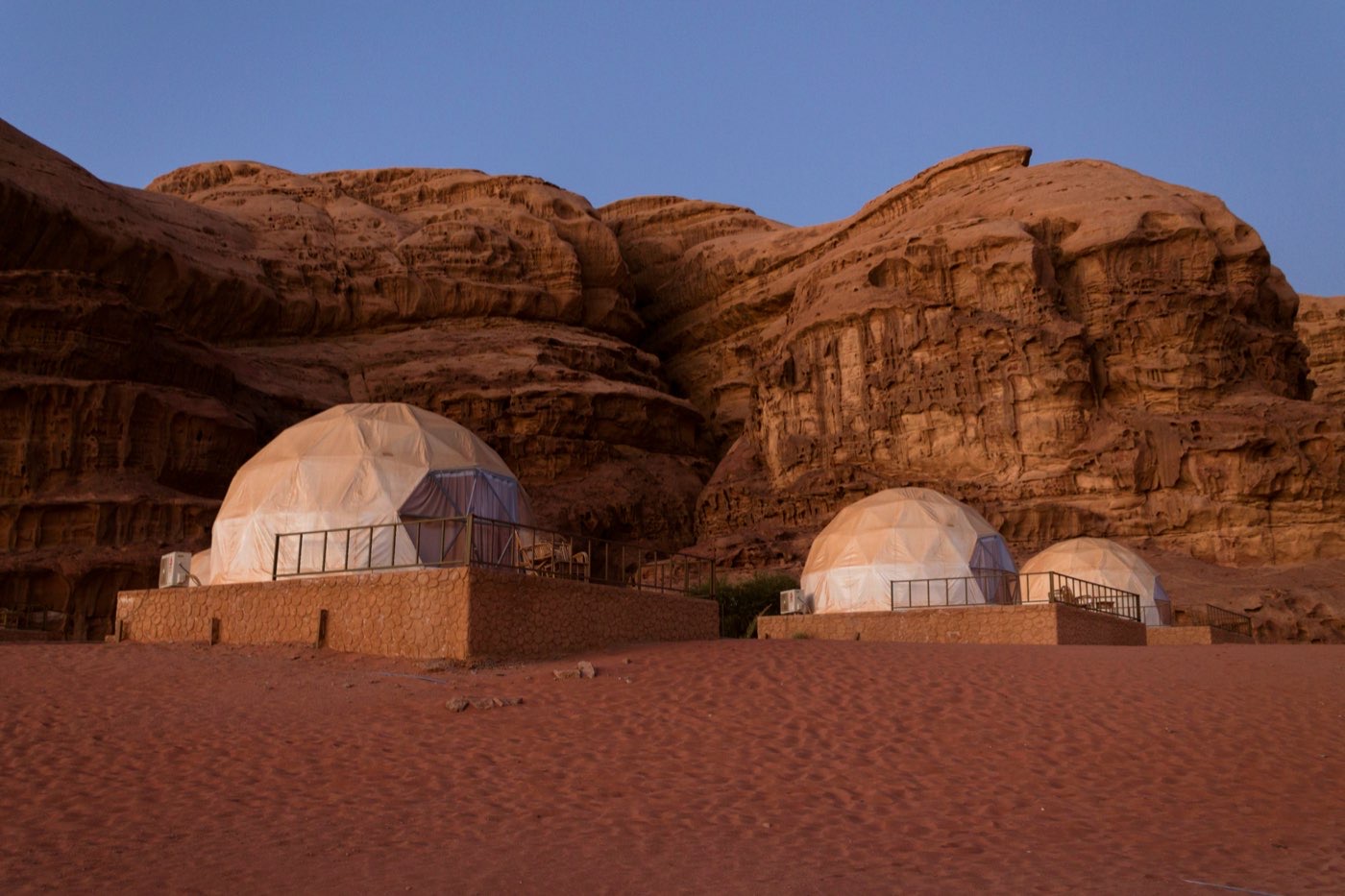
Wadi Rum is a desert at a scale that recalibrates your sense of space. The sandstone and granite massifs that rise from the valley floor stand 600–800 metres above the flat sand, and they are not the occasional dramatic formation that punctuates ordinary landscape - they are everywhere, pressing close and retreating, cutting the valley into a series of enclosed chambers and broad plains that change character as you move through them. The light, which shifts from pale gold to deep amber to purple in the hour around sunset, is what the photographs try to capture and routinely fail to represent.
The protected area covers 720 square kilometres of Jordanian desert in the far south of the country, between Aqaba and the Saudi border. UNESCO inscribed it as a World Heritage Site in 2011, recognising both its natural geology and its cultural significance - including Nabataean rock inscriptions, pre-Islamic petroglyphs, and its role in the 1917–1918 Arab Revolt. For logistics on getting there, where to stay, and best time to visit, see the Wadi Rum travel guide.
Day Trip vs Overnight: What to Expect
Day trip (half-day, 4 hours): Covers the main highlights in a single jeep circuit - Lawrence’s Spring, Khazali Canyon, the red sand dunes, and one or two rock bridges. You see the landscape in bright daylight and return to Rum Village by early afternoon. Cost: approximately JOD 25–40 per person depending on group size.
Day trip (full day, 8 hours): Extends to include more remote formations, longer canyon walks, and a sunset stop before returning. Cost: approximately JOD 50–70 per person. This is the best option for visitors who specifically cannot overnight but want a thorough impression.
Overnight: The camp drops you for the sunset, and you have the landscape to yourself once day-trip vehicles return to the visitor centre. After dark, the scale of the Milky Way over the desert is the defining experience for most visitors. The following morning, you wake to a sunrise that lights the eastern cliffs incrementally from orange to red. Most camps include a jeep tour in their overnight package. Cost: JOD 50–80 per person all-in for mid-range camps (tent accommodation, dinner, breakfast, jeep tour).
Two nights: Only practical for people who genuinely want to slow down in the desert - for hiking, photography, or simply sitting in the silence. The second day allows access to more remote formations and longer hiking routes that are rushed on a one-night schedule.
What to See: Main Sites
Lawrence’s Spring (Ain Lawrence): A natural freshwater spring in a cleft in the sandstone cliff, named for T.E. Lawrence who described visiting it in Seven Pillars of Wisdom. Nabataean inscriptions cover the surrounding rock face - the spring was a caravan stop long before Lawrence’s time. A modest pool collects below the spring. All jeep tours include this stop.
Khazali Canyon: A narrow cleft extending 100 metres into the cliff face, with pre-Islamic rock art - ibex hunting scenes, human figures, and Nabataean inscriptions - carved into the inner walls at various heights. The canyon requires you to squeeze through a narrow entrance; the interior opens enough to move freely. Sections of rock art date to thousands of years BCE. One of the most immediately impressive stops on the standard tour.
Red Sand Dunes: A field of fine red sand that accumulates against the base of one of the larger massifs. The dunes are accessible on foot from the vehicle - the climb to the top takes 10–15 minutes. Views from the dune crest extend across a wide stretch of the valley. A consistent visitor favourite, particularly for late-afternoon photography.
Um Fruth Rock Bridge: A natural sandstone arch that can be climbed - the path goes up one side and down the other, a 15-minute exercise in scrambling over smooth rock. The views from the top of the arch across the surrounding desert are excellent. A second, more challenging arch (Burdah Rock Bridge) requires a longer climb and should only be attempted by those comfortable with exposed scrambling; allow an extra 1.5–2 hours.
Burdah Rock Bridge: The largest natural arch in Wadi Rum, sitting at around 35 metres height above the desert floor. The approach hike takes 45 minutes to an hour; the final section involves hands-on scrambling. The view from the arch is the most dramatic elevated perspective in the protected area. Guides accompany all hikers to this formation.
Sunset Points: Guides know the best elevated locations for the hour before sunset - specific rocky outcrops or dune ridges where the colour of the cliffs intensifies as the sun drops. This is not marketed as a separate site but is one of the most important elements of a Wadi Rum visit. Ask your guide to include a sunset stop explicitly in your itinerary.
Costs at a Glance
| Item | Approximate Cost (as of 2026) |
|---|---|
| Protected area entry fee | JOD 5 per person |
| Half-day jeep tour (4hrs) | JOD 25–40 per person |
| Full-day jeep tour (8hrs) | JOD 50–70 per person |
| Budget overnight camp (dorm tent + meals) | JOD 30–50 per person |
| Mid-range camp (private tent + meals) | JOD 60–100 per person |
| Luxury bubble tent (private, A/C, meals) | JOD 200–400 per night |
| Camel ride (1–2 hours) | JOD 20–30 per person |
| Taxi from Aqaba to Rum Village | JOD 30–40 |
Activity Difficulty Guide
No fitness required: Jeep tours, camel rides, sunset stops, hot air balloons. All are suitable for any visitor and form the bulk of standard itineraries.
Light scrambling: Red dunes climb (20 minutes of loose sand), Um Fruth Rock Bridge (short rope-assisted step, climbable in 15 minutes). Accessible to most visitors; no technical skill required.
Moderate scrambling: Burdah Rock Bridge (45–60 minute approach with exposed final section). Comfortable with heights required. A guide is mandatory - arrange through your camp for approximately JOD 20–30.
Multi-day hiking: The Jordan Trail passes through Wadi Rum on the Dana–Petra–Wadi Rum stages. Self-guided or guide-supported trekking is possible; allow 2–4 days for the Wadi Rum section. Guides for extended routes charge approximately JOD 50–80 per day.
What to bring for any activity: Minimum 2 litres of water per person (4 litres for any hike or extended outdoor time), sun protection, a warm layer for evenings (temperatures drop 15–20°C after sunset regardless of season), and a torch. There are no ATMs in Rum Village - arrive with cash from Aqaba, Petra, or Amman. To book a Wadi Rum jeep safari, overnight camp, or balloon flight, browse Wadi Rum tours and activities.
See Also
- Wadi Rum Where to Stay
- Stargazing in Wadi Rum
- Hot Air Balloon Over Wadi Rum
- Lawrence of Arabia in Wadi Rum
For a night under the stars, read our Wadi Rum overnight camps guide for camp types, prices and what is included.