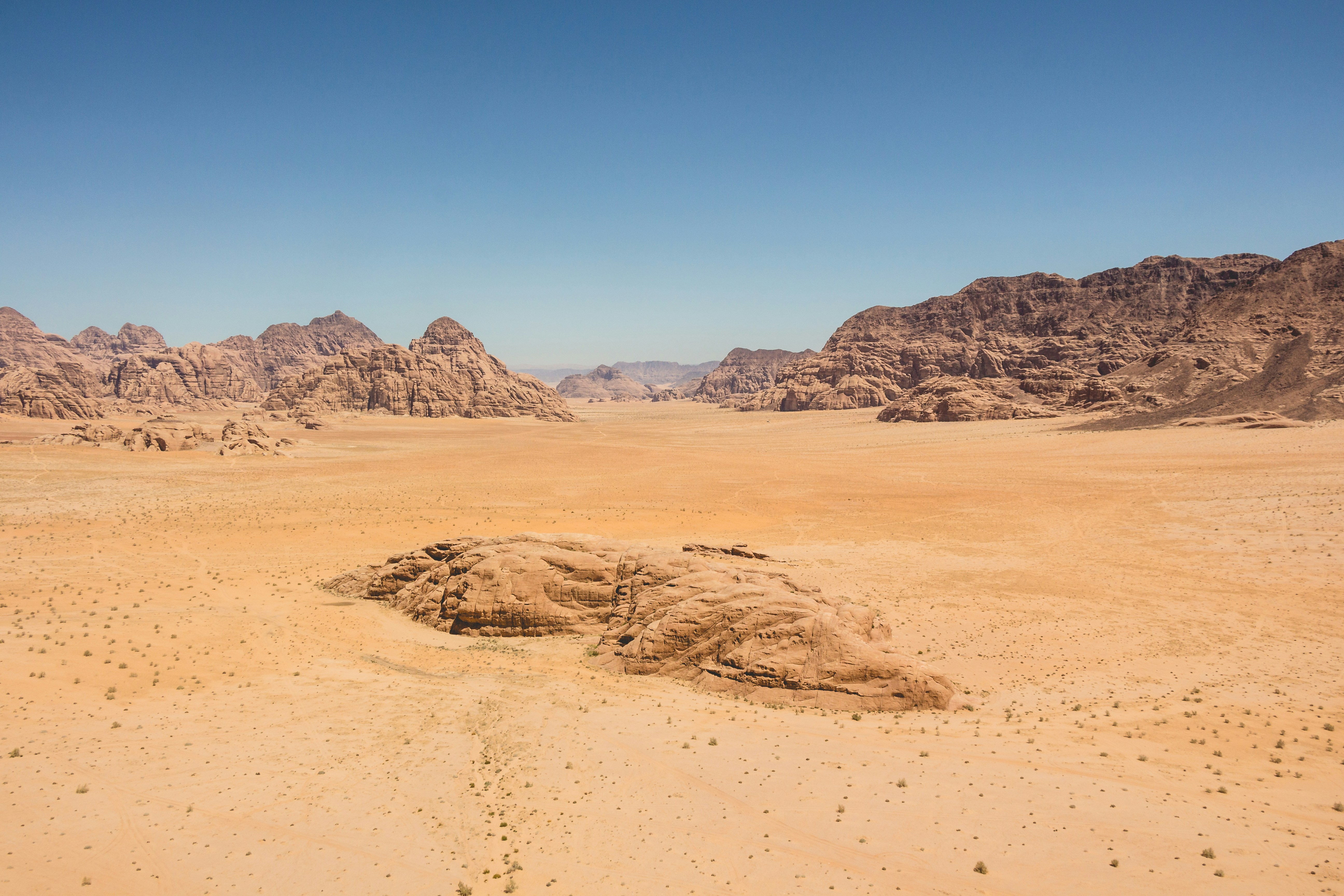
A hot air balloon at sunrise is not the subtlest way to see Wadi Rum, but it is one of the most effective. The geology that makes the desert compelling at ground level - the vertical scale of the sandstone pillars, the relationship between the flat sandy valleys and the surrounding rock masses - becomes properly comprehensible from 300 metres above it. The light at that hour, rising from the east and catching the red cliffs at an angle that changes minute by minute, is the same light that makes photographers stay up the night before to catch the first glow on the rock faces.
Balloon flights over Wadi Rum operate on a strict seasonal and weather-dependent schedule. Getting the logistics right before you book is more important here than for most activities in Jordan.
The Operator Landscape
The primary operator for balloon flights over Wadi Rum is the Royal Aero Sports Club of Jordan (RASCJ), a licensed aviation organisation that has been running flights in the protected area since the early 2010s. They operate multiple envelopes (balloon canopies) and can run several flights simultaneously in peak season.
A small number of other operators also run flights under separate licensing - some of which are subcontracted from RASCJ, others of which operate independently. When booking through tour platforms, confirm which physical operator is conducting the flight and that they hold valid Civil Aviation Authority of Jordan certification.
For direct booking, the Royal Aero Sports Club can be reached through their website or through the Wadi Rum Visitor Centre contacts. Many camps in Wadi Rum also arrange balloon bookings as part of their activity packages - this is often the most convenient option if you are already staying in the desert.
Cost and What’s Included
Balloon flight prices run approximately USD 180–220 per person as of 2026 (operators quote in US dollars rather than Jordanian dinars - confirm the currency at booking). The price typically includes:
- Return transfer from your Wadi Rum camp or Rum Village Visitor Centre to the launch site
- Pre-flight tea or coffee
- The flight itself (45–75 minutes)
- A certificate of flight (standard across most balloon operators globally)
- Post-flight light breakfast or refreshments at some operators
What is not included: tips for the pilot and ground crew (customary - around USD 10–15 per person is standard), photography packages (some operators offer in-flight video recording for an additional fee of approximately USD 30–50), and transport to/from Wadi Rum from Aqaba or Petra.
Prices through booking platforms are typically 10–15% higher than booking direct to account for platform commission. If you are staying in a camp that offers balloon booking, ask whether they can arrange it at the direct operator rate.
Season and Weather
Balloon flights operate October through May. Summer operations (June–September) are suspended due to the combination of extreme heat and unpredictable thermal activity that develops over the heated desert surface through the daylight hours.
Within the operating season, flights are weather-dependent on a daily basis. The limiting factors are:
Wind speed: Maximum safe wind speed for launch is approximately 15–20 km/h. Surface gusts above this level prevent inflation or create unstable flight conditions. The Wadi Rum desert typically has calmer morning winds than afternoon - hence the sunrise timing.
Wind direction: Balloons travel with the wind and cannot be steered back to a specific landing point. Operators choose launch days when the wind direction will carry the balloon over accessible terrain where a chase vehicle can follow. A wind direction that would carry the balloon toward unsuitable terrain (steep ridgelines, remote areas) triggers cancellation even if wind speed is within limits.
Cloud and rain: Overcast skies significantly reduce the visibility and photographic quality of the flight. Rain or approaching rain fronts lead to cancellation.
In practice, October, November, March, and April have the most consistent flyable weather and moderate temperatures. January and February can have excellent clarity but cold mornings - you will be standing in an open basket at altitude for over an hour, and the temperature is several degrees colder in the air than on the ground.
What the Flight Is Like
Launch happens in the pre-dawn dark. The inflation process - filling the envelope with heated air from large burners - takes 30–40 minutes and is itself worth watching. The balloon gradually shapes from a flat pile of fabric on the desert floor into something 25 metres tall, illuminated from within by the burner flame.
Boarding requires stepping over the basket edge, which stands approximately chest-high. The basket is divided into sections (usually 4–6 compartments around a central burner structure) with 2–4 passengers per compartment. The pilot stands in or near the central section, operating the burner and the venting rope.
The lift-off is nearly silent - a brief rush of hot air from the burner, then the ground simply falls away without sensation. There is no lurch or mechanical noise. The silence is one of the defining aspects: the only sounds are the occasional burner blast and the wind.
The flight path covers approximately 15–25 kilometres depending on wind speed, tracking across the protected area in whatever direction the prevailing air mass is moving. On typical October–April mornings, the wind carries the balloon broadly northwest or north, over formations including Burdah, Um Fruth, and the central valley plain. The pilot adjusts altitude by managing burner heat (rising) and venting the envelope (descending) - altitude typically ranges from 100 metres (close to the cliff tops) to 500 metres (broad panoramic view). Experienced pilots will descend close to significant formations for photography and then ascend again for the overview.
Duration: 45–75 minutes in the air, depending on wind conditions and the pilot’s plan. Most flights are closer to 60–70 minutes.
Landing: Balloon landings are not precise. The ground crew follows by jeep and coordinates by radio, but the landing point is wherever the pilot determines is safest given terrain and conditions. Landings on flat sandy ground are smooth; landings near rock or on a slope require the basket to drag briefly. Hold on to the basket handles when landing is announced.
Photography
The balloon is an ideal platform for landscape photography. The slow movement and altitude give time and perspective that a drone or helicopter cannot match. Specific tips:
Wide angle: A 16–24mm lens on full frame (or equivalent) is the most useful focal length for showing the full scale of the landscape. The temptation to zoom in is understandable but the defining shots are the wide compositions showing the relationship between valley, pillars, and horizon.
Shoot downward: The most interesting angles are straight down (the desert floor texture, shadow patterns of the pillars) and diagonal (the pillar masses disappearing into the valley). Eye-level horizon shots are less interesting from a balloon than you expect - they look like any elevated viewpoint.
Timing: The first 20 minutes after launch, when the sun is just clearing the horizon and the shadows are longest, produce the most dramatic light. By the time the flight ends and the sun is fully up, the landscape is brighter and the shadows have shortened. Prioritise shooting in the first half of the flight.
Booking Timeline
Book 3–7 days in advance in high season (October through April). In peak weeks - Christmas and New Year, Easter, and the Eid al-Fitr and Eid al-Adha holidays - book 2–3 weeks ahead. The number of flyable mornings in any given week is limited by weather, and good conditions fill quickly when multiple groups are seeking the same dates.
If you are booking a Wadi Rum camp, ask them to add a balloon booking at the same time - most camps have direct contacts with operators and can streamline the arrangement. You can also browse hot air balloon flights and Wadi Rum tours to compare operators and book with payment protection.