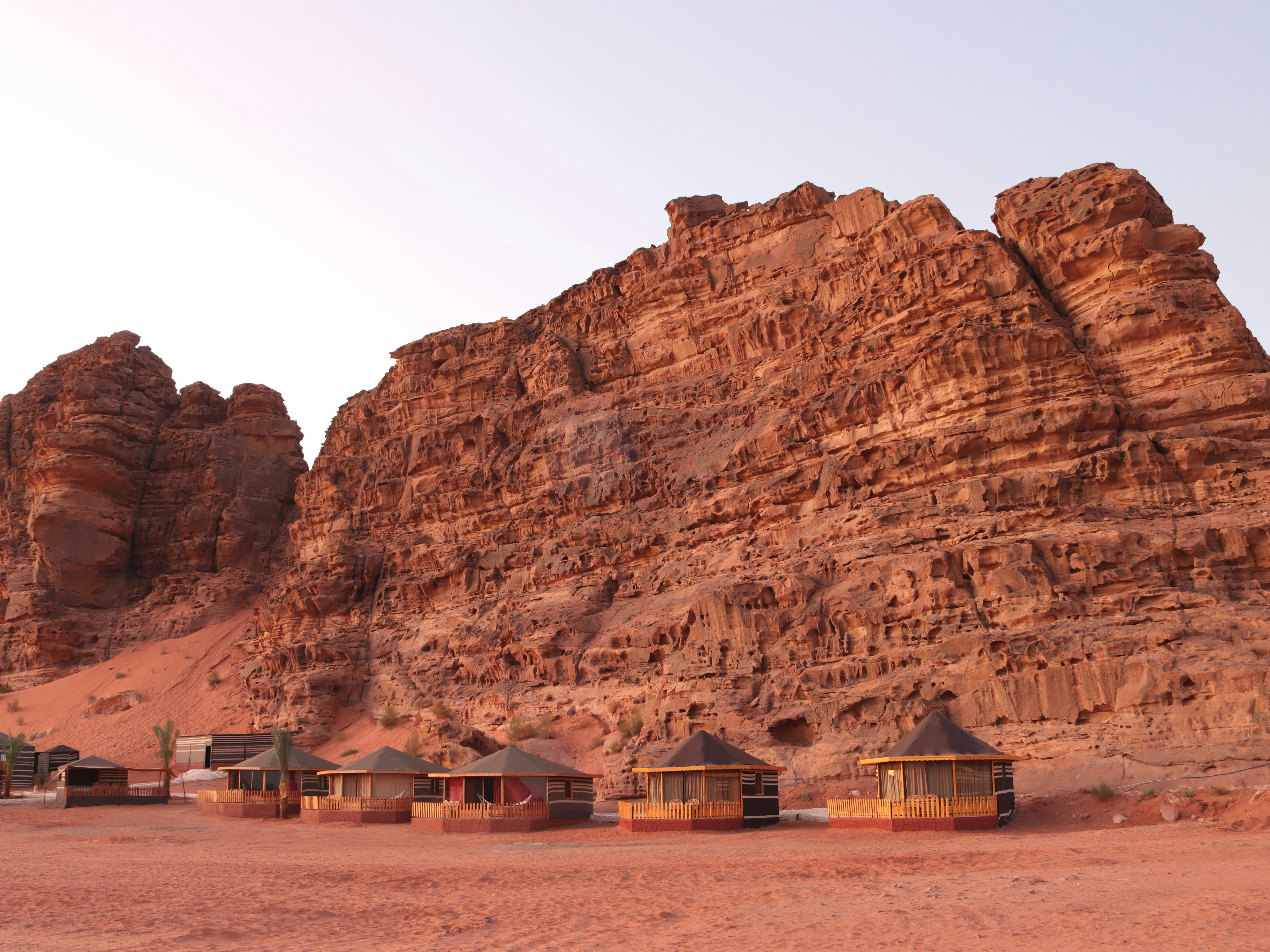
Food in Wadi Rum is a simpler matter than in any other part of Jordan - there are almost no choices to make. The protected area contains no restaurants, no independent cafes, and no supermarkets. What you eat in the desert is what your camp provides, and what every camp provides is some variation of the same core Bedouin-style meal that has been served in this landscape for generations.
This simplicity is not a limitation once you understand what zarb actually is. If you eat it well made - slow-cooked underground for several hours, brought out in a smoking container and served at the communal table as the stars come out - it is one of the most memorable meals in Jordan.
Zarb: The Dish That Defines Wadi Rum Cooking
Zarb is the cooking method, not just the dish. A large metal rack is loaded with marinated lamb pieces, whole chicken portions, potatoes, onions, and rice. This rack is placed inside a sealed metal cylinder - the zarb - which is then lowered into a pit dug in the desert sand. Hot coals are placed in the pit, the sand is piled over the top, and the entire assembly cooks slowly for three to four hours with no additional heat source.
The result: meat with a texture that cannot be replicated by any other method. The lamb falls from the bone. The chicken skin is mahogany-coloured from the dry heat and the smoke of the coals. The rice underneath the meat has absorbed the cooking juices and is dense with flavour. The whole thing arrives at the table in a cloud of smoke that the camp staff dramatically reveal when they open the lid.
Most camps that serve zarb do so for dinner - the long cooking time makes it practical for the evening rather than lunch. Better camps start the zarb preparation in the afternoon while you are out on your jeep tour, so it is ready when you return at sunset.
What Camp Meals Actually Include
Dinner at most Wadi Rum camps means one of two formats:
The zarb dinner is the premium experience - a single shared main dish of zarb-cooked meat and rice, accompanied by salads, bread, and mezze. This is what the better and mid-range camps serve. The quality of the zarb is the primary differentiator between camps.
The buffet dinner is more common at larger and budget operations: a spread of grilled meats (chicken pieces, lamb kebabs), rice, flatbread, hummus, fattoush salad, cucumber and tomato salad, and sometimes a soup. It is adequate and filling; it lacks the drama and depth of zarb.
Breakfast follows a consistent pattern across all camp tiers: pita or flatbread baked on a griddle pan over an open fire, labneh (strained yoghurt), hummus, olive oil, za’atar, sliced tomatoes and cucumber, boiled or fried eggs on request, and sweet Bedouin tea made with sage and cardamom. The tea is served in small glasses throughout the morning. This is a genuinely good breakfast - simple, clean, and attuned to the desert climate.
Bedouin tea (shay) is offered throughout the day at most camps: black tea brewed strong with dried sage leaves, cardamom pods, and significant sugar. It is served hot in small glasses and is both warming in the cold desert mornings and somehow cooling in the midday heat. Refusing it is technically possible but culturally unusual - and the tea is good enough that you will not want to.
The Visitor Centre Cafe
At Rum Village, the main visitor centre at the entrance to the protected area has a small cafe selling water, soft drinks, instant coffee, tea, and basic packaged snacks. This is the only eating option if you are doing a day trip without a camp booking. The selection is limited and the prices are higher than you would pay outside the protected area - approximately JOD 1–3 for a drink as of 2026. Stock water and snacks before you enter if you are on a day-use basis.
Practical Notes for Camp Meals
Zarb timing. Ask your camp what time dinner is served and when the zarb goes into the ground. If you are scheduling your afternoon jeep tour, it is worth knowing whether to be back at camp by 18:00 or 19:00 for the meal reveal. Missing the zarb opening is a minor disappointment that is easy to avoid.
Eating with your hands. Traditional Bedouin dining involves eating directly from the communal zarb container or a shared serving dish, using flatbread as a scoop. This is not obligatory - plates and cutlery are always available - but eating with the group from a shared dish is the culturally coherent way to experience the meal.
Water. Camps provide drinking water, but hydration in Wadi Rum requires intention. The desert air at high altitude is drier than it feels, especially when you are active on jeep tours. Drink water consistently rather than waiting for thirst. Most camps provide unlimited water with meals; check whether water is available throughout the day during your jeep tour or whether you need to carry your own.
For everything else about Wadi Rum - where to go in the protected area, which jeep routes cover the key formations, and how to plan a night under the stars - see our Wadi Rum city guide.
Book a Wadi Rum Camp with Zarb Dinner
Zarb - the Bedouin underground fire-pit cooking method - is Wadi Rum’s signature food experience, and it is only available at desert camps rather than any restaurant in the conventional sense. Booking an overnight stay or an evening dinner at a Bedouin camp is the only reliable way to eat zarb; day visitors without a camp booking will not have access to it. The experience of watching the metal frame being lifted from the sand pit, the steam rising from the slow-cooked lamb, and eating by firelight under the desert sky is as much about place as it is about food. Browse Wadi Rum tours and overnight camps for camps that include zarb dinner.
Plan Your Jordan Trip
Before leaving, pick up a Jordan eSIM from Airalo - set up before arrival, no SIM swapping at the airport. VisitorsCoverage travel insurance covers medical emergencies, trip cancellation, and evacuation for Jordan trips.
More in Wadi Rum
- Things to Do in Wadi Rum
- Best Camps and Hotels in Wadi Rum
- Wadi Rum Where to Stay
- Aqaba Food Guide
- Jordanian Cuisine Guide
- Vegan Jordan Guide
Need a base? Search hotels in Wadi Rum on Booking.com