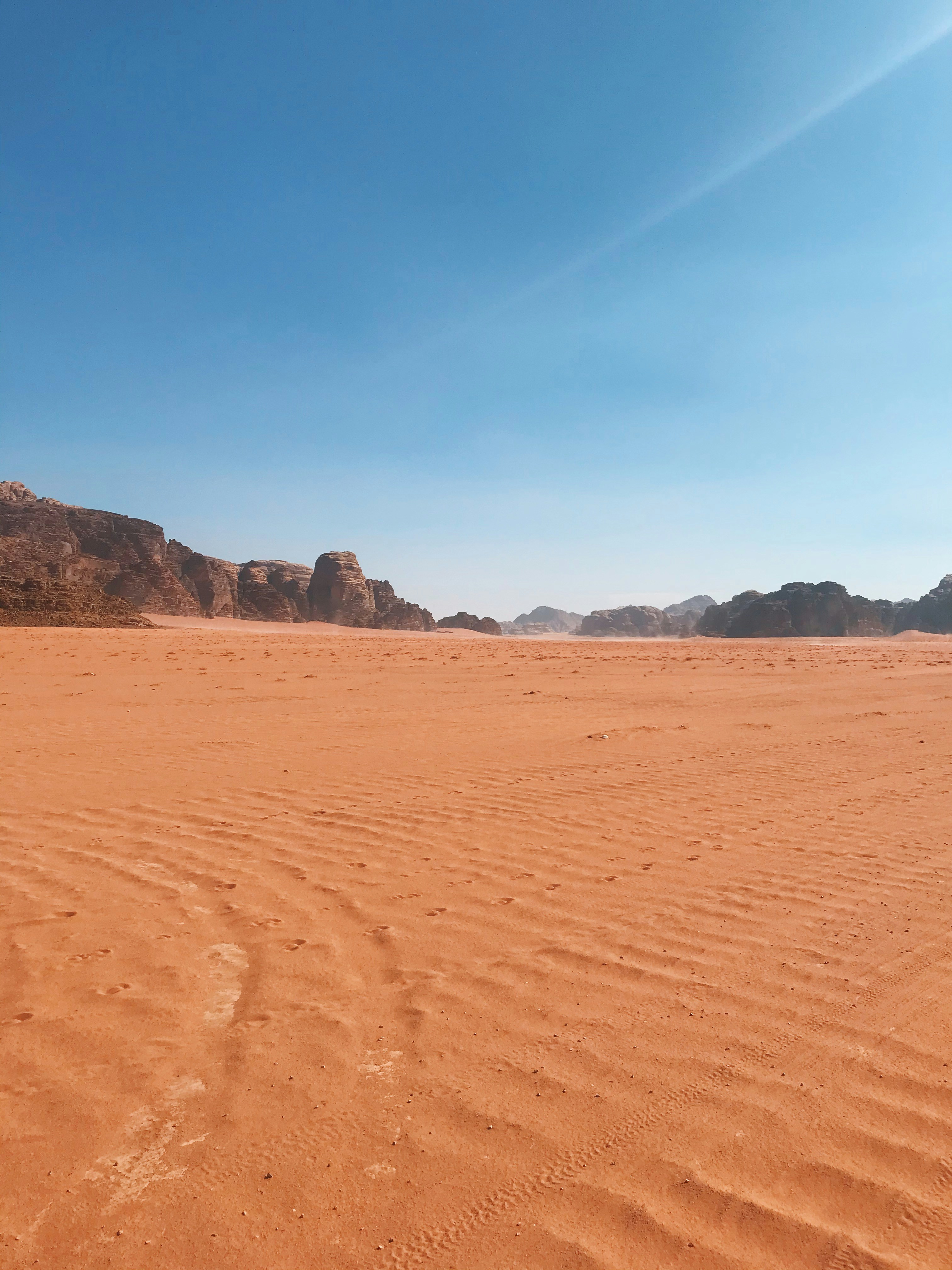
Jordan’s two most iconic natural experiences are at opposite ends of the country and opposite ends of the activity spectrum. The Dead Sea, at 430 metres below sea level, is a place for floating, spa treatments, and watching the light change over the water. Wadi Rum, in the south near the Saudi border, is a vast red desert for jeep tours, camel riding, and sleeping under stars. Here is a direct comparison for travellers deciding where to spend their time.
At a Glance
| Factor | Wadi Rum | Dead Sea |
|---|---|---|
| Type | Desert protected area | Hypersaline lake / spa resort |
| Location | South Jordan, near Aqaba | West Jordan, 55 km from Amman |
| Entry fee | ~JOD 5 protected area fee as of 2026 | Varies - through hotels or day passes |
| Overnight stay | Desert camps - JOD 25–180/person as of 2026 | Resort hotels - JOD 80–220/night as of 2026 |
| Day visit cost | ~JOD 30–70 (entry + jeep tour) | ~JOD 25–45 day pass at resort hotel |
| Activity level | Active (jeep, hike, camel) | Passive (float, spa, pool) |
| Best season | Sep–May | Nov–Mar |
| Distance from Amman | 320 km south (~4 hours) | 55 km west (~1 hour) |
| Jordan Pass coverage | Yes | No |
Wadi Rum: The Desert
What the experience is
Wadi Rum is a protected desert reserve covering 720 square kilometres of red sand floor broken by massive sandstone and granite formations. The scale alone is worth coming for - nothing in Jordan (or the wider region) prepares you for how large and silent it is.
The standard visit follows one of the jeep tour circuits that local Bedouin operators run through the reserve. A half-day tour (approximately 4 hours, JOD 25–35 per person as of 2026) covers Lawrence’s Spring, Khazali Canyon, Khazali inscriptions, the sand dunes at Um Sabatah, and a sunset viewpoint. A full-day tour extends this to the southern reserves and the Um Fruth rock bridge. Both operate in small 4WD pickup trucks with bench seats in the back.
For those who want more independence, camel rides and guided hiking trails are available through the visitor centre. Our Wadi Rum tours guide covers operators and current pricing. Wadi Rum jeep and camel tours can be booked online before you arrive at the protected area.
The overnight experience
Sleeping in Wadi Rum is the main event for many visitors. The camp dinner alone - zarb, a traditional Bedouin underground slow-cook of meat and vegetables - is among the better meals you’ll have in Jordan. After dinner, the absence of light pollution makes the Milky Way directly visible from camp, sometimes in extraordinary clarity. The silence is total.
Wadi Rum Night Luxury Camp runs transparent geodesic tents and bubble domes with private desert views; rates run approximately JOD 120–180 per person per night (half board) as of 2026. Sun City Camp offers solid mid-range Bedouin-style tents at approximately JOD 60–90 per person (half board). Budget camps cluster near the village and start at approximately JOD 25–35 per person including dinner and breakfast.
🏨 Search Wadi Rum camps and hotels on Booking.com
More detail on Wadi Rum’s stargazing conditions is in our Wadi Rum stargazing guide.
Who Wadi Rum suits
Wadi Rum is best for active travellers who want an adventure, anyone who hasn’t spent time in a real desert, photographers, and travellers who specifically want the overnight camp experience. Children genuinely enjoy it - the jeep tours are accessible and the camp evenings are engaging. Older travellers and those with limited mobility may find the vehicle transfers uncomfortable over rough desert terrain.
The Dead Sea: The Lake
What the experience is
The Dead Sea’s salinity is approximately 34% - nearly 10 times that of normal ocean water. The buoyancy is extreme and immediately apparent: you float without any effort, your legs rise involuntarily, and the standard pose (lying back reading a newspaper while looking confused) is genuinely achievable. The mineral composition of the water - magnesium, potassium, calcium - is associated with various skin and respiratory benefits, though claims vary significantly.
The Jordanian shoreline is dominated by resort hotels in the Sweimeh area. These hotels provide the main access point to the Dead Sea on the Jordanian side - private beach sections with floating piers, fresh water rinse-off showers, changing facilities, and access to their spa and pool complex. Non-guests can typically buy a day pass for approximately JOD 25–45 as of 2026.
The floating experience itself takes 20–30 minutes before novelty fades. Most visitors combine it with the hotel spa (Dead Sea mud treatments, mineral pool soaks) and spend 3–6 hours at the resort overall.
Hotels at the Dead Sea
The Kempinski Hotel Ishtar Dead Sea has the most polished shoreline setting - rooms start at approximately JOD 150–220 per night as of 2026 and the pool terraces cascade directly to the water. The Hilton Dead Sea Resort & Spa is adjacent and slightly more accessible at approximately JOD 120–180 per night. For a family-friendly option at better value, the Holiday Inn Resort Dead Sea runs approximately JOD 80–120 per night and has strong pool facilities.
🏨 Search Dead Sea resort hotels on Booking.com
What else is nearby
The Dead Sea’s position in the Jordan Valley puts it 45 minutes from Amman, Madaba, and Mount Nebo. The mosaics at Madaba (Mosaic Map in the Church of Saint George, entry approximately JOD 1 as of 2026) and the viewpoint at Mount Nebo (entry approximately JOD 1–3 as of 2026) are natural half-day additions to a Dead Sea visit. This cluster makes the Dead Sea the easiest major Jordanian experience to add to a trip without significant extra travel.
Who the Dead Sea suits
The Dead Sea is best for travellers who want to relax, couples wanting a resort-style night, and anyone with skin conditions (psoriasis, eczema) who specifically wants the therapeutic float. It also suits travellers with limited mobility - the resort infrastructure is well-developed, and the floating experience requires no fitness. It is a shorter experience than Wadi Rum and works well as a stopping point between Amman and the south.
Head-to-Head Comparison
| Question | Wadi Rum | Dead Sea |
|---|---|---|
| Better as a day trip from Amman | No (too far) | Yes (55 km) |
| Better overnight experience | Yes | No |
| More physically demanding | Yes | No |
| Better for older or less mobile travellers | No | Yes |
| More unique globally | Yes (very few red deserts like it) | No (similar experiences in Israel) |
| Better value for a day visit | Yes | No (resort day passes add up) |
| Better combination with Petra | Yes | No |
| Better combination with Amman and Madaba | No | Yes |
How They Fit Into a Jordan Itinerary
They serve different parts of a Jordan trip and are rarely in direct competition. The standard 7-day routing:
- Day 1–2: Amman
- Day 3: Dead Sea day trip or overnight (add Madaba and Mount Nebo)
- Day 4–5: Petra
- Day 6: Wadi Rum overnight
- Day 7: Aqaba or fly home from Amman
On this sequence, the Dead Sea comes early (close to Amman) and Wadi Rum comes late (near Aqaba). Our 7-day Jordan itinerary builds in both with transport logistics and accommodation suggestions.
Final Verdict
Wadi Rum offers a more unique experience globally - there are few places on earth that look like it. The Dead Sea is remarkable but the experience is shorter and available on the Israeli side as well. If you have to choose, Wadi Rum edges it for memorability and for what you’ll talk about when you get home. But most visitors to Jordan find time for both - they are at opposite ends of a natural south-to-north route and require very little extra effort to include.
More Jordan comparisons: Petra vs Wadi Rum · Dead Sea: Jordan vs Israel Side · Amman vs Aqaba
Explore both destinations: Wadi Rum visitor guide · Dead Sea visitor guide · 7-day Jordan itinerary
🏨 Search hotels in Wadi Rum - Search hotels in Dead Sea
Plan Your Trip
✈️ Book your flights to Jordan 🛡️ Get travel insurance 📱 Stay connected with an eSIM 🚗 Rent a car