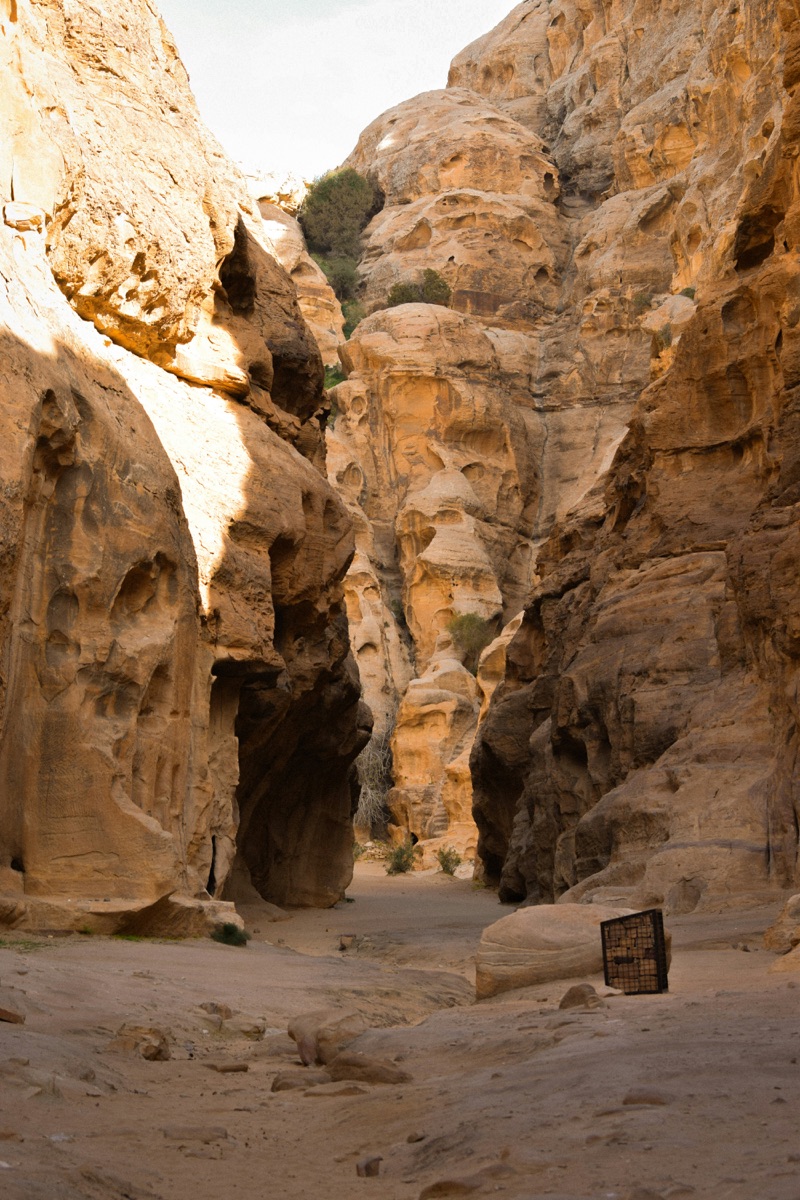
Ten kilometres north of Wadi Musa, a narrow sandstone gorge cuts through the same rose-red cliffs that made Petra famous. Entry is free. There is no ticket booth, no queue, and on most mornings, almost no other visitors. This is Siq al-Barid - Little Petra - and it deserves far more attention than it gets.
What Is Little Petra?
Siq al-Barid (Arabic for “cold canyon,” a reference to the shade cast by its high walls) was a Nabataean suburb of the main Petra city. Archaeologists believe it functioned as a caravanserai - a resting and trading post for merchant caravans arriving along the incense and spice routes before continuing south into the main city. The canyon is shorter and narrower than Petra’s famous Siq but cuts into the same striated sandstone, and the carved structures inside are genuinely impressive.
The site was occupied from roughly the 1st century BCE through the 2nd century CE, the same period as the peak of Nabataean power. Unlike the main Petra site, Little Petra has never been developed as a formal tourist attraction - no signage, no restaurant, no visitor centre. That absence is exactly what makes it worth the detour.
What to See Inside the Siq
The Carved Facades and Triclinia
The canyon opens immediately into a series of carved chamber entrances cut directly into the cliff face. These range from simple rectangular doorways to more elaborate facades with pilasters and cornices. Several are triclinia - formal dining rooms carved into the rock, used for funerary banquets and communal meals. The Nabataeans mixed practical architecture with ritual space: a carved room could serve as a merchant’s rest stop on one level and a ceremonial dining hall on another.
Look at the floor level of each chamber entrance for water channels - the Nabataeans carved irrigation and drainage systems into nearly every surface they shaped. Even in a secondary site like this, their hydraulic engineering is evident.
The Painted Biclinium
Roughly midway through the siq, a set of steps leads up to an entrance on the left-hand side. Climb in and look up: the ceiling carries a fresco that has survived roughly two thousand years of wind, heat, and intermittent use as a shelter by local Bedouin. Grapevines, pomegranates, and small winged amorini (Cupid figures) are painted in red, yellow, and black across the plaster ceiling.
This is the Painted Biclinium, and it is one of the most significant surviving examples of Nabataean painting anywhere. Nabataean art blended Hellenistic motifs with Arabian decorative traditions - the grapevine is a classic Greco-Roman symbol, but the composition and colour palette are distinctly Nabataean. The fresco is faded and the room is cramped, but it is genuinely extraordinary that it survived at all.
The Far End and the Plateau Scramble
The canyon eventually opens onto a small terrace where the rock faces close in and the path narrows to a crack. At this point there is a rough scramble up to a plateau above. The scramble involves some exposed handholds but is manageable for reasonably fit adults - it takes about 10 minutes up and gives panoramic views across Wadi Araba toward the Negev in the west.
From the plateau, fit visitors can continue along a marked trail that eventually connects to the back of the main Petra site near the High Place of Sacrifice. Allow 3 to 4 hours for the full traverse; take water, and ask at the Petra Visitor Centre about conditions before attempting it alone.
How to Get to Little Petra
By Car or Taxi
The easiest approach is to drive or take a taxi from Wadi Musa. The site is approximately 10km north of the town centre via the main road toward Bayda. The journey takes 12 to 15 minutes and the trailhead has a free car park with space for around 30 vehicles. A return taxi from Wadi Musa costs approximately JOD 10–15 as of 2026; agree the price before departing, and ask the driver to wait or arrange a return time.
If you have rented a car, this is an easy side trip - the road is paved throughout and signposted. Car hire from Amman or Aqaba makes the Petra region significantly more flexible; book in advance during high season (March–May and October–November) when vehicles book out.
By Tour
Several half-day and full-day tours from Wadi Musa and Amman include Little Petra as a stop, typically combined with Petra itself. Browse Petra and surroundings tours if you prefer a guided itinerary - some guides have detailed knowledge of the carved chambers that adds considerable context.
The Siq al-Barid Hiking Trail
The back trail from Little Petra into Petra is a legitimate alternative for experienced hikers. The route passes through quiet canyon scenery well away from the main visitor crowds. The Petra Visitor Centre can arrange a licensed guide (approximately JOD 50–80 for a half-day) - do not attempt the back routes without local knowledge, as the trail intersections are not well-signed and conditions change after rain.
Best Time to Visit
Little Petra shares the same climate as the main site. The optimal windows are March to May and September to November, when temperatures are moderate (15–25°C) and the light on the sandstone in early morning and late afternoon is at its best.
The Painted Biclinium is best viewed in the morning when light enters the canyon from the east. By midday the gorge heats up noticeably and the light on the west-facing facades is flat. Plan to arrive by 8:30–9:00am if you want good photographs and cooler temperatures.
July and August see temperatures above 35°C; Little Petra becomes unpleasantly hot by 10am and is best visited early or avoided entirely in favour of cooler sites. Winter (December–February) is pleasant in terms of temperature but the plateau scramble becomes slippery after rain.
Combining Little Petra with the Main Petra Site
Most visitors treat Little Petra as a warm-up or a wind-down. The two most practical approaches:
Morning first: Drive to Little Petra when it becomes accessible at dawn, spend 60–90 minutes exploring, then arrive at the main Petra Visitor Centre for opening at 6:00am. This avoids the main site’s morning crush and means you have already covered Little Petra before the day heats up.
Afternoon last: Spend the morning at main Petra, exit in the mid-afternoon heat, and drive north to Little Petra for a quieter end to the day. The canyon shade makes it more bearable than the main site’s exposed Royal Tombs area in late afternoon.
If you have arranged airport transfers from Petra to Aqaba or Amman, book through a reliable transfer service - drivers can often drop you at Little Petra on the way out with a short detour agreed in advance. Admission tickets for Petra’s main site are sold at the Visitor Centre.
Practical Notes
- Entry is free, no ticket required
- No food or water available on site - bring your own
- Toilets are available at the car park (basic facilities)
- The canyon floor is uneven; proper footwear is recommended
- Photography is unrestricted; the Painted Biclinium ceiling requires a steady hand or a tripod
- Bedouin sellers operate stalls at the entrance - informal and low-pressure compared to the main site
Little Petra takes less than two hours and costs nothing beyond the taxi fare. On a Petra trip, it is the most straightforward way to see a genuinely significant Nabataean site without queues, without an entrance fee, and with the kind of quiet that the main site cannot offer during peak season.