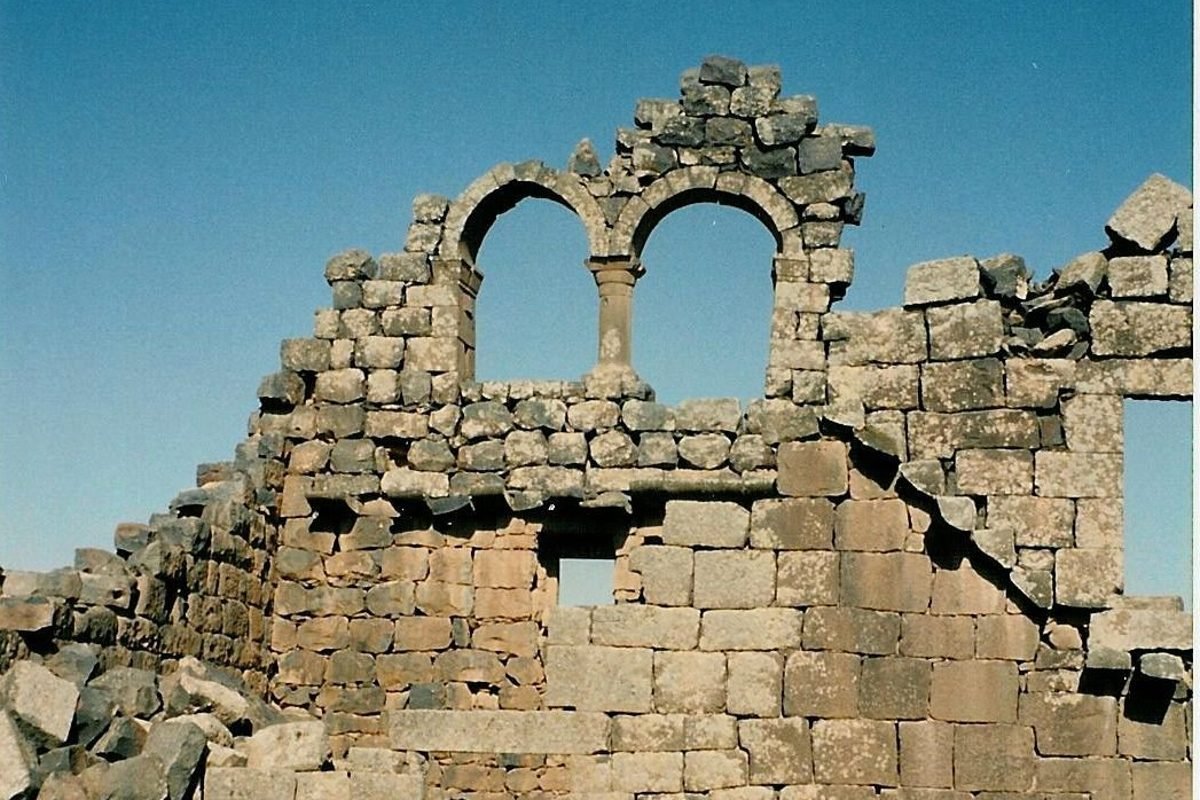
Umm el-Jimal is the strangest town in Jordan’s archaeological record. Where Jerash and Petra are pale stone, this one is built entirely from black volcanic basalt, and the ruins stand against a flat grey-brown plain in the north-east. UNESCO inscribed the site in July 2024, making it Jordan’s seventh World Heritage Site, and it sits about 80 km north-east of Amman, close to the town of Mafraq. Until the listing, it appeared mostly as an add-on in tour itineraries. It deserves a proper visit of its own.
A Town Built From Black Stone
The name means “Mother of Camels” in Arabic, and the settlement was occupied from the Nabataean and Roman periods through the Byzantine era and into the early Islamic centuries (roughly the 1st to the 8th century CE). Its builders had almost no timber, so they used what the land gave them: heavy basalt blocks laid without mortar, with basalt slabs for roofs, doors, windows and even staircases.
The result is a town where hundreds of buildings survive to second-storey height or more. Many show features that astonish first-time visitors: cantilevered stone staircases rising from courtyards, corbelled arches, stone doors that once swung on basalt hinges, and long rows of houses clustered around shared yards. It is among the best surviving examples anywhere of ordinary Roman and Byzantine domestic building.
What to See
The Roman barracks. One of the earliest substantial structures on the site, built as a military post, later converted to other uses. A good place to start for context.
The churches. Several Byzantine churches survive, including the Western Church and the Cathedral, with arcades and apses of black stone. They show the town’s Christian life in the 5th and 6th centuries.
The houses and courtyards. The main attraction is walking between these domestic compounds. Look for the stairs, the animal enclosures and the narrow lanes that gave each family a private world.
The reservoirs. Water collection explains why people lived here at all. Large cisterns and a reservoir show how the town managed scarce rainfall.
Inscriptions. Greek, Latin and Nabataean inscriptions record builders and dates; a guide helps you find the key ones.
How the Town Worked
The settlement lies on the edge of the basalt desert, where rainfall is low and the land is hard. Residents farmed on the fringes, kept livestock and traded with caravans on routes towards Bosra and Damascus. Large houses, called compounds, held several families around a central yard, with stables on the ground floor and living rooms above. Water was the key resource, which explains the cisterns in nearly every courtyard and the big public reservoir.
After the 8th century the town declined, probably because of earthquakes, shifting trade routes and changes in rule. It was resettled in the early 20th century by families from Syria, who reused older stones, so some houses you see mix Byzantine and modern building. Archaeologists from several expeditions have studied it since the 1970s. UNESCO’s listing recognises the preserved urban fabric and its testimony to frontier life over six centuries.
Photography and Etiquette
Early morning and late afternoon give the best light on the dark stone and cool the ground. The site is open and unfenced in places; stay on paths and do not climb unstable walls. Local children and families may live next to the ruins, so ask permission before photographing people.
Planning the Visit
- Distance: about 80 to 86 km north-east of Amman, 90 minutes by car.
- Cost: reported free or covered by the Jordan Pass as of 2026; see our Jordan Pass guide and confirm on site.
- Facilities: none to speak of. Bring water, snacks, sun protection and sturdy shoes; basalt is uneven underfoot and hot in summer.
- Season: March to May and September to November are comfortable. Midsummer afternoons are punishing, and winter can be windy and cold.
- Getting there: hire a rental car or arrange a driver. A guided tour from Amman is the easiest option if you want the history explained.
- Safety: the site is in northern Jordan, not far from the Syrian border. Conditions are generally calm for visitors, but check the current situation in our Jordan safety guide before travelling.
Official visitor information is on the Jordan Tourism Board Umm al-Jimal page.
Combining Umm el-Jimal With Other Stops
Umm el-Jimal sits in a different direction from the Umayyad desert castles, but both belong to Jordan’s eastern frontier story and make a rewarding pair over two half-days. For a north-west alternative, Umm Qais and Jerash are easier to combine by road. See day trips from Amman for the options and how long each takes. If you plan to base yourself in the capital, browse hotels in Amman.