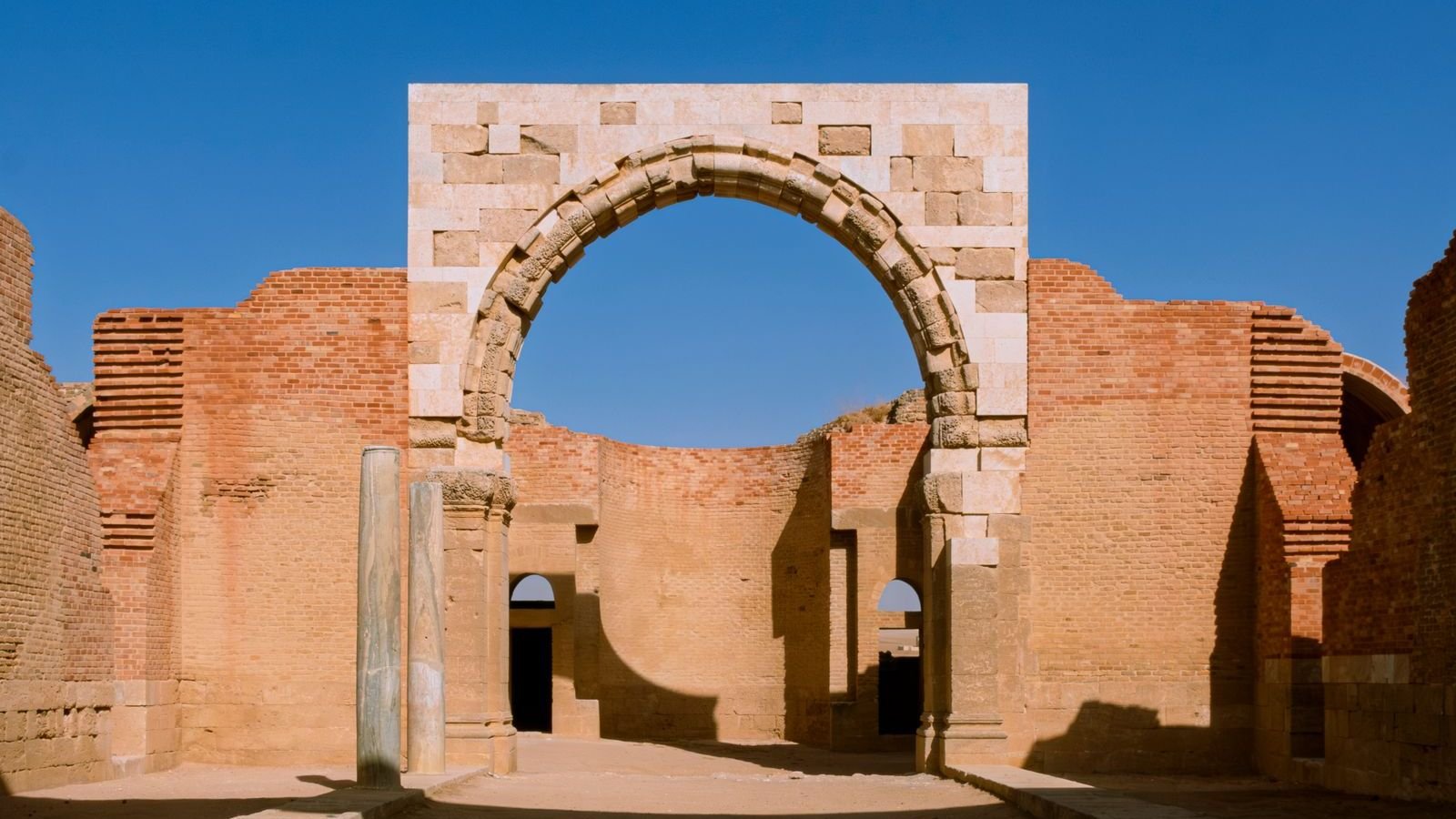
East of Amman the highway runs out into flat basalt and limestone desert, and a handful of Umayyad-era buildings sit alone in it. These are the “desert castles”, and a loop from the capital takes in the three best: Qasr Kharana, Qasr Amra and Azraq Castle, with the Azraq Wetland Reserve as an unexpected green finish. It suits a day when you want history without the crowds of Petra. If you are building a wider plan, this is also the missing entry in our day trips from Amman guide.
Planning more stops? See our picks of 6 underrated places in Jordan.
The Loop at a Glance
| Stop | From Amman | Time on site | Entry (approx., as of 2026) |
|---|---|---|---|
| Qasr Kharana | about 65 km, 1 hr | 30-40 min | JOD 3 |
| Qasr Amra | about 85 km, 1.25 hrs | 45 min | JOD 3 |
| Azraq Castle | about 100 km, 1.5 hrs | 45 min | small fee, free with Jordan Pass |
| Azraq Wetland Reserve | next to Azraq town | 1 hr | JOD 8 (RSCN 2025 rates) |
The sequence runs outward on Highway 40 (the Azraq road) and back the same way. Most itineraries do Kharana, Amra, then Azraq, and return to Amman in the late afternoon. Fees and hours change; treat the figures here as a guide and check at the gate. The official Jordan Pass site lists Qasr Kharana, Quseir Amra and Qasr Azraq as open 8am to 5pm, though closing can be earlier in winter and on holidays, so aim to arrive by 3pm.
Qasr Kharana
Kharana is the easiest to reach and the one that looks most like a fortress: a square, two-storey block with round corner towers and slit windows. Despite appearances it was probably never a military post. An inscription dates it to around 710 AD, and most scholars read it as a meeting place where Umayyad rulers negotiated with local Bedouin leaders. Walk the courtyard, climb to the upper rooms and look for the plasterwork and stone carving that survive. It is small, so budget half an hour.
Qasr Amra (Qusayr Amra)
Amra is the reason to come. Built in the early 8th century, probably under Caliph al-Walid I, this modest bathhouse and reception hall was inscribed by UNESCO in 1985. Its interior walls and domed ceilings are covered in frescoes: hunting scenes, dancers, musicians, and a celestial map on the bath dome. Figurative painting this early in the Islamic world is rare, and that is what makes the site important. Interior lighting is dim, so allow your eyes time to adjust, and note that restoration work sometimes limits access to parts of the building. We recommend a guide or a printed explainer, because the paintings are hard to read without context.
Azraq Castle and the Lawrence Link
Azraq Castle is a black basalt fortress with a long layered history: Roman and Byzantine foundations, an Umayyad phase, an Ottoman rebuild. Its place in modern history is tied to T.E. Lawrence, who used Azraq as a staging point during the Arab Revolt and stayed in the rooms above the south gate in the winter of 1917-18. The tiny chamber is still pointed out to visitors. For the wider story, read our guide to Lawrence and the Arab Revolt at Wadi Rum. A caretaker is usually on hand to let visitors in.
Azraq Wetland Reserve
The oasis around Azraq was once among the most important wetlands in the Middle East, a stop for migrating birds. Pumping for Amman’s water supply drained most of it in the 1990s, and the Royal Society for the Conservation of Nature (RSCN) has since restored a portion. The Azraq Wetland Reserve has a self-guided marsh trail with a bird hide and a small visitor centre. Migration seasons (spring and autumn) are best for birdlife; in midsummer it is a pleasant, shaded break rather than a wildlife spectacle. Fees are tiered by nationality, and the Jordan Pass covers entry, as listed in our Jordan Pass guide.
Self-Drive vs Tour
Tour: a half-day (about 5 hours) or full-day (7-9 hours) trip from Amman handles transport, timing and commentary, and some include the wetland. Prices vary by operator and group size; browse Amman desert castles tours to compare. A guide adds real value at Amra.
Self-drive: the roads are good and the loop is simple, with fuel available in Azraq. A rental car lets you start early and skip the group pace. Sign-posting at some junctions is thin, so use offline maps. See our Jordan car rental guide for insurance and licence rules.
Taxi or driver: a negotiated private driver is a middle option; agree the price and waiting time up front.
Jordan Pass, Timing and Practical Tips
- Jordan Pass: the official Jordan Pass site lists Qasr Kharana, Quseir Amra and Qasr Azraq (all 8am to 5pm), so the pass covers all three. The Azraq Wetland Reserve is on our list too.
- Start early: leave Amman by 8am to avoid ring-road traffic and the hottest hours.
- Heat: there is almost no shade at Kharana or Amra. Bring water and a hat from May to September.
- Safety: the main loop is a standard tourist route, but the FCDO advises against travel east of Azraq and near the Syrian border, so stay on the loop. See our Jordan safety guide.
- Fourth castle: Qasr Mushatta, shown in our header photo, sits near Queen Alia Airport and is also on the Jordan Pass list. It is not on the main loop, so confirm access before you detour.
- Combine: pair with the crusader castles elsewhere in the country if castles are your theme.