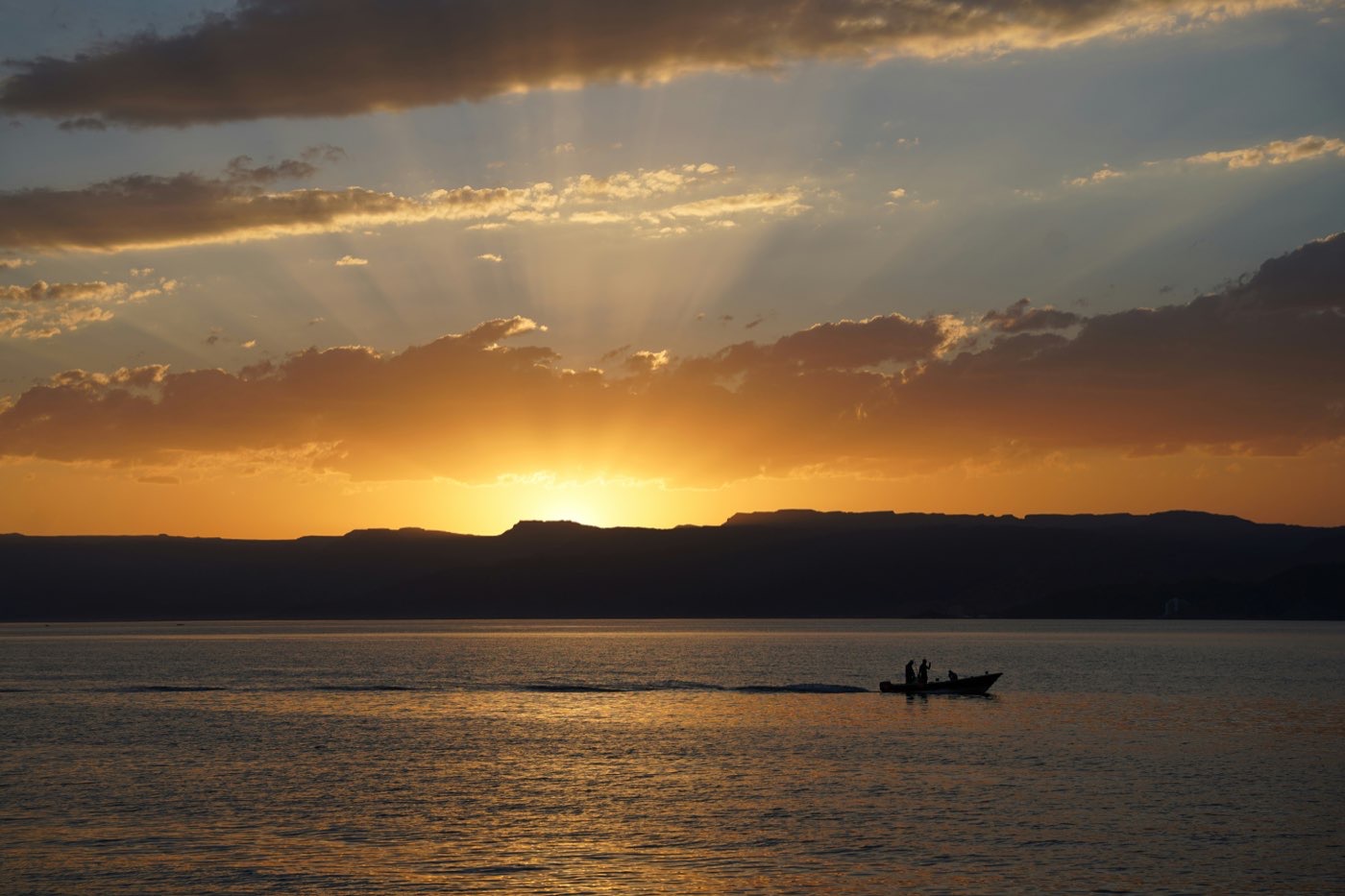
Aqaba sits at the northern tip of the Red Sea, hemmed in by desert mountains on three sides and sharing a coast with Israel, Egypt, and Saudi Arabia within a few kilometres. It is Jordan’s only coastal city and, as a designated free trade zone, has a slightly different character to the rest of the country - more permissive, more international, with better access to alcohol and a beach culture that other Jordanian cities lack.
For travellers, Aqaba divides cleanly into two categories of activity: underwater and on land.
Book an Aqaba Tour
| Tour | Duration | From | Book |
|---|---|---|---|
| Glass Boat & Snorkeling + Berenice Beach Club | 4 hrs | $33/person | Book → |
| Red Sea Cruise & Snorkeling Experience | 4 hrs | $35/person | Book → |
| Guided Scuba Diving Adventure in Aqaba | 3 hrs | $49/person | Book → |
| All Aqaba tours | - | - | Browse on GYG |
Prices verified from TripAdvisor / GetYourGuide as of 2026. Equipment typically included in snorkeling tours; confirm dive certification requirements before booking scuba tours.
Diving the Red Sea
The waters immediately offshore from Aqaba contain some of the most accessible reef diving in the Red Sea. Unlike much of the Egyptian Red Sea coast, which requires boat transfers to reach dive sites, several of Aqaba’s best sites are accessible by shore entry - meaning lower costs and more flexibility.
Cedar Pride Wreck - the most celebrated dive site in Aqaba. A Lebanese cargo ship sunk deliberately in 1985 to create an artificial reef, now at a maximum depth of approximately 25 metres. Covered in coral growth, with schools of glassfish and regular visits from larger species. Suitable for Open Water and above. One of the best wreck dives in the Red Sea.
Aqaba Canyon - a dramatic underwater wall and canyon system starting at around 7 metres and dropping to beyond recreational limits. Strong on soft corals and reef fish. Best dived with a guide for navigation.
First Bay / JRSL Reef - a shallow reef near the public beach, good for snorkelling and beginner dives. Maximum depth around 12 metres.
Royal Diving Club is the most established dive operator in Aqaba, running PADI courses from beginner to instructor level. An introductory (“discovery”) dive costs approximately JOD 25 as of 2026. A two-tank boat dive for certified divers costs approximately JOD 35–50 depending on the site. The club also rents dive equipment. Located on the southern coastal road, about 7 km from the city centre.
Snorkelling
Several hotels along the southern coast offer direct beach access to reef areas. Equipment rental is available at most beach clubs and at the Royal Diving Club for approximately JOD 5 per set as of 2026. The reef immediately south of the port is in shallower water and accessible without a boat. The JRSL public beach (see below) has a snorkellable reef area.
Beaches
Berenice Beach Club - a private beach club on the southern coastal road with sunbeds, water sports, and a restaurant. Day entry costs approximately JOD 15 per person as of 2026 (redeemable against food and drink). Good facilities and a maintained beach strip. Popular with Ammanis on weekend breaks.
JRSL Public Beach (Jordan Royal Submarine Leisure) - the main free public beach south of the city. Access is free and the reef area is snorkellable. Facilities are basic; bring your own equipment if you want to snorkel properly.
City Beach - a small public beach immediately in the city centre, near the Corniche. Good for an evening stroll rather than serious swimming.
Water Sports
The Berenice Beach Club and several operators along the southern coast offer banana boat rides, jet ski hire, and glass-bottom boat tours. Prices run approximately JOD 8–15 per person for standard activities as of 2026. Glass-bottom boat tours typically last 45–60 minutes and give non-divers a view of the reef without getting wet.
Aqaba Fort (Mamluk Fort)
The fort that dominates the waterfront was built by the Crusaders in the early 12th century and later expanded substantially by the Mamluks in the 16th century. It played a role in the Arab Revolt of 1916 - Lawrence of Arabia passed through Aqaba during this period. The interior is partially restored and the views from the upper walls toward the four-country confluence of the Red Sea are good on clear days.
Entry costs approximately JOD 3 as of 2026. Open daily 08:00–18:00 in summer, 08:00–16:00 in winter.
Aqaba Museum
A small but well-curated museum in the grounds of the Aqaba Fort complex, covering the city’s history from its Nabataean origins through the Islamic period to the 20th century. Entry costs approximately JOD 1 as of 2026. Worth an hour if you have any interest in the city’s history beyond its beach and dive credentials.
Shopping: Gold Souk and Duty-Free
Aqaba’s status as a free trade zone makes the Gold Souk a popular destination for duty-free gold and silver purchases. Gold prices follow the international spot price with lower local taxes than mainland Jordan. The souk is concentrated in the streets around the central commercial district. Compare prices between shops before committing - they vary more than they should given that gold is priced off the same international market.
Alcohol is also significantly cheaper in Aqaba than in Amman, where it is available only in licensed hotels and specialist shops. Several liquor stores operate in the city centre.
Day Trips from Aqaba
Wadi Rum - 60 km north, approximately 1 hour by car. The dramatic red desert landscape is best experienced with a Jeep tour or camel ride, and the area is most rewarding as an overnight stay in a Bedouin camp. As a day trip it is worthwhile but compact; as an overnight stop it is one of the strongest experiences in Jordan.
Eilat (Israel) - the Yitzhak Rabin / Wadi Araba crossing is 15 minutes by taxi from Aqaba city centre. Eilat itself has little of specific interest beyond its airport (Ben Gurion airport is about 90 minutes north), but the crossing is a useful option for travellers flying out of Israel. Confirm visa requirements for your nationality before attempting the crossing.
Petra - 130 km north, approximately 2 hours by car. A long but doable day trip from Aqaba; most visitors find the reverse direction easier (staying in Petra then dropping to Aqaba). To book diving, snorkelling, and water sports in Aqaba in advance, browse Aqaba activities and tours.
Search hotels in Aqaba on Booking.com
More in Aqaba
- Best Hotels in Aqaba
- Food to Try in Aqaba
- Diving in Aqaba: Full Guide
- Best Hotels in Aqaba: Full Comparison
- 7-Day Jordan Itinerary
Our best tours in Aqaba roundup covers snorkelling, diving, boat trips and day tours.