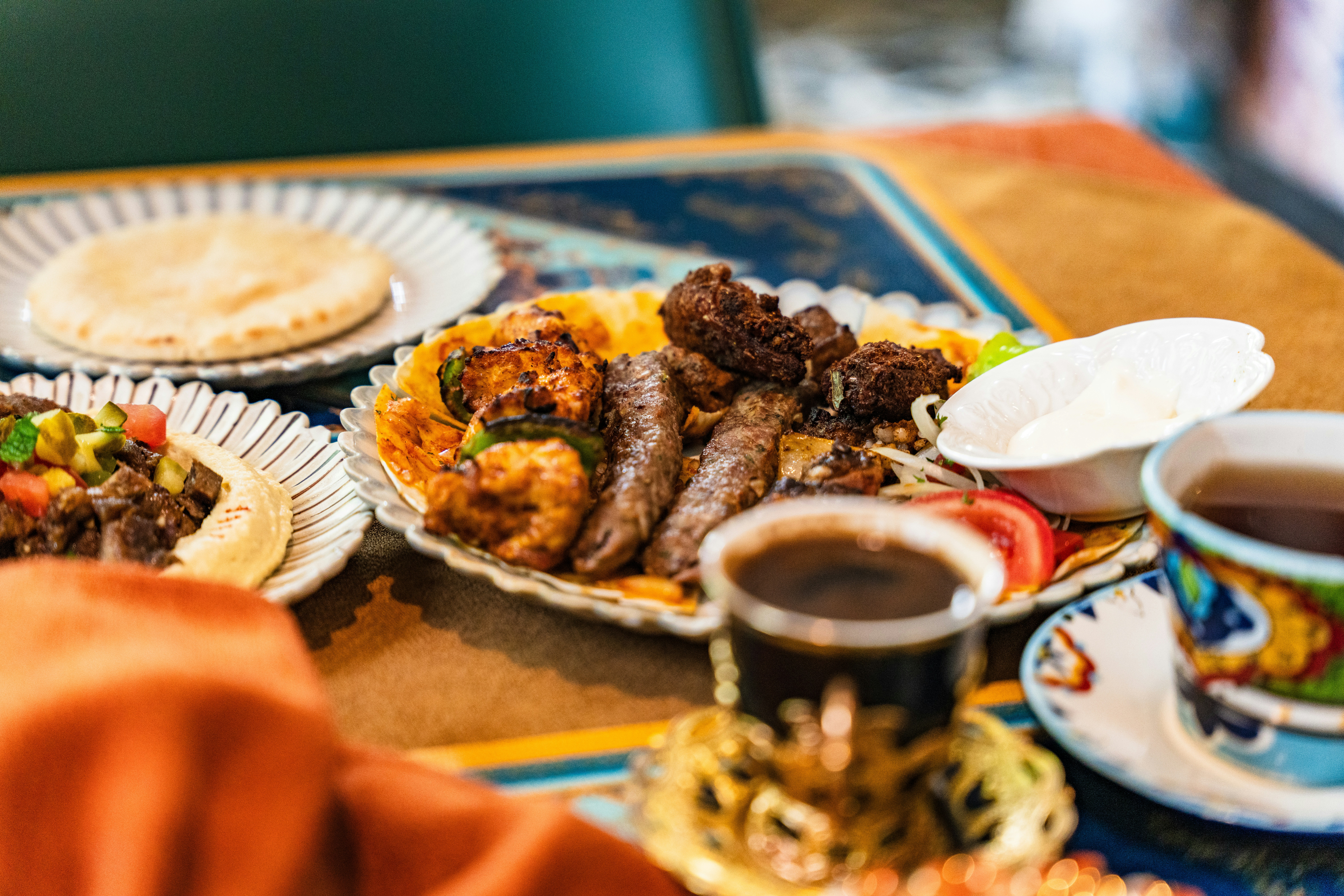
Aqaba sits at the northern tip of the Red Sea, and its food reflects both the sea and the desert hinterland behind it. Freshly grilled fish dominates the restaurant strip along the waterfront, while the inland streets around the souk serve Jordan’s classic lamb dishes, falafel sandwiches, and the sugary pastries that mark every Jordanian town. It is a compact city with a serious eating scene - unpretentious, largely affordable, and much better than visitors expect given the resort-heavy reputation.
The Dishes to Know
Sayadieh (Sayyadieh)
The signature dish of Aqaba is sayadieh - fish cooked over rice that has been seasoned with caramelised onions, cumin, turmeric, and allspice. The fish is typically hammour (grouper) or sultan ibrahim (red mullet), caught locally in the Red Sea. The rice absorbs the cooking liquid and turns an amber-gold colour. Served with a side of fried fish, tahini sauce, and salad, sayadieh is a full meal in one platter and the thing to order at any Red Sea seafood restaurant.
Mansaf
Though mansaf is more associated with Amman and the Bedouin interior than with Aqaba, it appears on menus throughout Jordan and Aqaba restaurants are no exception. Lamb is slow-cooked in jameed - dried fermented goat’s milk reconstituted into a sharp, tangy broth - and served over a bed of rice and flatbread. The dish is eaten communally, often standing, with the right hand. For visitors, it is a genuinely memorable meal: the jameed sauce is unlike anything in European cooking, savoury and sour in equal measure.
Grilled Fish and Seafood
Beyond sayadieh, Aqaba’s restaurants offer a rotating selection of whole grilled fish. Hammour, seabream, barracuda, and occasionally lobster come straight off charcoal grills. Most waterfront restaurants let you select your fish from a display before it is cooked - whole weight pricing means the bill can climb if you choose a large fish. Clarify the price by weight before confirming your order.
Mezze
Aqaba follows the wider Jordanian mezze tradition: hummus, mutabal (smoky aubergine dip), tabbouleh, fattoush, and warm pita arrive as a table spread before or alongside main courses. Quality varies considerably - at the better restaurants it is made fresh, at cheaper tourist spots it can be factory-bought and underflavoured.
Street Food and Snacks
- Falafel and hummus breakfasts at local spots around the city centre cost approximately 0.5–1 JOD per sandwich as of 2026. The standard format is falafel balls, fresh tomato, pickles, and tahini in a flatbread.
- Shawarma - chicken or lamb cut from a rotating spit, wrapped in thin bread with garlic sauce, pickles, and chips - is found throughout the city, particularly near the waterfront and bus station area. Budget approximately 1.5–2 JOD per wrap.
- Knafeh - shredded pastry layered over soft white cheese, soaked in sugar syrup and dusted with pistachios - is sold by weight at bakeries in the souk. This is Aqaba’s preferred sweet, particularly warm in the evening.
Where to Eat in Aqaba
Ali Baba Restaurant
One of Aqaba’s longest-established seafood restaurants, Ali Baba occupies a position in the central restaurant row near the seafront. The sayadieh here is reliably good, the fish are fresh, and the mezze table is substantial. Expect to pay approximately 8–15 JOD per person for a full meal as of 2026, including mezze and fish. It is popular with Jordanian families at weekends - a sign of quality and value. Service can be slow when full.
Captain’s Restaurant
Captain’s is a seafront institution with an extensive menu covering both Jordanian seafood classics and grilled meats. The terrace position gives views over the Gulf of Aqaba toward Saudi Arabia’s Tabuk coastline. Fish is priced by weight - budget approximately 10–20 JOD for two people sharing a mid-sized fish with sides. Captain’s caters heavily to tourist groups but maintains consistent quality. Booking ahead at peak season (autumn and spring) is advisable.
Red Sea Grill
A solid mid-range option on the waterfront strip, the Red Sea Grill focuses on grilled fish and serves both sayadieh and a rotating catch of the day. Less formal than Captain’s, with faster service and lower prices. Expect approximately 6–10 JOD per person for a complete meal as of 2026.
Al-Shami Restaurant
For visitors who want to eat as locals do rather than at the tourist waterfront row, Al-Shami in the city’s residential backstreets serves excellent mansaf and grilled lamb at considerably lower prices. Lunch is the main meal here. A full mansaf plate runs approximately 5–7 JOD as of 2026. No English menu - pointing at what other tables are eating is an entirely acceptable approach.
Al-Samak (For a Splurge)
Al-Samak on the South Beach strip is Aqaba’s most polished seafood restaurant, a step up from the casual waterfront row in both presentation and price. The menu focuses on Red Sea catch - hammour, sea bass, shrimp - prepared with more care than the standard grill spots further north. Expect approximately JOD 18–30 per person as of 2026 for a full meal with mezze, a main fish course, and soft drinks. The outdoor terrace runs along the beach side and is particularly good on calm evenings between October and April. Booking ahead is advised at weekends.
Royal Yacht Club Restaurant
The Royal Yacht Club restaurant sits at the marina on the southern Corniche, overlooking moored boats and the Gulf of Aqaba toward the Saudi coastline. Service is more formal than most Aqaba restaurants and the menu covers both seafood and grilled meats. Mains run approximately JOD 12–20 per person as of 2026. Popular with local business lunches midweek; booking ahead at weekends is recommended.
International Restaurants (For Those Who Need a Break)
Aqaba has a growing number of international and fusion restaurants, particularly around the resort hotels on the southern strip (South Beach area). These cater predominantly to foreign holidaymakers and are priced accordingly - 15–30 JOD per person is typical. If you are staying at one of the large resort hotels, the on-site restaurants are convenient but significantly more expensive than the independent waterfront options.
The Aqaba Souk and Local Provisions
The central souk area, a few blocks inland from the waterfront, has traditional bakeries, nut and dried fruit stalls, spice vendors, and small restaurants where lunch is the main event. This is where to stock up on dates, dried figs, pistachios, and za’atar (the dried thyme-sesame-sumac spice blend used throughout Jordanian cooking). Prices here are genuinely local - a 250g bag of good pistachios costs approximately 2–3 JOD as of 2026.
Reservation Tips
Most of Aqaba’s waterfront restaurants (Ali Baba, Captain’s, Al-Samak, Royal Yacht Club) accept walk-ins but fill by 8pm on Jordanian weekends (Thursday and Friday evenings). During Eid al-Fitr, Eid al-Adha, and national public holidays, even mid-range waterfront restaurants reach capacity - call ahead or arrive before 7pm. The inland and souk-area spots (Al-Shami and the falafel counters) do not take reservations and operate on a walk-in basis only.
For the fish-by-weight restaurants (Captain’s, Red Sea Grill), confirm the price per kilo before selecting your fish - the weight of a whole hammour can push the bill considerably higher than the stated base price implies.
Book an Aqaba Food Tour
Aqaba’s compact layout makes a guided food walk practical and worthwhile. A good local guide knows which stalls at the fish market sell the morning’s freshest catch, which downtown shawarma vendors use the better cuts, and how to navigate the waterfront restaurant strip without defaulting to the most tourist-visible options. Some operators also combine a brief Red Sea snorkelling session with a seafood lunch, making the fish-to-plate journey unusually direct. Browse food tours and guided experiences in Aqaba for current operators.
Practical Notes
Breakfast timing: Most local restaurants open from around 7am. Hotel breakfasts are available from 6:30am at larger properties. For fresh falafel, the best spots are busy by 8am and sometimes sell out by 10.
Lunch vs dinner: In Aqaba, lunch (noon–3pm) is when locals eat their main meal. Tourist-oriented waterfront restaurants serve all day, but quality of the fresh fish can be better at midday when stocks are freshest.
Ramadan timing: During Ramadan, many local restaurants operate reduced hours or close during daylight. Tourist-area restaurants continue serving, but the atmosphere changes. If you visit during Ramadan, check times in advance - exact dates shift each year.
Alcohol: Aqaba is a free-trade zone with more liberal licensing than the rest of Jordan. Beer and wine are available at the tourist waterfront restaurants and resort hotels. Local and smaller restaurants generally do not serve alcohol.
Payment: Most tourist waterfront restaurants accept credit cards. Local spots and the souk are cash only. Prices above are approximate as of 2026 - confirm before ordering if budget is a concern.
Getting to the Restaurants
The main restaurant strip runs along King Hussein Street along the waterfront, easily walkable from most Aqaba accommodation. The souk area and local spots are a 5–10 minute walk inland. Taxis within Aqaba should cost approximately 1.5–3 JOD as of 2026 for most journeys within the city centre. For a guided Aqaba food or cultural tour, browse Aqaba tours and experiences.
Plan Your Jordan Trip
Before leaving, pick up a Jordan eSIM from Airalo - set up before arrival, no SIM swapping at the airport. VisitorsCoverage travel insurance covers medical emergencies, trip cancellation, and evacuation for Jordan trips.
More in Aqaba
Need a base? Search hotels in Aqaba on Booking.com