Jordan and Egypt are often compared because they sit within a few hundred kilometres of each other, both draw visitors for ancient monuments, and both are natural stepping stones in a broader Middle East or Africa circuit. But they are genuinely different experiences - different cultures, different price points, different logistics, and very different scales. Here is a direct comparison to help you decide which suits your trip.
At a Glance
| Factor | Jordan | Egypt |
|---|---|---|
| Area | 89,000 km² | 1,010,000 km² - 11× larger |
| Population | ~10 million | ~104 million |
| Capital | Amman | Cairo |
| Currency | Jordanian Dinar (JOD) | Egyptian Pound (EGP) |
| Language | Arabic (English widely spoken in tourist areas) | Arabic (English spoken in tourist areas) |
| Top draw | Petra, Wadi Rum, Dead Sea | Pyramids, Nile, Luxor, Red Sea |
| Days needed | 7–14 | 10–21 |
| Overall cost | Moderate | Budget to moderate |
| Visa on arrival | Most Western passports - yes | Most Western passports - yes |
Ancient Sites: Egypt Wins on Scale
Egypt’s ancient inventory is unmatched anywhere on earth. The Pyramids of Giza, the Sphinx, the temples at Karnak and Luxor, the Valley of the Kings, Abu Simbel - these are among the greatest archaeological sites in the world by any measure. The National Museum of Egyptian Civilization in Cairo holds the royal mummies collection. Entrance fees have increased sharply in recent years; visiting the Valley of the Kings costs approximately USD 18–25 as of 2026, and a day in Luxor covering major temples runs USD 40–60 per person depending on sites chosen.
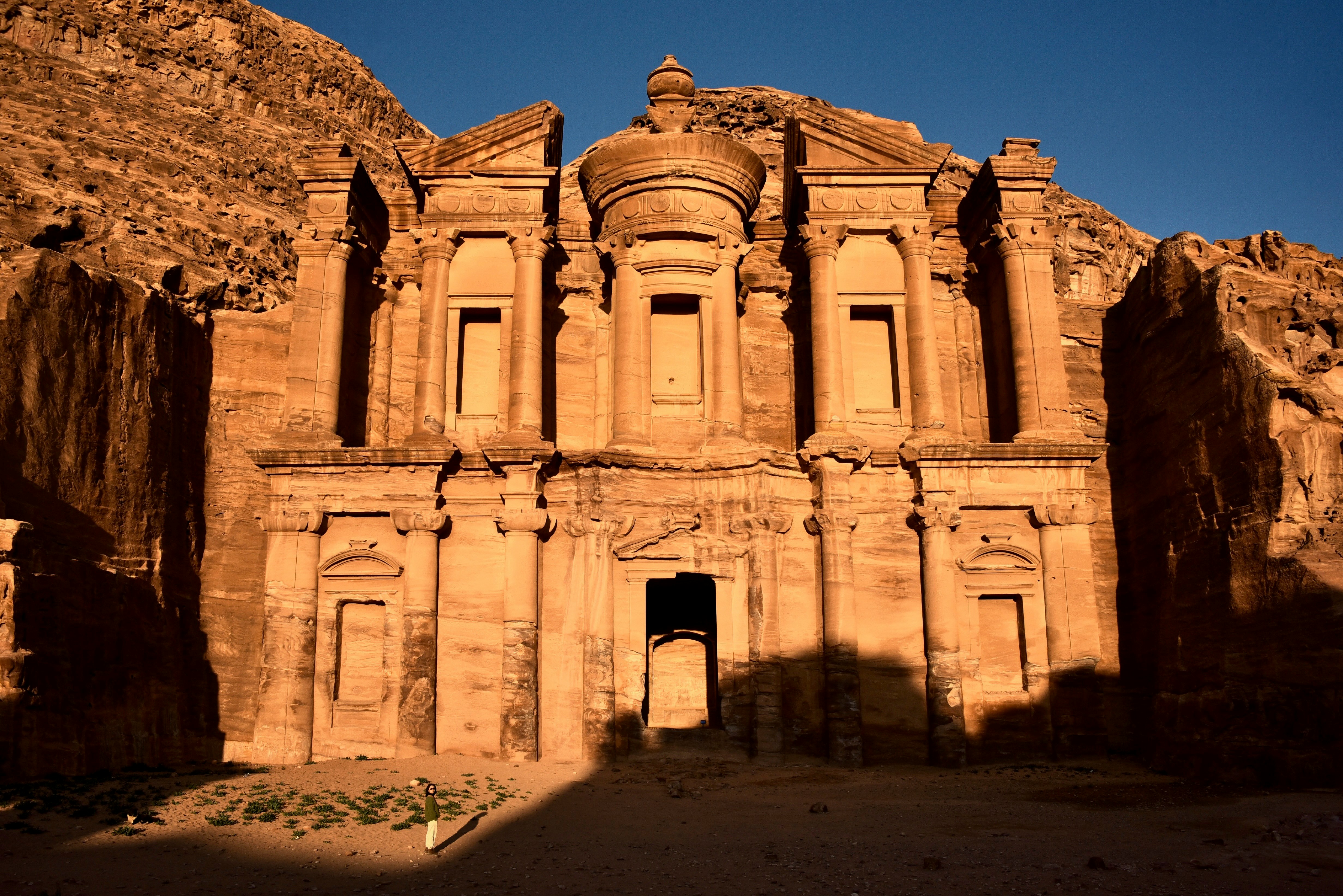
Jordan’s highlight is Petra - one of the world’s most spectacular archaeological sites and genuinely comparable to Egypt’s best in terms of visual impact. A one-day Petra ticket costs approximately JOD 50 as of 2026. Jerash, the Roman city 50 km north of Amman, is separately one of the best-preserved Roman provincial cities in the Middle East. For ancient history in breadth and depth, Egypt is the winner. But Jordan’s sites feel less crowded and better managed in our experience.
Natural Wonders: Jordan Punches Above Its Weight
Jordan has three genuinely world-class natural experiences: the Dead Sea (the lowest point on earth, with waters so dense you float without effort), Wadi Rum (a vast red desert reserve used as a Mars analogue in multiple films), and the Red Sea coral reefs off Aqaba.
Egypt’s natural highlights include the Sinai desert (Dahab, Sharm el-Sheikh), the Red Sea Riviera (Hurghada), the Nile, and the Eastern Desert. Egypt’s Red Sea coast has more developed dive infrastructure and more reef variety than Aqaba, though Aqaba’s reefs are perfectly good for most divers and snorkellers.
Jordan wins the desert experience (Wadi Rum over Sinai), Egypt wins the dive scene.
Costs and Budget
Egypt is generally less expensive than Jordan. A reasonable mid-range budget for Egypt - including accommodation, transport, food, and entry fees - runs approximately USD 60–90 per person per day. In Jordan, the same standard of trip costs approximately USD 90–130 per person per day, partly because Petra’s entry fee alone is JOD 50, and partly because Jordan has a higher cost of living than Egypt.
Accommodation comparison
Amman, Jordan - mid-range options:
- Casa Mia Hotel (Jabal Amman): approximately JOD 45–70/night as of 2026
- Caravan Hotel (downtown): approximately JOD 30–45/night as of 2026
Cairo, Egypt - mid-range options:
- Novotel Cairo Airport: approximately USD 90–120/night as of 2026
- Marriott Mena House (Giza, Pyramids view): approximately USD 200–300/night as of 2026 (higher for the view)
- Pension Roma (central Cairo, budget): approximately USD 20–35/night as of 2026
Food costs
Cairo is cheaper than Amman for eating out. A full meal at a mid-range Cairo restaurant costs approximately USD 8–15 per person; in Amman, similar quality runs approximately JOD 8–18 (roughly USD 11–25). Street food and local restaurants are cheaper in both cities - a Cairo koshari bowl runs USD 1–2; an Amman falafel and hummus plate runs JOD 2–4.
Safety and Atmosphere
Jordan has one of the strongest safety records for tourists in the Arab world. Crime against tourists is rare; petty harassment is lower than in many comparable destinations. Amman has a relaxed, cosmopolitan feel. Rural Jordan - including Petra and Wadi Rum - is generally very safe.
Egypt is broadly safe in the main tourist corridors (Cairo, Luxor, Aswan, the Red Sea coast), but petty hassle, taxi overcharging, and persistent touts are more common than in Jordan. Parts of Egypt outside the tourist corridors have varying security situations - check current travel advisories from your government before booking. Check our Jordan safety guide for Jordan-specific information.
Logistics and Getting Between Them
The Aqaba–Nuweiba ferry across the Gulf of Aqaba is the classic crossing between Jordan and Egypt. The fast ferry takes approximately 1 hour; the slow ferry around 3 hours. Prices vary by season - approximately USD 55–80 one-way as of 2026. Book ahead during Eid and summer school holidays.
Flights between Amman (AMM) and Cairo (CAI) are frequent and inexpensive with Royal Jordanian and Air Cairo; flight time is approximately 1 hour 30 minutes.
Who Should Choose What
Choose Jordan if: You want an intense, compact trip with world-class sites in a manageable geography. Jordan takes 7–10 days to cover well. The experience is calmer, less crowded at the key sites, and the logistics are simpler. Book tours across Jordan’s highlights to hit Petra, Wadi Rum, and Jerash efficiently within a compact schedule.
Choose Egypt if: You want breadth of ancient history, a bigger adventure, or a longer trip. Egypt rewards 2–3 weeks to cover the Nile corridor properly alongside Cairo and a Red Sea extension.
Do both if: You have 14–21 days and want the full spectrum - Jordanian desert and architecture alongside Egyptian monuments and the Nile. The ferry crossing makes combining them straightforward.
Final Verdict
Egypt wins on volume of ancient sites and lower overall cost. Jordan wins on ease of travel, safety of atmosphere, and the quality of the individual experiences at Petra and Wadi Rum. They are not in competition - most travellers who visit one end up wanting to visit the other. See our first-time Jordan guide for what to prioritise if Jordan is your starting point.
More Jordan comparisons: Jerash vs Petra · Wadi Rum vs Dead Sea · Amman vs Aqaba
Start planning your Jordan trip: First Time in Jordan · Petra visitor guide · Wadi Rum visitor guide
🏨 Search hotels in Jordan - Search hotels in Egypt
Plan Your Trip
✈️ Book your flights to Jordan 🛡️ Get travel insurance 📱 Stay connected with an eSIM 🚗 Rent a car