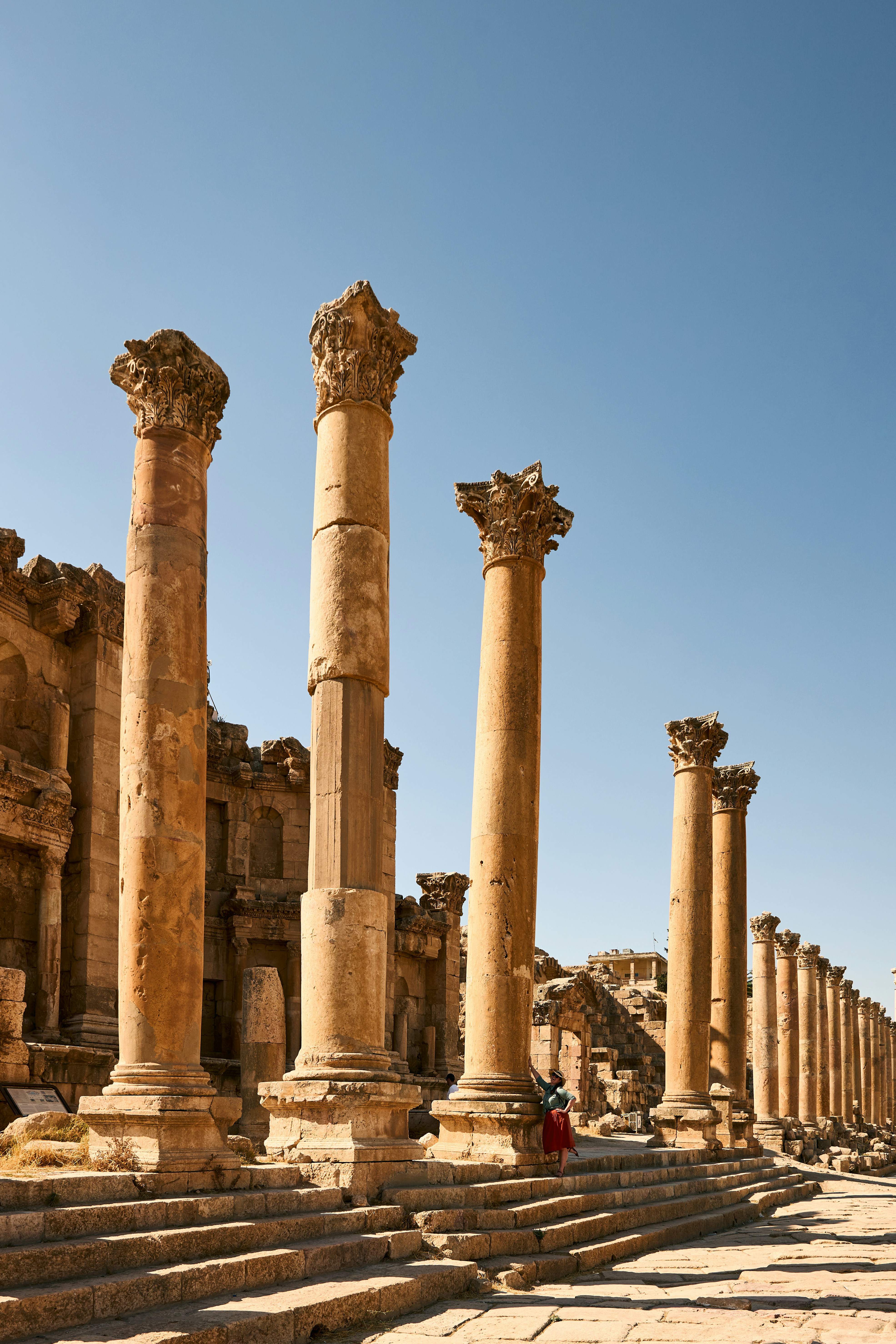
Jordan has two historical sites that compete for space on every itinerary: Jerash, the Roman provincial city 50 kilometres north of Amman, and Petra, the Nabataean capital 240 kilometres to the south. They are completely different in character - different eras, different architectural styles, different scales, and different levels of effort to visit. Here is a direct comparison.
At a Glance
| Factor | Jerash | Petra |
|---|---|---|
| Era | Roman, 1st century BCE – 7th century CE | Nabataean, 4th century BCE – 2nd century CE |
| Entry fee | ~JOD 10 as of 2026 | ~JOD 50 (1 day) as of 2026 |
| Jordan Pass coverage | Yes | Yes |
| Time needed | 2–4 hours | Full day minimum, 2 days recommended |
| Distance from Amman | 50 km north (~45 min) | 240 km south (~3 hours) |
| Walking difficulty | Easy - mostly flat | Moderate to strenuous |
| Crowds | Moderate | High (especially Treasury area) |
| Nearby accommodation | Amman (day trip) | Wadi Musa hotels |
Jerash: The Roman City
What makes Jerash exceptional
Jerash was one of the ten cities of the Roman Decapolis - a league of prosperous Graeco-Roman cities in the eastern empire. Unlike many Roman sites where you are imagining what once stood, Jerash gives you most of it intact: a complete colonnaded street (the Cardo Maximus), two theatres (the South Theatre seats 3,000; the North Theatre 1,600), a Nymphaeum fountain, an Oval Plaza with original paving stones, and a triumphal arch built to welcome Emperor Hadrian in 129 CE.
The South Theatre still hosts performances - the Jerash Festival of Culture and Arts runs each July and August, with concerts and plays performed on the original Roman stage. Few experiences in the Middle East compare to hearing live music in a 2,000-year-old Roman theatre.
Entry and costs
General entry to Jerash costs approximately JOD 10 as of 2026. The Jordan Pass covers this, and if you’re buying the pass anyway (which most visitors to Petra should), Jerash becomes effectively free. A site guide for 2–3 hours costs approximately JOD 15–25 and adds substantial context to what you’re seeing - worth it if this is your first time visiting a major Roman site. Guided day trips to Jerash from Amman combine transport and a licensed guide in one booking. The ticket includes access to the Jerash Archaeological Museum inside the site.
Practicalities
Jerash is a half-day trip from Amman. The JETT bus or a private taxi takes 45–60 minutes. Most visitors go north from Amman in the morning, spend 3 hours at the site, eat lunch in the town of Jerash, and return to Amman in the afternoon. There is no need to overnight in Jerash - the accommodation options in the town itself are limited and the site is better visited as a day trip.
Eating near Jerash: The town has several restaurants near the entrance. Lebanese House Restaurant is the most reliable option for mezze and grills, with meals running approximately JOD 6–12 per person as of 2026.
Petra: The Nabataean Capital
What makes Petra exceptional
Petra was the capital of the Nabataean kingdom, a people who controlled the trade routes between Arabia, Egypt, and the Mediterranean from approximately the 4th century BCE. They carved their city directly into the rose-red sandstone of a hidden valley - temples, tombs, markets, colonnaded streets, and a full urban infrastructure, all cut by hand from the cliff walls. The Treasury (Al-Khazneh), the most photographed image in Jordan, is a tomb façade 28 metres wide and 39 metres high, carved with a precision that still astonishes structural engineers.
What sets Petra apart from Jerash is scale and density. The site covers 264 square kilometres, with over 800 individual carved structures. The main visitor circuit - Siq, Treasury, Street of Facades, Royal Tombs, Colonnaded Street, Monastery - covers approximately 9 km on foot and includes more individual highlights than most visitors can absorb in a single day.
Our guide to Petra’s history covers the Nabataean context in detail.
Entry and costs
A one-day ticket costs approximately JOD 50 as of 2026. A two-day ticket adds approximately JOD 5. The Jordan Pass covers unlimited days of entry. Horse rides from the entrance gate to the Siq opening are included in the entry price (they charge separately for rides inside the site). Donkey and camel rides inside the site cost approximately JOD 10–25 per ride as of 2026.
Eating at Petra: The Basin Restaurant inside the site - at the far end of the main Colonnaded Street, about 40 minutes walk from the Treasury - serves buffet lunches for approximately JOD 12–15 per person as of 2026 and is the most practical mid-walk option. In Wadi Musa town, Cleopatra Restaurant and Al-Arabi Restaurant both offer solid mezze at approximately JOD 6–12 per person.
Hotels near Petra
The Mövenpick Resort Petra is directly at the site entrance - rooms run approximately JOD 100–145 per night as of 2026. The Petra Guest House is inside the entrance gate area at approximately JOD 70–100 per night. Rocky Mountain Hotel in Wadi Musa town is a good mid-range option at approximately JOD 40–60 per night.
🏨 Search hotels in Petra (Wadi Musa) on Booking.com
Head-to-Head Comparison
| Question | Jerash | Petra |
|---|---|---|
| Better in half a day | Yes | No (needs a full day) |
| Better value without Jordan Pass | Yes (JOD 10) | No (JOD 50) |
| More physically demanding | No | Yes |
| Better for families with young children | Yes | Manageable, but harder |
| More impressive overall | No | Yes |
| Requires overnight | No | Yes (recommended) |
| Better paired with Amman | Yes | No (too far) |
| Better paired with Wadi Rum | No | Yes |
How They Fit Into an Itinerary
The two sites are not in competition - they are at opposite ends of Jordan and naturally fit different parts of a trip. The standard sequence:
- Day 1–2: Amman, with a half-day Jerash excursion on day 1 or day 2
- Day 3–4: Drive south to Petra via King’s Highway or Desert Highway; full day at Petra
- Day 5–6: Wadi Rum overnight, then Aqaba
This is the 7-day Jordan itinerary that most visitors follow. Jerash on the way out of Amman, Petra in the south - they serve different roles and neither replaces the other.
Final Verdict
Petra is the more impressive single site by a margin - if you can only see one historical site in Jordan, choose Petra. But Jerash is not an also-ran: it’s one of the great Roman sites of the Mediterranean world, and the half-day detour from Amman is easily justified. Both are covered by the Jordan Pass, which changes the financial calculation considerably. If you have 7 or more days in Jordan, budget time for both. See our Jordan Pass guide for how the maths works.
More Jordan comparisons: Petra vs Wadi Rum · Amman vs Aqaba · Jordan vs Egypt
Explore both sites: Jerash visitor guide · Petra visitor guide · 7-day Jordan itinerary
🏨 Search hotels in Jerash - Search hotels in Petra
Plan Your Trip
✈️ Book your flights to Jordan 🛡️ Get travel insurance 📱 Stay connected with an eSIM 🚗 Rent a car