Jordan and Egypt are the two most visited countries in the Arab world for good reason: one gives you rose-red rock cities and star-filled desert silence, the other delivers the most recognisable monuments on earth. Combining them in a single trip is logistically straightforward — a short flight connects Amman or Aqaba to Cairo — and the contrast in pace and landscape makes each country sharper by comparison. This itinerary runs ten to fourteen days depending on how deep you want to go into Upper Egypt, and suits any budget from backpacker dorms to five-star desert camps.
Visas and Entry
Jordan: Most nationalities can purchase a visa on arrival at Queen Alia International Airport (approximately JOD 40, around USD 56), or apply online in advance via the Jordan e-Visa portal. The Jordan Pass bundles the visa fee with entry to over 40 sites including Petra, making it cost-effective for most visitors. It requires a minimum three-night stay.
Egypt: Apply online at the Egypt e-Visa portal before travel. A single-entry tourist visa costs approximately USD 25 for most nationalities and is issued within 3–7 days. Some nationalities, including US, UK, EU, and Australian passport holders, can also get a visa on arrival at Cairo airport.
No specialist travel insurance is required beyond a standard policy, but medical coverage is strongly recommended for both countries.
Best Time to Go
October to April is the sweet spot for both countries. Temperatures in Petra and Wadi Rum are comfortable for hiking (15–25°C in October and March). Cairo and Luxor cool to the low 20s by December, making long days at outdoor sites bearable. July and August bring extreme heat to all four destinations — Wadi Rum regularly hits 40°C — and should be avoided unless you are travelling specifically for the desert experience at dawn and dusk.
Ramadan (dates vary by year) brings reduced opening hours and a quieter atmosphere in Jordan; Egypt’s tourist sites remain open, though local services slow.
Day 1–2: Amman
Fly into Queen Alia International Airport and base yourself in Amman. The capital rewards one full day: the Citadel (Jabal al-Qal’a) for panoramic views and the Roman Theatre in the valley below are the two anchors. The downtown area (Wasat al-Balad) is compact enough to walk, and the food is excellent — lunch at Sufra in Rainbow Street (mains approximately JOD 8–14) is a reliable introduction to Levantine mezze without tourist-trap pricing.
Hotels in Amman:
- Budget: Nomads Hotel & Hostel, Rainbow Street — dorms from approximately JOD 10/night, clean common areas, central location
- Mid-range: Hisham Hotel — doubles from approximately JOD 55/night, well-maintained older property, walking distance to downtown
- Luxury: The House Boutique Suites — doubles from approximately JOD 120/night, Abdoun neighbourhood, rooftop views over West Amman
For a deeper look at what to fit in, see our Amman city guide. Browse Amman tours and guided day trips on GetYourGuide if you’d prefer a structured introduction to the city.
Day 3: Petra
Drive from Amman to Petra (approximately 3 hours, 260 km south on the Desert Highway). Rent a car or take the JETT public bus, which departs Abdali station most mornings for approximately JOD 11 one-way. Arrive mid-morning to beat the midday heat in the Siq.
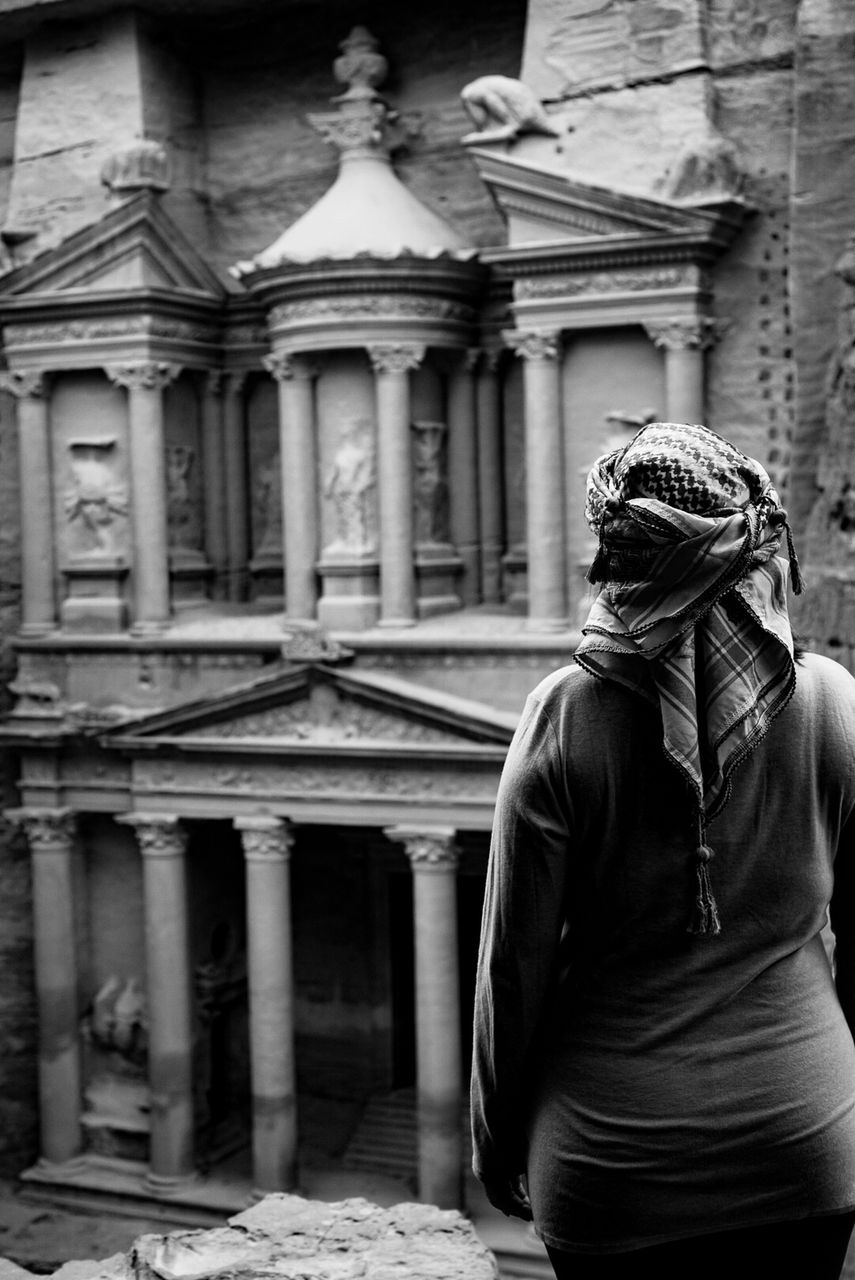
Allow a full day inside Petra. The Treasury (Al-Khazneh) at the end of the Siq is the iconic image, but the Street of Facades, Royal Tombs, and — if legs allow — the Monastery (Ad Deir) up 850 steps are equally dramatic. Entry approximately JOD 50 (included with Jordan Pass). See our Petra city guide for the full breakdown of what to visit and when, or browse Petra guided tours on GetYourGuide for structured half-day and full-day options from Wadi Musa.
Hotels in Petra (Wadi Musa):
- Budget: Valentine Inn — doubles from approximately JOD 30/night, good rooftop terrace, 10-minute walk to Petra gate
- Mid-range: Mövenpick Resort Petra — doubles from approximately JOD 120/night, direct connection to the Petra Visitor Centre via underground tunnel
- Luxury: Hyatt Regency Aqraba — doubles from approximately JOD 180/night, hilltop position with Petra canyon views
Day 4: Wadi Rum
Drive south from Petra to Wadi Rum (approximately 1.5 hours, 100 km). The protected wilderness area requires a permit and entry through the visitor centre (approximately JOD 5 included in many camp packages). Most visitors spend the afternoon on a 4WD tour with a local Bedouin guide — typically 3–4 hours covering Lawrence’s Spring, Khazali Canyon, and the red dune at Jebel Umm Adaami, from approximately JOD 25–35 per person. Browse Wadi Rum 4WD and overnight camp tours on GetYourGuide for a comparison of options and advance booking.
Stay overnight in a desert camp to experience stargazing away from any light pollution. Our Wadi Rum complete guide covers the best camps and how to book.
Wadi Rum camps by tier:
- Budget: Wadi Rum Bedouin Camp — traditional goat-hair tents, shared bathrooms, approximately JOD 35–45 per person including dinner and breakfast
- Mid-range: Sun City Camp — permanent tents with en-suite bathrooms, approximately JOD 70–90 per person half-board
- Luxury: Memories Aicha Luxury Camp — bubble tents with panoramic desert views, approximately JOD 180–220 per person including meals
For a focused two-country southern loop, see our 3-day Petra and Wadi Rum itinerary.
Day 5: Fly Amman to Cairo (or Aqaba to Sharm el-Sheikh)
Option A — Amman to Cairo: Drive back north to Amman (approximately 4 hours from Wadi Rum) and fly Queen Alia International to Cairo International on Royal Jordanian or EgyptAir. Both carriers operate daily direct services. Fares range from approximately USD 80–160 one-way, booked two to four weeks out. Flight time approximately 1 hour 40 minutes. Book through the respective airline websites for best prices.
Option B — Aqaba to Sharm el-Sheikh: If you prefer to avoid doubling back to Amman, drive 75 km south from Wadi Rum to Aqaba (approximately 1 hour) and take the high-speed ferry to Sharm el-Sheikh (approximately 1 hour, USD 65–80 one-way). From Sharm you can fly onward to Cairo on EgyptAir or Air Sinai in under an hour, or start a Sinai extension instead. The Aqaba city hub has the ferry booking details.
Day 6–8: Cairo and Giza
Cairo is intense by any standard — traffic, noise, and scale that makes Amman feel quiet. It also holds the most extraordinary collection of ancient objects on earth. Three days gives you the essential sites without burning out.
Day 6 — Giza Plateau and Egyptian Museum: The Great Pyramid complex (entry approximately EGP 450–600 as of 2026, verify current prices) is best at opening time before tour groups arrive. Finish the afternoon at the Grand Egyptian Museum in Giza (entry approximately EGP 1,000 for full access as of 2026), where the complete Tutankhamun collection is housed. Book tickets online in advance.
Day 7 — Coptic Cairo and Islamic Cairo: The Hanging Church, Ben Ezra Synagogue, and the Al-Muizz Street corridor of Mamluk architecture cover two millennia of layered history in a short walk. Khan el-Khalili market is immediately adjacent for lunch and shopping.
Day 8 — Saqqara and Memphis: The Step Pyramid of Djoser at Saqqara predates the Giza pyramids by over a century and is significantly less crowded. Entry approximately EGP 450 as of 2026. Memphis archaeological site is 15 minutes away.
Hotels in Cairo:
- Budget: The Hostel in Cairo — dorms from approximately USD 12/night, Zamalek island, clean and well-managed
- Mid-range: Hotel Longchamps, Zamalek — doubles from approximately USD 60/night, 1920s building with rooftop terrace
- Luxury: Sofitel Cairo Nile El Gezirah — doubles from approximately USD 180/night, Nile river views, Zamalek
Day 9–10: Luxor
Fly Cairo to Luxor on EgyptAir — multiple daily flights, approximately 1 hour, fares from approximately USD 50–80 one-way. Luxor is where the concentration of ancient monuments reaches a critical mass: the East Bank holds Karnak Temple and Luxor Temple; the West Bank holds the Valley of the Kings, Hatshepsut’s temple at Deir el-Bahari, and the Colossi of Memnon.
Two days covers all of this at a reasonable pace. Valley of the Kings entry covers three tombs (additional tombs cost extra); Tutankhamun’s tomb requires a separate ticket (approximately EGP 500 as of 2026, verify before booking).
Hotels in Luxor:
- Budget: Bob’s Guesthouse — doubles from approximately USD 25/night, West Bank, simple and central
- Mid-range: Nefertiti Hotel — doubles from approximately USD 55/night, rooftop Nile views, East Bank
- Luxury: Sofitel Winter Palace — doubles from approximately USD 220/night, colonial-era property, riverfront gardens
Day 11–14: Aswan (Optional Extension)
If you have four additional days, the overnight train from Luxor to Aswan (approximately 3–4 hours, fares from USD 15 for second class) takes you to a slower, calmer Egypt. Aswan’s main draws are Philae Temple on its island in the Nile, the Unfinished Obelisk in the granite quarries, and a felucca sailing trip between the islands. Abu Simbel, a 3-hour drive into the desert, is the other major site — the relocated twin temples of Ramesses II are worth the early start for their sheer scale.
Hotels in Aswan:
- Budget: Nuba Nile Hotel — doubles from approximately USD 30/night, Nile-facing rooms
- Mid-range: Movenpick Resort Aswan (Elephantine Island) — doubles from approximately USD 100/night, island position accessed by free boat
- Luxury: Anantara Qasr El Sarab Aswan — doubles from approximately USD 200/night as of 2026, verify current rates
Practical Notes
Currency: Jordanian Dinar (JOD) in Jordan; Egyptian Pound (EGP) in Egypt. Both are cash-dependent outside tourist hotels and restaurants. Change dollars or euros at airports or licensed exchange offices rather than hotels.
Jordan Pass vs individual tickets: If you are visiting three or more sites in Jordan, the Jordan Pass (from approximately JOD 70 per person) covers the visa fee and Petra entry, saving meaningful money.
Time in each country: The split above gives roughly four days in Jordan and six to ten in Egypt. If you only have ten days total, compress Cairo to two nights and skip Aswan.
Getting around Egypt: EgyptAir domestic fares are inexpensive when booked early. The overnight sleeper train between Cairo and Luxor is comfortable in first-class but booking in advance is essential during peak season (November–February).
Search hotels in Jordan on Booking.com
More Jordan Planning
For a purely Jordan-focused trip or to extend your stay, see our 7-day Jordan itinerary and 5-day Jordan route. Both include the Dead Sea, Jerash, and the King’s Highway sites that this combo trip skips in favour of the Aqaba/Egypt connection.
Book Your Trip
- Flights - Find the best fares to Jordan · flights guide
- Travel Insurance - Get covered before you go · insurance guide
- eSIM - Stay connected from landing · eSIM guide
- Airport Transfers - Pre-book your transfer from Amman Queen Alia Airport · airport guide
- Car Rental - Compare prices across providers · car hire guide
- Hotels - Search hotels in Jordan on Booking.com
- Tours & Activities - Browse Jordan tours on GetYourGuide