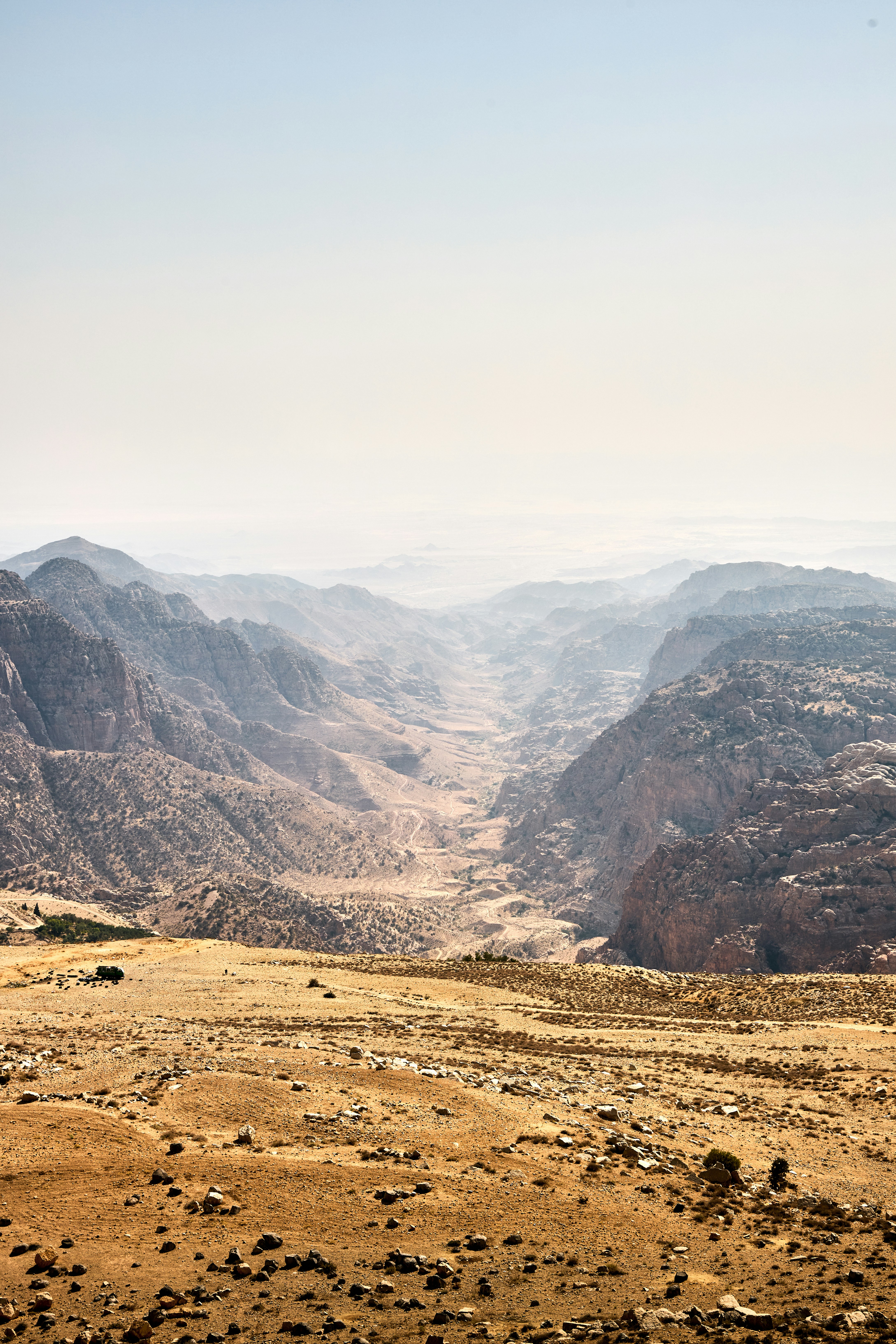
Dana Biosphere Reserve is Jordan’s largest nature reserve, covering 320 square kilometres of terrain that drops from the sandstone plateau at around 1,500 metres down through a series of dramatic wadis (canyons) to the desert floor at Wadi Araba, below sea level. The landscape shifts from Mediterranean scrubland at the top to desert formations at the bottom - and the trails that connect them are the best hiking in Jordan outside of Wadi Rum.
Most visitors arrive from Amman on their way south to Petra via the King’s Highway, stopping in Dana for one or two nights. The reserve is managed by the Royal Society for the Conservation of Nature (RSCN), which runs the trails, the accommodation, and the visitor centre in Dana village. Getting the most from Dana requires at least one overnight stay - arriving late and leaving early the next morning does not do the landscape justice.
Dana Village
The stone village of Dana sits on a cliff edge above the canyon, its traditional houses constructed from local sandstone in a style that has changed little in centuries. The RSCN has worked with the community to preserve the village as a living settlement rather than a tourist reconstruction: some houses are inhabited year-round, others are used as guesthouses or workshops, and a small crafts shop near the visitor centre sells locally made products.
Walking through the village itself takes 20–30 minutes. The cliff-edge views from the upper lanes are the best free panorama in Dana - the canyon drops away sharply below the houses, with the reserve’s layered sandstone formations stretching south and west. In spring, wildflowers grow between the stones throughout the village.
The RSCN visitor centre in the village is the starting point for all guided trail bookings. Stop here first to check current trail conditions, buy maps, and arrange a guide if you need one.
Dana Tower Trail
The easiest and most accessible hike from Dana village is the Dana Tower Trail - a 2-kilometre loop starting from the village edge. The trail climbs briefly to a viewpoint over the reserve before looping back, taking approximately 1 hour at an easy pace. This is the right choice if you have limited time, are hiking with children, or want an orientation walk before attempting one of the longer routes.
The trail is free to walk without a guide and is well-marked with RSCN trail markers. The viewpoint at the high point of the loop gives the widest panorama of the reserve available from a short hike.
Rummana Campsite Trail
The Rummana Campsite, approximately 8 kilometres north of Dana village, is the starting point for several short trails through the northern section of the reserve. The most popular is the loop trail from Rummana toward Dana village and back - approximately 4 kilometres, taking 2–3 hours, with good wildlife observation opportunities.
This section of the reserve is known for Nubian ibex sightings - the sure-footed wild goats that navigate the cliff faces and rocky terrain throughout the reserve. Early morning is the best time to spot them; they are often visible on the canyon walls in the first two hours of daylight. The Rummana area is also good for birdwatching: over 200 bird species have been recorded in the reserve, including Bonelli’s eagle, the Syrian serin, and various raptors that use the thermal columns rising from the canyon for soaring.
Day use of the Rummana Campsite area is free; overnight camping at the RSCN campsite costs approximately JOD 15–20 per person and includes basic tent facilities. Book through the RSCN (rscn.org.jo).
Wadi Dana Trail (Full Day)
The Wadi Dana Trail is the reserve’s signature hike: a 14-kilometre descent from Dana village through the canyon to Feynan Ecolodge on the desert floor. The trail takes 5–7 hours depending on pace and is rated moderate - the path is clear and the gradient is manageable, but the length and exposure require proper preparation.
The descent moves through several distinct ecological zones: the Mediterranean scrubland of the upper canyon, the more arid mid-section with acacia trees and juniper, and finally the open desert floor where the wadi meets the Wadi Araba rift valley. The change in landscape over the course of the walk is one of the trail’s main attractions.
An RSCN guide is required for this trail. Guide fees are approximately JOD 15–25 per group depending on group size and current RSCN pricing - confirm at the visitor centre. The guide is worth more than the fee: trail conditions vary seasonally, and navigating the lower canyon sections without local knowledge is genuinely difficult.
If you finish at Feynan Ecolodge you will need to arrange transport back to Dana, which is not straightforward - Feynan is very remote. Most people who do this trail stay overnight at Feynan and arrange a 4WD transfer back the following day (the lodge can organise this at additional cost).
Wadi Ghwayr Trail
The Wadi Ghwayr Trail is a 7-kilometre loop that passes through a canyon section with seasonal water - one of the few shaded, wet hikes available in Jordan. The trail involves some scrambling through the canyon streambed and requires an RSCN guide. It is best in spring (March–May) when water flow is reliable; in summer the canyon may be dry.
The trail is rated moderate to challenging in the scrambling sections. Allow approximately 4–5 hours. Guide fees apply as above - book at the visitor centre the day before if possible, as guide availability can be limited.
Wildlife
Beyond the Nubian ibex, the reserve is home to a significant range of wildlife that is rarely seen elsewhere in Jordan. The Syrian wolf is present in the reserve, though sightings are rare. Sand partridge and stone curlew are common in the upper reserve areas. The canyon walls are habitat for rock hyrax - small rodent-like mammals more closely related to elephants - which can be spotted on sunny mornings warming themselves on exposed rocks.
Spring and autumn migration brings additional bird species through the reserve. The RSCN visitor centre sells a reserve-specific bird checklist that is useful for species identification.
Feynan Ecolodge
Feynan Ecolodge sits at the bottom of the Wadi Dana canyon on the desert floor, accessible by walking the Wadi Dana trail or by 4WD from the west via the Wadi Araba road. The lodge is solar-powered - no electricity grid, no Wi-Fi - and lit at night by candles and solar lanterns. It offers approximately 26 rooms at around JOD 80–120 per night including breakfast and dinner as of 2026.
The remoteness and the lack of connectivity are the point: Feynan is positioned as one of the most isolated and genuinely off-grid lodge experiences in the region. Booking must be done through the RSCN directly at rscn.org.jo; the lodge does not accept walk-in guests.
Getting to Dana from Amman
Dana is approximately 200 kilometres south of Amman on the King’s Highway, taking around 3 hours by car. There is no direct public transport - no bus or minibus serves Dana village directly.
By private taxi: Approximately JOD 50–70 one-way from Amman, depending on negotiation and the driver. Most taxis from Amman will do this run on a fixed fare if arranged in advance through your hotel.
By King’s Highway itinerary: The most common way to reach Dana is as part of a multi-day drive from Amman to Petra via the King’s Highway, stopping at Madaba, Karak, and Dana en route. This route takes 2–3 days at a comfortable pace and covers all the major sites between Amman and Petra.
From Petra: Dana is approximately 70 kilometres north of Petra - about 1 hour by car. Visitors staying in Wadi Musa often do a day trip north to Dana, though this requires a full day and private transport. To join a King’s Highway tour that includes Dana, browse guided Jordan tours.
Search hotels in Dana on Booking.com