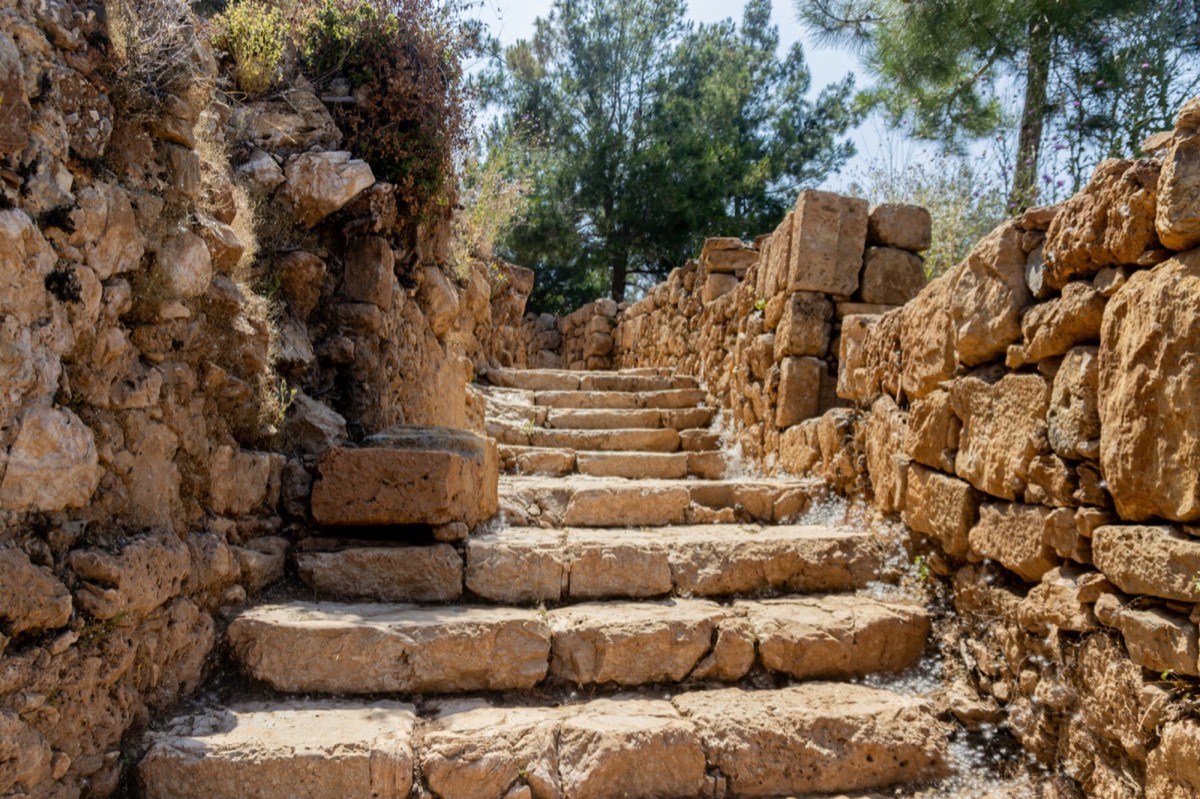
Karak sits on a plateau 900 metres above sea level, 140 kilometres south of Amman on the King’s Highway. The town exists in its current form almost entirely because of what the Crusaders built here: a castle so strategically positioned that it took Saladin three attempts and six years to capture it. Kerak Castle is the reason to come, but the old town that surrounds it, and the views west across the Jordan Valley and the Dead Sea, make the stop worthwhile beyond the fortress walls.
Kerak Castle
Kerak Castle was built by the Crusaders in 1142 as a stronghold for the Kingdom of Jerusalem’s southern frontier. Pagan the Butler, lord of Oultrejordain, chose this plateau edge for its natural defensive position - the rock drops away sharply on three sides, and the only approach at the time was across a narrow neck of land to the north. The castle became one of the largest and most formidable Crusader fortresses in the Levant, housing a garrison, stables, a church, and residential quarters for the ruling lords.
The castle’s most infamous occupant was Reynald of Châtillon, who held Kerak from 1177 and used it as a base for raids on Muslim caravans and, notoriously, an expedition targeting the holy cities of Mecca and Medina. These provocations led directly to Saladin’s repeated sieges: in 1183, when a wedding banquet was in progress inside the castle during one attack; in 1184; and finally in 1189, when the garrison surrendered after running out of food.
Entry costs approximately JOD 3 per person as of 2026. Opening hours are daily 08:00–16:00. The fee includes access to the on-site museum.
What to See Inside the Castle
The castle is large and requires a full 2 hours to cover properly. Start in the Crusader Gallery in the lower levels - a vaulted passage lit by narrow arrow slits, with rooms branching off for storage, stabling, and guard quarters. The scale of the stonework is impressive: massive basalt blocks cut and fitted with medieval precision.
The Mamluk Tower at the northern end of the castle was added after Saladin’s conquest and shows how the Mamluk sultanate expanded and modified the Crusader structure. The Mamluks also added a mosque within the castle walls, the remains of which are still identifiable. The castle passed through further modifications under Ottoman rule, layering several hundred years of military history into the same walls.
The castle museum is small but informative - it holds coins, weapons, pottery, and carved architectural fragments from across the Crusader, Mamluk, and Ottoman periods. Display labels are in English and Arabic.
Walk the outer walls and ramparts at the end of your visit. The western wall in particular gives an unobstructed view across the Dead Sea valley below - on a clear day you can see the water glinting far beneath, with the hills of the West Bank beyond.
The Moat and Defensive Works
The northern approach to the castle - the only viable ground-level attack route - is crossed by a dry moat cut directly into the bedrock. The moat, the massive gatehouse, and the sequence of internal gates and chicanes that slow any approaching force are all still intact. Standing at the moat edge looking up at the gatehouse gives a concrete sense of why Saladin’s forces struggled for years to breach these walls.
The outer walls surrounding the town-side of the castle are extensive and still substantial, though not fully accessible on all sections. The eastern face overlooks Karak town itself and was the most heavily fortified.
Karak Old Town
The old town immediately surrounding the castle walls repays an hour of walking. The market streets running north from the castle gate have local bakeries, spice shops, and small cafes. Look for ka’ak - a ring-shaped sesame bread that is a local speciality - sold from small shops and street stalls throughout the morning. A cup of tea and fresh ka’ak from a Karak bakery costs almost nothing and is one of the more pleasant minor experiences on the King’s Highway.
The old town’s stone buildings are built from the same dark basalt as the castle, giving the whole area a visual consistency that distinguishes Karak from the more modern sprawl of towns further north.
Eating in Karak
Karak has a handful of local restaurants near the castle area serving Jordanian staples - mansaf, grilled chicken, mezze - at approximately JOD 4–8 per person. The area around the castle gate has the highest concentration of options. For a quick lunch before continuing south, the local places are perfectly adequate and notably cheap compared to Amman.
Karak on the King’s Highway to Petra
Most travellers who pass through Karak are doing so on the King’s Highway - the ancient trade route running the length of Jordan from Amman to Aqaba. The highway is significantly slower than the Desert Highway but passes through scenically varied terrain and several major sites. Karak sits roughly midway between Amman and Petra, making it a natural overnight stop or a lunch break on a single long drive south.
If you are continuing to Petra, the next major stop on the King’s Highway is the Dana Biosphere Reserve, approximately 100 kilometres further south. From Dana, Petra is another 70 kilometres.
Getting to Karak from Amman
By public minibus: Minibuses run from Amman’s South Bus Station (Wihdat) to Karak throughout the day, taking approximately 2–2.5 hours and costing around JOD 2–3 per person. Buses drop off in Karak town centre, within walking distance of the castle. The return service runs until mid-afternoon - check timing if you plan to catch a bus back.
By private taxi: A one-way taxi from central Amman costs approximately JOD 35–50. A return-trip arrangement with a driver waiting costs roughly JOD 70–90 for the day. This is a long day from Amman unless you are combining Karak with Madaba or continuing south.
By rental car: The most flexible option. Follow the Airport Road south from Amman and pick up the Desert Highway, then exit toward Karak. The King’s Highway approach from the north is more scenic but adds driving time. Total journey approximately 2 hours. To join a guided King’s Highway tour that includes Karak, browse Jordan tours from Amman.
Search hotels in Karak on Booking.com