Jordan and Morocco attract similar travellers - people drawn to ancient civilisations, desert landscapes, and Arab culture. But they sit at opposite ends of the Arab world, nearly 5,000 km apart, and deliver genuinely different experiences. Jordan is compact, expensive, and intensely archaeological. Morocco is sprawling, affordable, and saturated with living medina culture. Here is a direct comparison.
At a Glance
| Factor | Jordan | Morocco |
|---|---|---|
| Area | 89,000 km² | 446,000 km² - 5× larger |
| Population | ~10 million | ~38 million |
| Capital | Amman | Rabat |
| Currency | Jordanian Dinar (JOD) | Moroccan Dirham (MAD) |
| Language | Arabic (English widely spoken in tourist areas) | Arabic + Darija + French (Tamazight in Berber areas) |
| Top draw | Petra, Wadi Rum, Dead Sea | Fes medina, Marrakech, Sahara, Atlas Mountains |
| Days needed | 7–10 | 10–21 |
| Overall cost | Moderate to high | Budget to moderate |
| Visa on arrival | Most Western passports - yes | Most Western passports - not required |
Culture and History
Jordan’s cultural highlights are largely ancient and archaeological. Petra - the Nabataean city carved into rose-red sandstone - is one of the world’s great archaeological sites. Jerash is among the best-preserved Roman provincial cities outside Italy. Umm Qais, Madaba’s Byzantine mosaics, and the Desert Castles east of Amman round out a remarkable inventory concentrated in a very small geography.
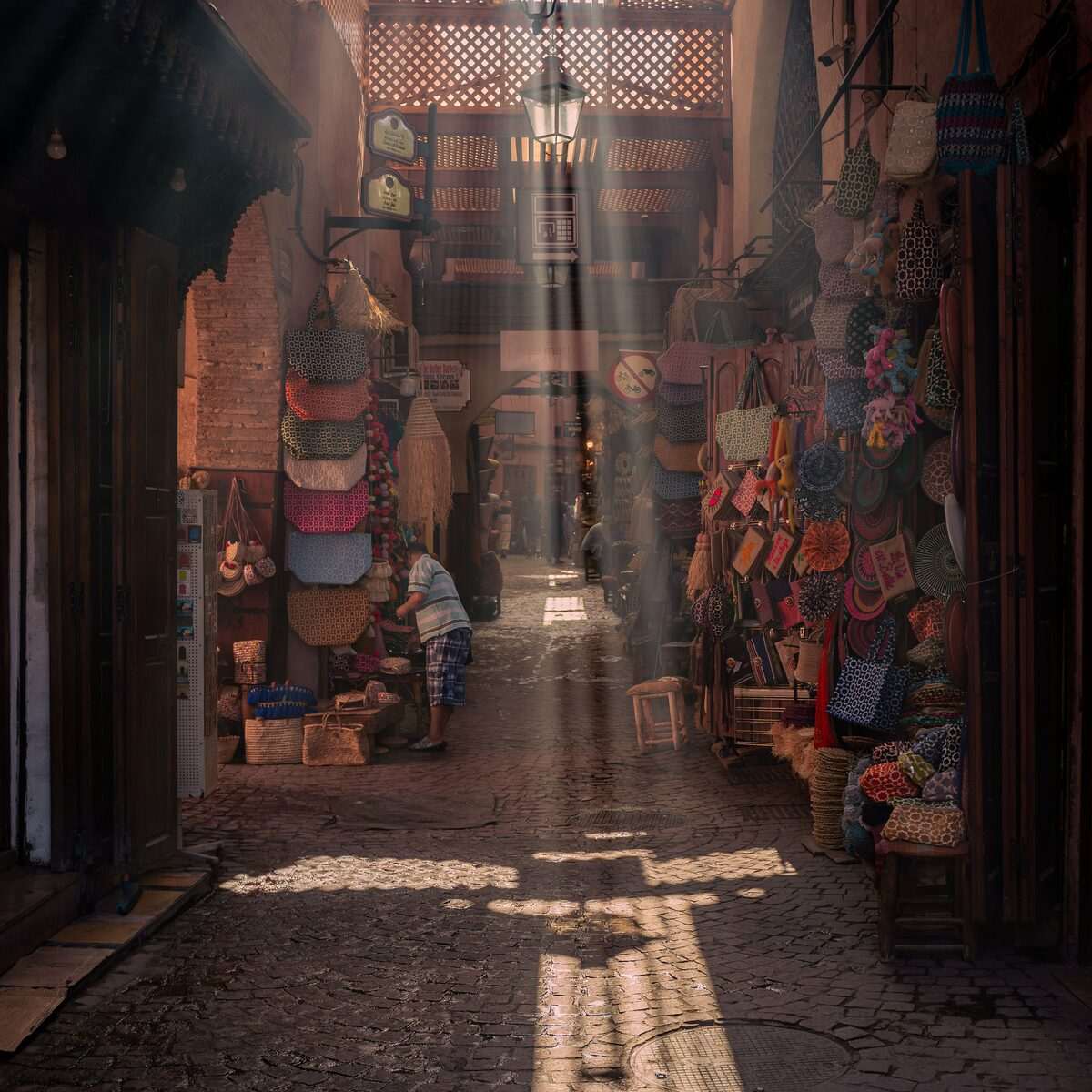
Morocco’s culture is layered differently. The medinas of Fes and Marrakech are living cities - UNESCO-listed historic quarters where tanneries, souks, mosques, and madrasas still function as they have for centuries. The Alaouite palaces of Meknes, the Roman ruins at Volubilis, and the Berber architecture of the Draa Valley add further depth. Morocco rewards slower, more immersive travel; Jordan rewards focused archaeological touring.
For ancient sites: Jordan wins - Petra and Jerash are exceptional concentrations of archaeology. For living culture and medina immersion: Morocco wins decisively.
Natural Highlights
Jordan packs three world-class natural experiences into a small area:
- Dead Sea - the lowest point on earth, with dense mineral waters that make floating effortless. Entry to the public beach areas costs approximately JOD 20–30 as of 2026.
- Wadi Rum - a vast red-rock desert reserve, home to Bedouin communities and used as a film location for numerous Mars-set productions. Overnight camps start from approximately JOD 35–80 per person as of 2026.
- Aqaba’s Red Sea - good reef diving and snorkelling, with wrecks including the famous Cedar Pride at accessible depths.
Morocco’s natural range is wider and more varied:
- Sahara Desert (Merzouga/Erg Chebbi) - the iconic golden sand dunes of the Eastern Sahara, reached after a long drive from Marrakech or Fes. Camel treks and overnight camps are the standard experience.
- Atlas Mountains - the High Atlas running through the centre of the country offers serious trekking including the ascent of Jebel Toubkal (4,167 m), North Africa’s highest peak.
- Atlantic and Mediterranean coasts - surf towns like Taghazout, blue-and-white Chefchaouen, and the windy kite-surf capital of Essaouira offer a completely different Morocco to the desert interior.
Winner: Morocco has greater natural variety. Jordan wins on concentrated impact within a short trip.
Costs and Budget
Morocco is considerably less expensive than Jordan. Rough daily budgets as of 2026:
| Category | Jordan | Morocco |
|---|---|---|
| Budget accommodation | JOD 15–25/night | MAD 150–300/night (~USD 15–30) |
| Mid-range riad/hotel | JOD 50–90/night | MAD 500–900/night (~USD 50–90) |
| Street food meal | JOD 2–5 | MAD 20–50 (~USD 2–5) |
| Mid-range restaurant | JOD 10–20 | MAD 100–200 (~USD 10–20) |
| Petra entry fee | JOD 50 (~USD 70) | - |
| Sahara camp (1 night) | - | MAD 500–1,200 (~USD 50–120) |
The biggest cost differential is Jordan’s entry fees. Petra at JOD 50 and Wadi Rum at JOD 5 per vehicle add significant daily cost. The Jordan Pass (from approximately JOD 70) bundles visa costs with multiple site entries and is worth buying for most visitors - see our Jordan Pass breakdown for the full calculation.
Morocco’s accommodation standout is the riad - a traditional courtyard guesthouse found in most medinas. A comfortable mid-range riad in Marrakech’s medina costs approximately MAD 500–800 per night as of 2026, offering an experience unavailable in Jordan. Search hotels in Morocco or hotels in Jordan to compare options.
Highlights: What Not to Miss
Jordan’s must-see list
- Petra - allocate two days minimum. The Treasury (Al-Khazneh), the Street of Facades, the Royal Tombs, and the Monastery (Ad-Deir) are all distinct sites requiring walking.
- Wadi Rum - a 4WD jeep tour plus an overnight camp. Most visitors spend one to two nights.
- Dead Sea float - a half-day experience, easily combined with a Petra–Dead Sea–Amman itinerary.
- Jerash - the best-preserved Roman city in the Middle East outside Italy; a 2-hour drive from Amman.
- Aqaba - Jordan’s only Red Sea access point; good for a day or two of diving or snorkelling.
Book guided tours across Jordan - combining Petra, Wadi Rum, and Jerash in a single organised circuit saves considerable logistics.
Morocco’s must-see list
- Fes el-Bali - the old medina is a genuine labyrinth. Budget two full days with a licensed guide.
- Marrakech medina and Djemaa el-Fna - the main square at dusk, with snake charmers, storytellers, and food stalls, is a uniquely Moroccan spectacle.
- Sahara (Merzouga) - the 4-hour drive from Fes or 9-hour drive from Marrakech is worth it for the dune landscape and stargazing.
- Chefchaouen - the blue-painted hill town in the Rif Mountains; compact and photogenic.
- Essaouira - Atlantic wind, whitewashed walls, good fish, and a completely different rhythm to the inland cities.
Book guided tours across Morocco for Fes medina walking tours, Sahara excursions, and Atlas day trips.
Logistics and Getting Around
Jordan is small and easy to navigate. Amman is the hub for everything - Petra is a 3-hour drive south, Wadi Rum 4 hours, the Dead Sea under an hour. A rental car gives complete flexibility; public minibuses serve the main routes. A 7–10 day trip covers Jordan’s core highlights comfortably.
Morocco requires more planning. The main tourist circuit - Casablanca or Marrakech → Atlas → Sahara → Fes → Meknes → north - is approximately 2,000 km and rewards 2–3 weeks. Trains connect Casablanca, Rabat, Fes, and Marrakech efficiently. Reaching the Sahara requires a long overland drive or a budget flight to Errachidia. Hiring a local driver for the Marrakech–Sahara–Fes route (approximately USD 300–500 for a 4-day circuit) is common and practical.
Safety and Atmosphere
Jordan is one of the most tourist-safe countries in the Middle East. Petty crime against visitors is rare. The atmosphere at major sites like Petra is active but generally low-pressure compared to Egypt or Morocco. Wadi Rum is exceptionally relaxed - Bedouin hosts are genuinely welcoming.
Morocco is broadly safe in its main tourist areas, but petty theft and persistent unofficial guide hassle in the medinas of Marrakech and Fes are more common than in Jordan. Keeping bags secure and politely refusing unsolicited guides resolves most issues. The Atlas regions, coastal towns, and Sahara areas are extremely relaxed.
Which Should You Choose?
Choose Jordan if:
- You have 7–10 days and want world-class ancient monuments in a compact, easy-to-navigate country
- The Petra-Wadi Rum-Dead Sea combination is on your bucket list
- You prefer a calmer, lower-hassle travel environment
- You are connecting to or from Israel, Egypt, or the wider Middle East
Choose Morocco if:
- You want living medina culture, not just archaeology
- You are travelling on a tighter budget
- You want a longer adventure with more geographical variety (desert, mountains, coast)
- You are travelling from Europe - Morocco is significantly closer and cheaper to reach
Do both if: You have 3+ weeks for a broader Arab-world circuit and can tolerate the connecting flights. They complement each other well - Jordan’s compact archaeological intensity paired with Morocco’s sprawling cultural depth make for a compelling contrast.
Final Verdict
Jordan wins for Petra, Bedouin desert experience, and ease of travel; Morocco wins for medina culture, value, and geographic variety. Neither destination is a substitute for the other - they serve different travel appetites. If your priority is a single world-class site (Petra), Jordan is the answer. If you want depth of culture, flexibility of budget, and variety of landscape, Morocco has the edge.
More Jordan comparisons: Jordan vs Egypt · Petra vs Wadi Rum · Amman vs Aqaba · Wadi Rum vs Dead Sea
Plan your Jordan trip: First Time in Jordan · Best Time to Visit Jordan · Getting Around Jordan
Search hotels in Jordan · Search hotels in Morocco
Plan Your Trip
✈️ Book your flights to Jordan 🛡️ Get travel insurance 📱 Stay connected with an eSIM 🚗 Rent a car