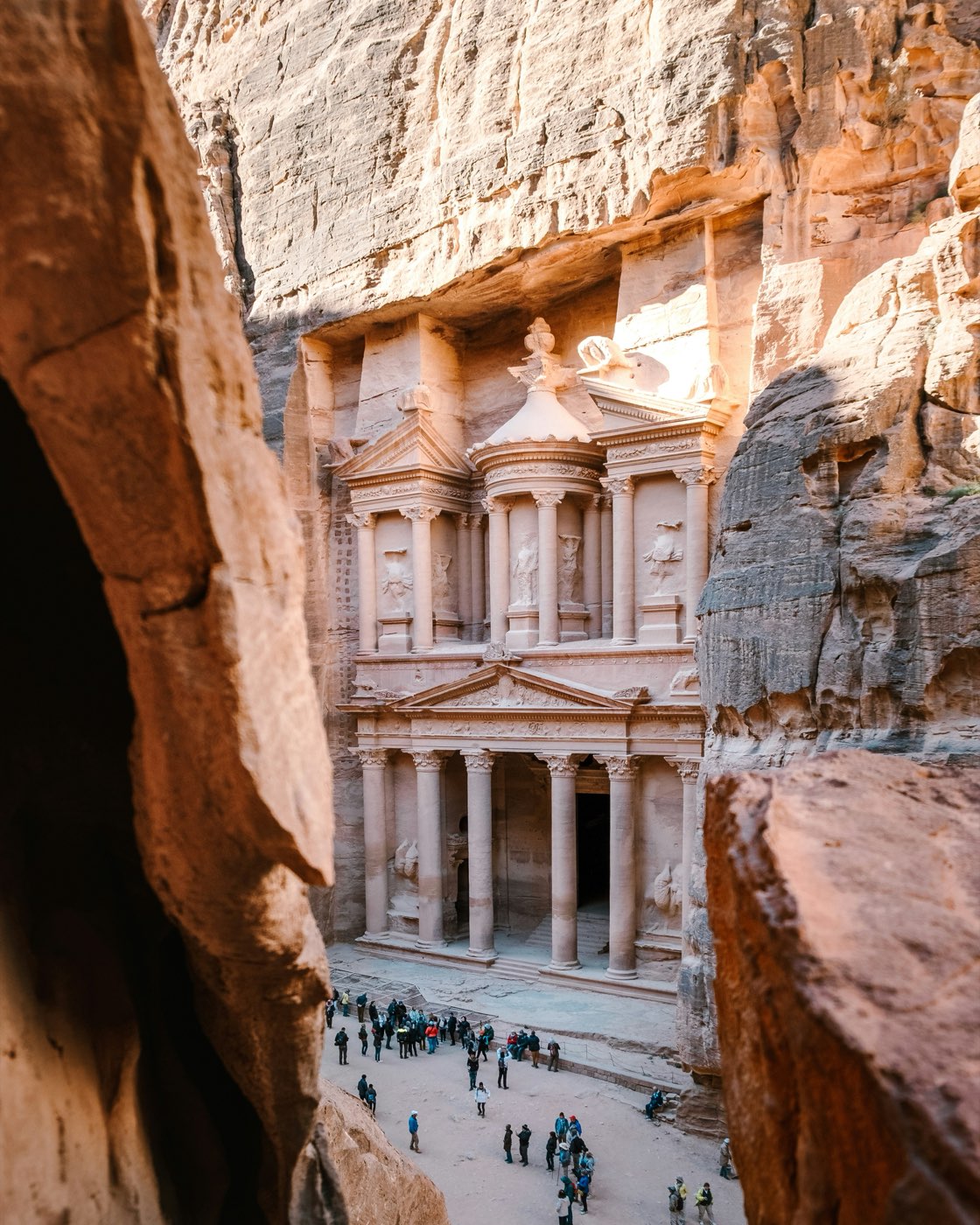
Jordan’s geography creates three distinct climate zones in a compact country — the fertile highlands around Amman (800m elevation), the ancient desert of Wadi Rum and the Jordanian Valley, and the Red Sea coast at Aqaba. The best time to visit depends on which experiences you prioritise, but the headline is simple: spring (March–May) and autumn (September–November) suit almost every kind of Jordan travel.
Monthly Weather Overview
| Month | Amman (°C) | Aqaba (°C) | Wadi Rum (°C) | Rain | Verdict |
|---|---|---|---|---|---|
| January | 5–12 | 14–22 | 5–18 | Moderate | Cold highlands; Aqaba pleasant |
| February | 6–14 | 15–23 | 7–20 | Moderate | Warming; late winter crowds |
| March | 9–19 | 19–27 | 12–26 | Light | Excellent — sweet spot |
| April | 13–24 | 23–31 | 16–30 | Rare | Excellent — best for hiking |
| May | 17–29 | 27–35 | 20–34 | Rare | Good — can be warm by month end |
| June | 21–33 | 30–38 | 24–38 | None | Hot; go early morning at Petra |
| July | 23–36 | 33–41 | 27–42 | None | Very hot; beach holiday at Aqaba only |
| August | 23–36 | 33–41 | 27–42 | None | Very hot; peak tourist season |
| September | 20–31 | 30–37 | 23–37 | None | Good — Aqaba still excellent |
| October | 15–26 | 25–32 | 17–30 | Light | Excellent — quieter than spring |
| November | 10–19 | 20–27 | 12–24 | Light | Very good — low crowds |
| December | 6–13 | 15–22 | 7–19 | Moderate | Cool highlands; Christmas draws some visitors |
Temperature ranges are approximate daytime averages; Wadi Rum nights in winter can drop to near 0°C.
Spring: March to May (Recommended)
Spring is the most reliable season for a first visit. Petra is comfortable in daylight — you can walk the full site from the Siq to the High Place of Sacrifice and back without suffering heat exhaustion. Wildflowers cover the highland plateau in March and April, and the desert air is clear.
March and April are peak spring months. Petra entry is quieter than summer despite the good weather. Wadi Rum nights remain cool — bring a fleece layer for desert camps. Hotels in Petra village and Wadi Rum typically charge from approximately JOD 30 per night for guesthouses, JOD 80+ for mid-range, and JOD 200+ for luxury as of 2026. Guided day tours and multi-day itineraries operate at full capacity in spring — browse Jordan tours on GetYourGuide to book the Petra, Wadi Rum, and Dead Sea circuits that sell out fastest in March and April.
May is excellent but watch the tail end of the month — temperatures at Petra can push past 30°C from midday, and Wadi Rum days approach 35°C. Start hikes by 7am.
Rain: March can bring brief showers in Amman and Petra; April onwards is essentially dry.
Summer: June to August
Summer is the peak tourist season for international visitors, but it is not the ideal season. The honest picture:
Amman sits at 800m and stays bearable in June (around 30°C), but July and August regularly hit 35–37°C. The city has shade and air conditioning; urban exploration is fine with early starts.
Petra in July and August is genuinely difficult between 10am and 4pm. The rock city has almost no shade beyond the Siq itself. If you visit in summer, arrive before 6:30am when the gates open, complete the Monastery hike in the morning, and retreat by midday. The Jordan Pass is valid for multiple days — consider splitting your Petra visit over two early mornings rather than a single full day.
Aqaba in summer is actually popular: the Red Sea coast sits at sea level, temperatures hit 38–40°C, but beach resorts with pools and sea breezes make it manageable. Snorkelling and diving conditions are excellent year-round.
Wadi Rum in July and August peaks above 42°C in the afternoon. Jeep tours go early morning and at sunset; midday in the desert is extremely uncomfortable.
Autumn: September to November (Recommended)
Autumn rivals spring as the best season. October and November see temperatures drop to the 20s at Petra and Amman, the summer crowds thin, and accommodation rates often fall from high-season peaks.
September still feels warm — Aqaba is superb — but Petra and Amman are already more comfortable than July. Wadi Rum retains desert warmth through the day but cools rapidly after sunset.
October and November are arguably the finest months for the Jordan Trail (a multi-day hiking route from Um Qais to Aqaba). Crowds at Petra are noticeably lighter than spring peaks. Budget travellers will find negotiated rates at guesthouses much easier to secure.
Winter: December to February
Winter suits travellers who want solitude and are comfortable with cold. Amman can fall below 5°C in January and occasionally sees snow — rare but not unknown. Petra has seen snowfall that closes the site for a day or two in January or February.
Aqaba is the winter winner: temperatures average 14–22°C, making it pleasant for diving and beach walks while the rest of Jordan wraps up. Several Amman-based visitors do a winter long weekend in Aqaba to escape the cold highlands.
Wadi Rum nights in December and January drop close to 0°C. Overnight desert camps provide thick blankets and sometimes heated tents, but this is genuine cold-weather camping. The compensation: crystal-clear star visibility and dramatic desert light with long shadows all day.
Ramadan Travel in Jordan
Ramadan falls approximately 10 days earlier each year in the Gregorian calendar. In 2026, Ramadan is expected to begin around 17 February and end around 18 March — though exact dates depend on moon sighting and may vary by a day.
What changes for tourists:
- Restaurants and cafés away from hotels close during daylight hours. Hotel restaurants typically remain open for guests.
- Public eating, drinking, and smoking in the street is generally avoided out of respect — ducking into a café or hotel for meals is straightforward.
- Alcohol service is restricted in restaurants and bars; some establishments stop serving entirely. Hotel bars are the reliable option.
- Government offices may have reduced hours.
- Petra, Wadi Rum, Jerash, and all major sites remain open with normal hours.
What improves:
- Crowds at tourist sites are often lower during Ramadan as regional tourism pauses.
- Iftar (the sunset meal breaking the fast) is a genuine experience — many hotels and restaurants offer iftar buffets where tourists are welcome, typically from around JOD 15–25 per person as of 2026.
- The atmosphere in Amman’s old city after sunset is uniquely vibrant.
Jordan is one of the more relaxed Muslim countries for Ramadan travel, but basic respect — avoid eating in public spaces during the day — goes a long way.
Crowds and Costs by Season
| Season | Crowds at Petra | Hotel Rates | Comments |
|---|---|---|---|
| March–May | High (spring peak) | Peak rates | Book 2–3 months ahead |
| June–August | High (international peak) | Peak rates | Hottest period |
| September–November | Moderate | Mid-season | Best value for quality |
| December–February | Low | Low season | Cold highlands; Aqaba popular |
Festivals and Events
Jerash Festival of Culture and Arts runs for approximately three weeks each July–August, bringing theatre, dance, and music to the Roman ruins of Jerash. Tickets run from approximately JOD 10–35 as of 2026.
Eid al-Fitr (end of Ramadan) and Eid al-Adha (approximately June 2026, though dates shift) bring domestic tourism peaks — book accommodation early if your travel coincides with either Eid.
Christmas and New Year sees Amman’s Sweifieh and Abdoun districts decorated and lively, with some festive events at the major hotels.
Practical Packing Notes
- Spring/Autumn: Layers are essential. Petra mornings start cool (12–16°C) and afternoons reach 24–28°C. A light fleece plus sun hat covers the range.
- Summer: Sun protection is non-negotiable. SPF 50, sunglasses, hat, and at least 2 litres of water per person for Petra.
- Winter: A proper jacket for Amman and highland sites. Wadi Rum overnight stays in December–February require a warm sleeping bag or thick blankets — most camps provide them, but confirm before booking.
- Aqaba year-round: Light summer clothing with a light layer for evenings October–March.
Jordan rewards careful timing. Spring and autumn offer the widest range of conditions — comfortable hiking at Petra, enjoyable desert camps in Wadi Rum, and warm evenings in Amman. Search flights to Jordan for Amman’s Queen Alia Airport, which connects to most European hubs and regional Middle Eastern cities year-round. Travel insurance for Jordan is worth arranging before departure, particularly if your itinerary includes desert treks, climbing, or adventure activities in Wadi Rum.
Plan Your Trip
✈️ Book your flights to Jordan 🛡️ Get travel insurance 📱 Stay connected with an eSIM 🚗 Rent a car