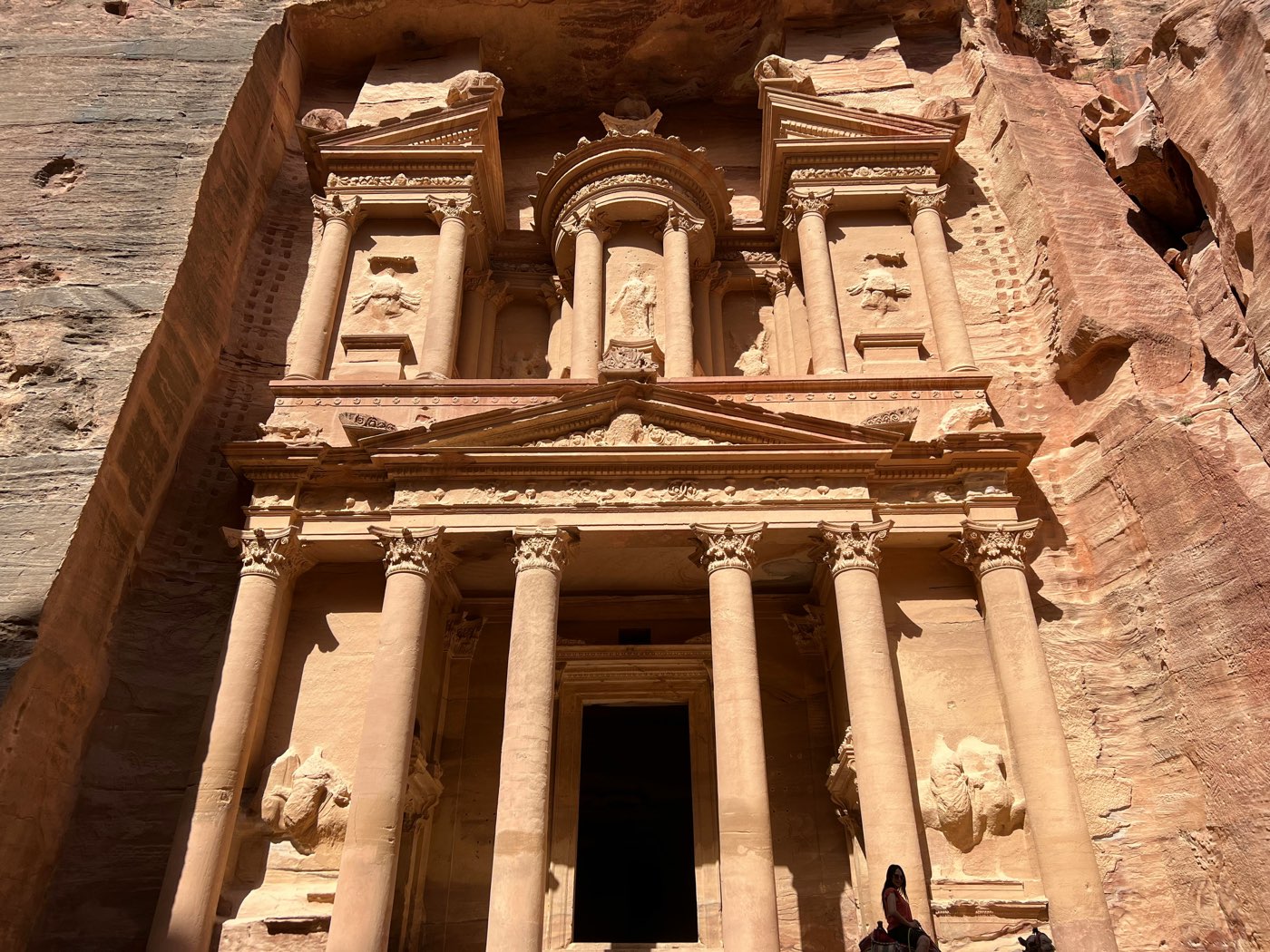
The Treasury is the image that sells Petra to the world, and it earns its reputation. But treating it as the destination - photographing it from the end of the Siq and then leaving - misses the majority of one of the most remarkable archaeological sites on earth. Petra covers an area of over 260 square kilometres. The carved monuments visible to most visitors represent a fraction of what is here.
Book a Petra Tour
| Tour | Duration | From | Book |
|---|---|---|---|
| Petra Day Trip from Amman (transport + guide) | 12 hrs | $93/person | Book → |
| Petra Private Day Trip from Amman | 12 hrs | $120/person | Book → |
| Petra + Wadi Rum 2-Day Combo | 2 days | $125/person | Book → |
| All Petra tours | - | - | Browse on GYG |
Prices verified from TripAdvisor / GetYourGuide as of 2026. Petra site entry (approx JOD 50 for 1 day) is usually separate - check inclusions. Jordan Pass holders enter free.
The Siq
The entrance gorge - 1.2 kilometres of narrow canyon, in places less than 3 metres wide and 180 metres high - serves as the natural dramatic prelude to the city. The Nabataeans channelled water through it via a system of ceramic pipes and plaster-lined channels, parts of which are still visible in the walls. Walking it takes 20–30 minutes at a steady pace; it pays to slow down and look at the carved niches and relief figures in the sandstone.
The Siq is included in the standard site entry. Entry to Petra costs approximately JOD 50 for a one-day ticket as of 2026. A Jordan Pass includes two or three days of Petra entry (depending on which pass you buy) and pays for itself for most itineraries.
The Treasury (Al-Khazneh)
The Treasury emerges from the end of the Siq as an abrupt visual shock - 40 metres of carved sandstone rising from the canyon floor in detailed columns, friezes, and urns. It was built as a tomb for a Nabataean king in the 1st century BC and has no interior treasury; the name came from later Bedouin folklore that the upper urn contained hidden gold.
The best light falls on the façade between 09:00 and 11:00, when the sun reaches the canyon floor. Arriving at site opening (06:00) lets you walk the Siq in relative quiet and reach the Treasury before the day’s tour groups arrive from around 09:30 onward.
Street of Facades and Roman Theatre
Beyond the Treasury, the canyon opens into a wider valley. The right wall is lined with the Street of Facades - more than 40 tomb entrances cut into the cliff, ranging from simple doorways to elaborate multi-storey façades. The sheer density of carved stone is impressive.
Further along the valley, the Roman Theatre was cut directly into the rock to seat approximately 3,000 spectators. The fact that it required removing several pre-existing Nabataean tombs to build indicates how thoroughly the Romans reshaped parts of the city during their occupation in the 2nd century AD.
Royal Tombs
The hillside to the east of the main valley holds the most elaborate surviving tombs in Petra. The Urn Tomb is the largest, with a wide forecourt supported by lower-level vaults that were converted into a church in the Byzantine period - the faded frescoes are still faintly visible inside. The Corinthian Tomb, Palace Tomb, and Silk Tomb (named for the banded colouration of its stone) stand adjacent. Climbing up to the Urn Tomb takes about 15 minutes from the valley floor and gives a commanding view back across the main site.
Colonnaded Street and Qasr al-Bint
The main valley floor beyond the theatre was the commercial heart of Nabataean Petra. The Colonnaded Street follows the line of a wadi (dry riverbed) with the remains of column bases marking the porticoed shops that once lined it. At the far end stands Qasr al-Bint - the most significant free-standing temple remaining in Petra. Despite its common name (“Castle of the Pharaoh’s Daughter”), it was dedicated to the Nabataean god Dushara and dates from the 1st century BC. It is the only major structure in Petra built with cut stone blocks rather than carved directly from the rock.
The Monastery (Ad-Deir)
The Monastery is the most impressive structure in Petra by scale - its façade is roughly 45 metres wide and 45 metres high, larger than the Treasury in every dimension - and it receives far fewer visitors because of the climb required to reach it.
From the main colonnaded street, follow the signs for 800+ rock-cut steps carved into the hillside. The ascent takes 45–60 minutes at a reasonable pace. There are tea stalls at intervals along the route, and a rest stop at the top before the final view is rewarded with the façade emerging from behind a rock shoulder. The interior contains a rock-cut bench and a small niche - it may have served as a church or a Nabataean banqueting room. The view from the ridge above extends across the mountains toward Wadi Rum on a clear day.
High Place of Sacrifice
The High Place of Sacrifice sits on one of the highest peaks within the main site, reached via a separate trail of around 800 steps. It takes approximately an hour to reach the summit. The ritual platform - two stone obelisks and an altar with drain channels - is intact. The return route down the other side passes several painted tombs and runs out near the Colonnaded Street. Doing the High Place as a descent route (up via one path, down via the alternate) makes for a more interesting loop.
Petra by Night
Petra by Night operates on Monday, Wednesday, and Thursday at 20:30. The route follows the Siq by candlelight to the Treasury, which is surrounded by several hundred small candles. Admission costs approximately JOD 17 in addition to the standard day entry as of 2026. The experience is seated and accompanied by live music. The visual effect of the lit façade is genuinely striking; the passive format of the event divides opinion. Worth considering if you are staying two nights and have already done a full day inside the site.
Little Petra (Al-Beidha)
Eight kilometres north of the main entrance at Wadi Musa, Little Petra - also called Al-Beidha - is a smaller canyon with Nabataean carved facades, a painted dining room (the Painted House), and far fewer visitors than the main site. Entry is included with a main Petra ticket. It is best visited either as a standalone morning trip before the main site opens or on a second day. The painted biclinium at the far end of the canyon is the highlight - frescoes of grapevines and erotes (putti) in a style that blends Nabataean and Hellenistic influence.
Horse Rides in the Siq
The Petra entry ticket officially includes a horse ride from the entrance gate to the start of the Siq. In practice, this is a short transfer rather than a tour, and tipping the horse handler JOD 5–10 is the expected norm. The ride is not obligatory - most visitors walk. Camel and donkey rides inside the site are offered by local operators at negotiated prices; expect to pay JOD 5–15 depending on distance. To book a guided Petra tour from Amman or a Petra–Wadi Rum combo, browse Petra day tours and packages.
Search hotels in Petra on Booking.com
More in Petra
- Best Hotels in Petra
- Food to Try Near Petra
- Petra by Night Experience
- Petra Tours: Guided Options
- Petra History: The Nabataean City
- 3-Day Petra and Wadi Rum Itinerary
- Jordan Pass Guide
Want a guide for the site? See our best tours in Petra for day trips, guided walks and small-group options.