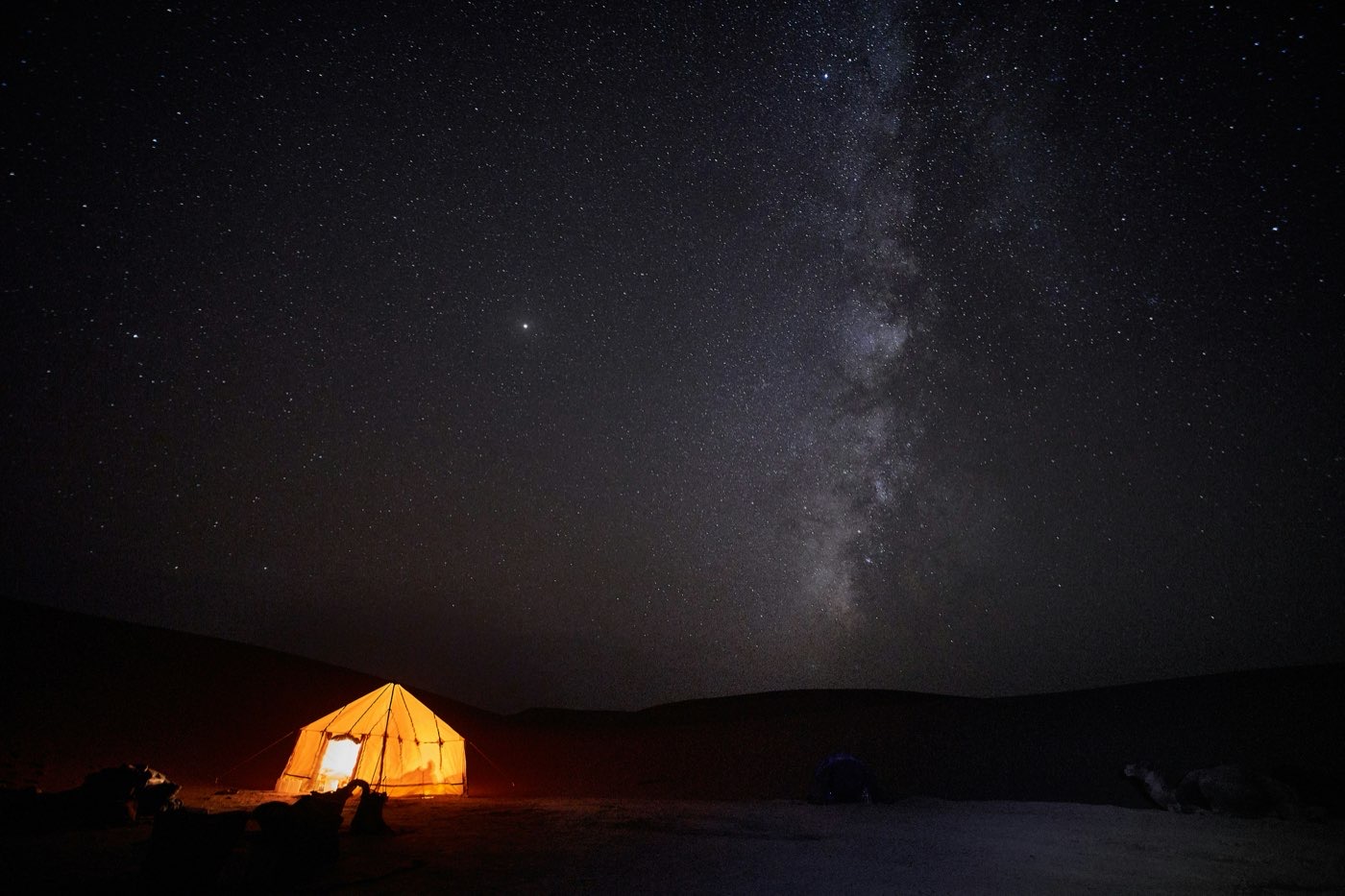
Wadi Rum is one of the few places in the Middle East where sleeping under the stars inside a protected desert reserve is genuinely straightforward. The range of camp options has expanded dramatically - from basic Bedouin blankets-on-a-mat through to transparent bubble domes with private bathrooms - and the choice now suits budgets from backpacker to honeymoon. If you would rather compare and book a camp stay online, search Wadi Rum camps and hotels on Booking.com or see guided Wadi Rum tours.
All camps listed here are located inside or immediately adjacent to the Wadi Rum Protected Area. The entrance fee to the protected area is approximately JOD 5 per person as of 2026, payable at the visitor centre in Rum Village - this is usually included in camp packages but worth confirming when you book.
How Wadi Rum Camps Work
The typical overnight arrangement is a half-board package: arrival in the afternoon (or after a morning jeep tour), a sunset viewing at a dune or rock arch, dinner cooked over a fire or in a traditional zarb underground oven, sleep, then breakfast and either a return to Rum Village or an onward jeep excursion.
Most camps organise a jeep tour as part of the package. If you have already done a day tour independently, you can negotiate a reduction on the package price - most Bedouin operators are flexible. To book the jeep separately, the overnight jeep and camp tour is the most common bundle.
Budget Camps (approximately JOD 25–50 per person, half board)
At this tier, expect a traditional Bedouin tent with communal sleeping - goat-hair or canvas structures with mattresses on the ground, heavy woven blankets, and shared toilet facilities (usually drop latrines or basic outhouses). Meals are generous: rice, chicken, flatbread, hummus, and tea as standard.
Bedouin Lifestyle Camp in the heart of the valley offers this tier. It is run by a local Bedouin family and primarily attracts independent travellers and backpackers. Prices run approximately JOD 25–35 per person for a shared tent with dinner and breakfast as of 2026. The food - slow-cooked lamb or chicken buried in sand with charcoal, known as zarb - is frequently cited as the highlight.
Rum Stars Camp near Burdah Rock Bridge has a similar Bedouin-run structure with optional camel riding added to the overnight package. Prices are approximately JOD 30–40 per person half board.
Mid-Range Camps (approximately JOD 60–120 per person, half board)
Fixed tent structures with proper single beds, internal mattresses, electricity (typically solar-powered), and in better camps, private en suite bathrooms with proper showers. The communal dining area is usually a large Bedouin-style tent with carpets and low seating.
Wadi Rum Quiet Village Camp sits in a secluded section of the valley away from the busier routes and offers individual fixed canvas tents with private bathrooms. Prices run approximately JOD 70–90 per person including a 2-hour sunset jeep tour and half board as of 2026.
Hasan Zawaideh Camp has been operating for over 20 years and is frequently recommended by independent travellers. It offers both shared dorm-style tents and private tents, with a strong focus on the quality of dinner (the zarb is their main event - buried in sand for four hours before sunset). Prices approximately JOD 50–80 per person depending on tent type as of 2026.
Rahayeb Desert Camp offers a polished mid-range experience: proper beds, en suite bathrooms, and a large communal fire area. They include a sunset jeep tour in the base package and can arrange additional activities (camel trekking, climbing) at extra cost. Half board approximately JOD 80–100 per person as of 2026.
Luxury and Bubble Tent Camps (approximately JOD 150–350 per couple, half board)
The transparent bubble tent - a pressurised geodesic dome with a clear ceiling for stargazing from bed - has become Wadi Rum’s signature luxury product. The best camps position bubble tents away from each other to preserve privacy, and offer en suite bathrooms with hot showers, air conditioning or heating, and room service.
Wadi Rum Night Luxury Camp is among the best-established luxury operators in the valley. Their bubble tents have private bathrooms, electricity, climate control, and a dedicated dining tent. Prices run approximately JOD 200–280 per couple for the bubble tent with half board as of 2026. They also offer traditional Martian tent suites (named for the Jordan location’s use in film productions) at a similar price point.
Sun City Camp operates a mixture of Martian domes, mirror tents, and bubble tents. The mirror tents - stainless steel geodesic structures that reflect the desert landscape - are their most photographed accommodation. Prices approximately JOD 150–250 per couple for mirror tents and JOD 200–320 per couple for bubble domes with half board as of 2026. Advance booking is essential - they sell out weeks ahead during spring and autumn.
Memories Aicha Luxury Camp is smaller and quieter than some larger operations, with personalised service and a focus on culinary quality. Their bubble tent packages run approximately JOD 240–300 per couple as of 2026.
What Is (and Isn’t) Included
Most packages cover:
- Jeep sunset tour (1.5–3 hours covering key rock formations and viewpoints)
- Dinner (usually zarb, grilled chicken, salads, flatbread, fresh hummus)
- Breakfast (flatbread, labneh, eggs, olives, tea)
- Sleeping arrangements per the tier you book
Not usually included: Lunch, entry to the protected area (approximately JOD 5pp, often added to bill on checkout), additional jeep excursions beyond the included tour, camel treks, horse rides, rock climbing.
Alcohol: Wadi Rum is a conservative Bedouin area. Basic and mid-range camps do not serve alcohol. Some luxury camps offer wine or beer as an add-on. Confirm before arriving if this matters to you.
Stargazing
The reason most people choose Wadi Rum over a regular hotel is the sky. The protected area has almost zero light pollution - on a new moon night, the Milky Way is visible to the naked eye across the full valley. All camps benefit from this, though specific stargazing programmes (with telescopes and guided explanation) are available at some mid-range and luxury camps as an add-on.
The best stargazing nights are those furthest from the full moon and with low humidity. The driest conditions come between May and October; December–February nights are cold but the air is clearer. Many camps have a Bedouin guide who will point out constellations and share traditional navigation stories - worth asking about when you book.
Practical Logistics
Getting to Wadi Rum: Most travellers arrive from Petra (1.5 hours by car, approximately JOD 25–35 by private taxi) or Aqaba (1 hour, approximately JOD 20–30). There is a public minibus from Aqaba to Rum Village in the morning but service is infrequent - a private transfer is more reliable. Many camps offer pickup from Aqaba or Petra for an additional fee (approximately JOD 25–40 per vehicle). For a guided option from the south, browse Wadi Rum tours that include transfers.
Check-in time: Camps expect guests around 2–4pm to allow time for a sunset jeep tour. Arriving by noon is possible but you will likely wait before your tour begins. Coordinate with your camp before travel.
What to bring: Warm layers regardless of season (desert nights drop sharply), a headtorch for navigating around camp at night, cash in Jordanian Dinars (ATMs are in Aqaba or Petra - there are none in Rum Village), and sun protection for the day. Phone signal exists in Rum Village but is patchy or absent inside the valley.
Children: Wadi Rum overnight stays are suitable for children who enjoy camping. Basic camps with their open fire and communal meals are often more exciting for kids than the quieter luxury bubble tents. Confirm that the jeep tour route is appropriate for young children - most operators adjust for families.
If you want a sealed, star-view stay, see our Wadi Rum bubble hotels guide for how they compare with traditional camps.