The Dead Sea is not a food destination. The shore is a resort zone rather than a town, and the eating options are almost entirely contained within the hotels themselves. Understanding this before you arrive is useful - it sets realistic expectations and helps you plan around the price point.
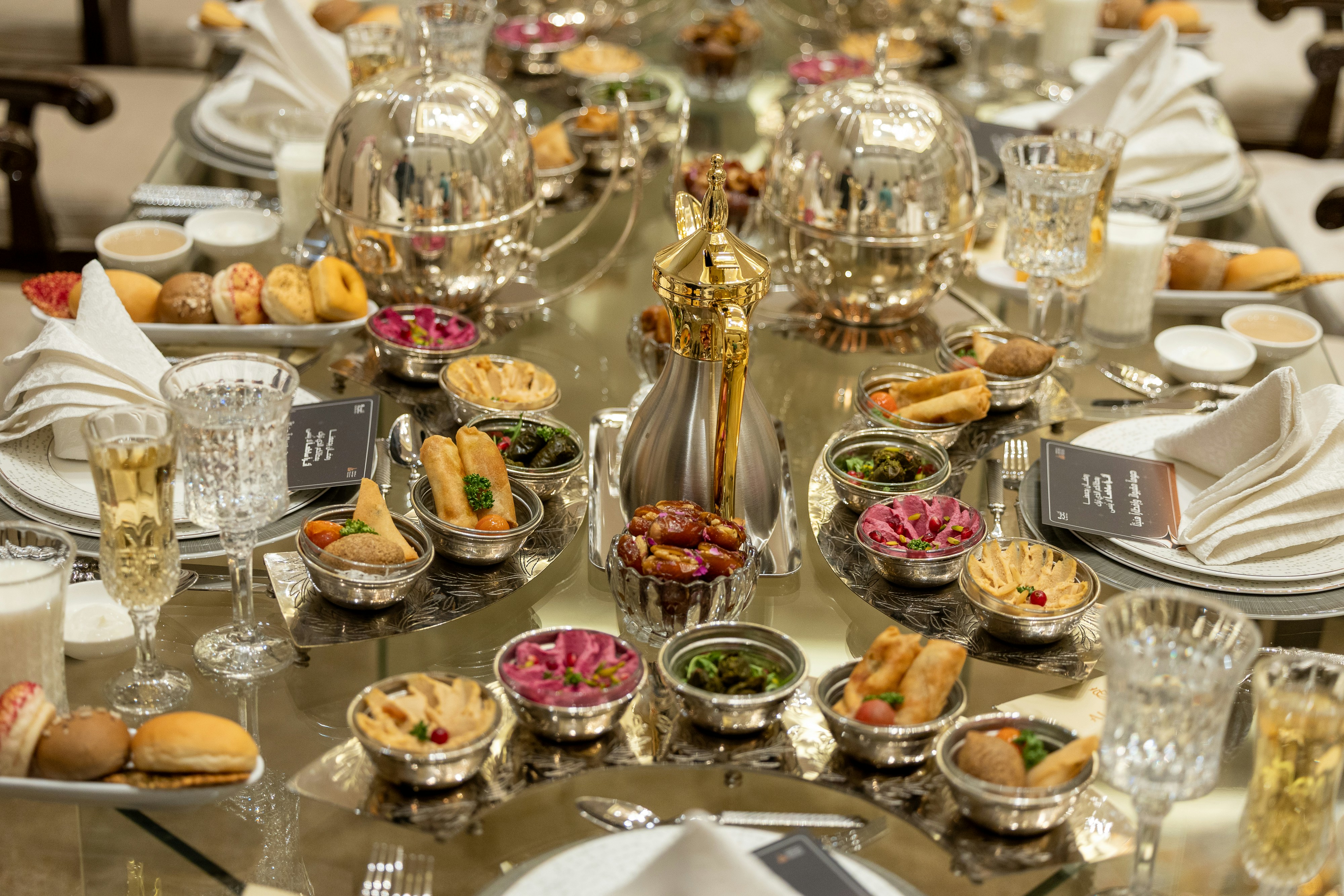
What the resort restaurants do offer is a high-quality version of Jordanian cuisine in a reliable setting. The buffet spreads at the larger properties - Kempinski, Marriott, Mövenpick - are comprehensive, well-executed, and include most of the dishes worth trying in Jordan: mansaf, maqluba, mixed grill plates, and a mezze section that covers hummus, moutabal, fattoush, tabbouleh, and more. The problem is the price, not the quality.
Eating at Your Resort
The buffet breakfast is usually the most practical option if it is included in your room rate, and worth the upgrade cost at booking if it is not. Jordanian breakfasts run to labneh (strained yoghurt), za’atar with olive oil, fresh vegetables, eggs in various forms, hummus, and pita. The resort versions add a hot section, fruit, pastries, and fresh juices. Plan a heavy breakfast before a morning floating session - it is the most efficient use of resort dining.
Lunch at the pool restaurant is the most common eating pattern for day visitors and hotel guests. Most resort pool restaurants offer a menu of lighter Jordanian dishes, salads, grills, and sandwiches alongside international options. Prices are significant - expect JOD 8–15 for a main course and JOD 3–5 for soft drinks as of 2026. A simple grilled chicken plate with salad and bread for two runs approximately JOD 20–25.
Dinner at the main restaurant is the most expensive option and the most elaborate. Kempinski’s Tajine restaurant serves Jordanian and North African-influenced dishes; the Mövenpick has a seafood-focused menu alongside regional cooking. A three-course dinner for two with drinks costs approximately JOD 60–100 as of 2026. This is resort dining by global standards - competent, well-presented, and priced accordingly.
The Regional Dishes to Eat
Mansaf at the resort buffet is worth eating even if it is not the most authentic version you will find in Jordan. Made with lamb slow-cooked in dried jameed yoghurt sauce and served over seasoned rice, it is the dish that represents Jordan to Jordanians. The buffet versions are milder in flavour than those served at dedicated restaurants in Amman or the south, but the fundamentals are right.
Mixed mezze - hummus, moutabal (smoked aubergine with tahini), fattoush (bread and vegetable salad with sumac dressing), kibbeh (fried bulgur and meat croquettes), and stuffed vine leaves - is consistently well-executed at the resort level. Most of the large properties source from the same suppliers as Amman’s better restaurants.
Musakhan - roasted chicken with caramelised onions and sumac on flatbread - is worth looking for on the à la carte menus. It is a northern Jordanian dish that does not appear as frequently as mansaf on resort menus but is among the most flavourful things in the Jordanian repertoire.
Options Outside the Resort Strip
Along the Dead Sea Highway (Route 65) between the Sweimeh resort cluster and Amman, there are a handful of casual roadside restaurants and petrol station stops. These are functional rather than destination dining - grilled meats, rotisserie chicken, falafel, and the standard Jordanian roadside fare. Prices are dramatically lower than resort restaurants; a grilled chicken meal with bread and salad runs approximately JOD 3–6 per person as of 2026. If you are driving to or from the Dead Sea and have flexibility, stopping at one of these for lunch is a reasonable alternative to paying resort prices.
Sweimeh town - the small settlement closest to the resort cluster - has a few shops and basic eating options, but nothing that qualifies as a notable restaurant. Basic Jordanian sandwiches and snacks are available; it functions as a convenience stop rather than a dining destination.
Combine a Dead Sea Visit with a Food Experience
Most visitors to the Dead Sea arrive on a day trip or short stay, and the resort restaurant format is functional but limited. Tour operators who run Dead Sea day trips from Amman often include a traditional Jordanian lunch at a regional restaurant on the return route — typically in the Jordan Valley where fresh produce from the valley’s farms appears on tables that resort kitchens cannot match. Browse Dead Sea tours from Amman for options that include a local lunch.
Practical Notes
Water intake at the Dead Sea is critical. The climate here - lowest point on earth, extremely arid, high UV - combined with the salt exposure during floating means dehydration risk is significantly higher than it feels. Drink water consistently throughout the day, especially if you are out in the sun between 10:00 and 15:00. Most resorts provide water at the beach and pool areas.
Alcohol is served at most of the large resort properties’ restaurants and bars. It is not available at the roadside stops outside the resort zone.
Food allergies. The resort buffets include clear labelling at the better properties (Kempinski, Marriott). If allergies are a significant concern, confirm with the restaurant manager before building your plate.
For an overview of the Dead Sea experience - floating, mud, mineral spas, and excursion options - see our Dead Sea city guide. To book a guided Dead Sea experience from Amman, browse Dead Sea day tours and resort packages.
Plan Your Jordan Trip
Before leaving, pick up a Jordan eSIM from Airalo — set up before arrival, no SIM swapping at the airport. EKTA travel insurance covers medical emergencies, trip cancellation, and evacuation for Jordan trips.
Search hotels in Dead Sea on Booking.com