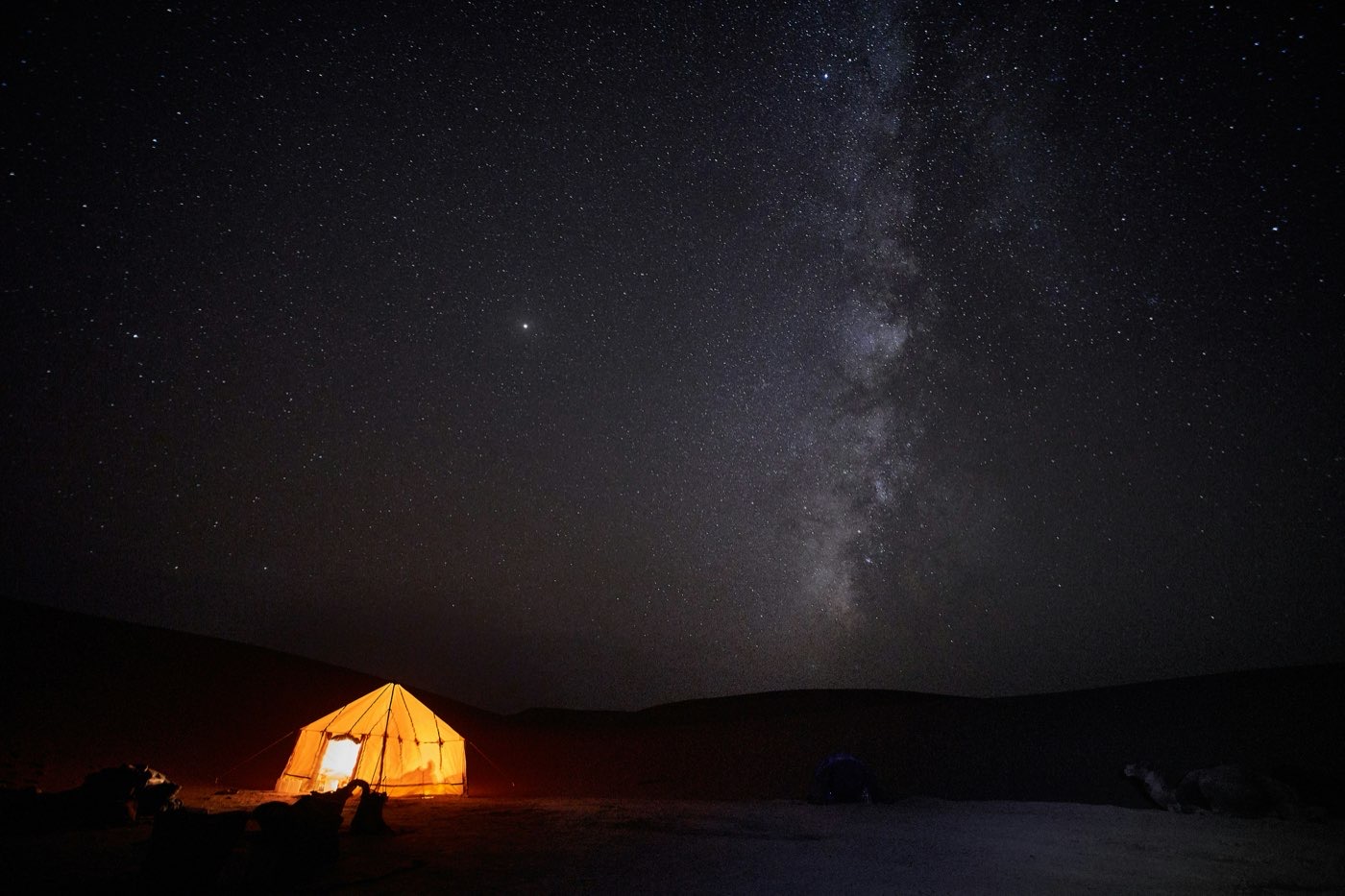
October marks the beginning of what desert camp operators in Wadi Rum call their “astronomy window” - the two-month period when daytime temperatures drop to a comfortable range, humidity stays near zero, and the skies clear with a consistency that summer monsoon dust and winter cloud cover cannot match. For travellers planning a visit, the next six to eight weeks represent the best conditions of the year for experiencing the desert at night.
Why October and November Are Different
Summer in Wadi Rum brings temperatures above 40°C and occasional dust haze that softens the horizon. By October, daytime highs have settled into the mid-twenties and nights drop to between 8°C and 14°C - cool enough to require a fleece, but comfortable for extended outdoor sessions. More critically for stargazers, the combination of dry air and low atmospheric moisture produces a seeing quality that camp guides describe as significantly sharper than other months.
The moon cycle matters for astronomy nights, and camps generally advise booking around the new moon for maximum darkness. In October 2026, the new moon falls on 21 October, making the week of 18–25 October the darkest window of the month.
Wadi Rum’s Status as a Dark Sky Reserve
Wadi Rum does not yet hold official International Dark Sky Reserve certification, but the Jordanian Royal Society for the Conservation of Nature has been in discussions to formalise its status. The area benefits from almost no artificial light pollution within a 50km radius - the nearest town of Wadi Musa (Petra) adds a faint glow to the north-east but does not affect visibility in the core protected zone.
Overnight camps are required by the Wadi Rum Protected Area Authority to use low-level red lighting only after 22:00, which helps preserve night adaptation for both guides and guests. Several camps have invested in mid-range telescopes and work with amateur astronomy guides who can identify constellation clusters, galaxies, and planets visible from the southern hemisphere.
What to Book
Most Wadi Rum overnight camps include an informal stargazing session as standard, typically one to two hours around midnight with a Bedouin guide who has grown up reading the desert sky. Dedicated astronomy camps, which operate on a smaller scale with telescopes and structured observation sessions, require advance booking - demand in October and November is high relative to the limited number of specialist operators.
The classic overnight format is a dinner under the stars followed by a sleeping tent or cave platform carved into the sandstone. Temperatures drop fast after midnight; a sleeping bag rated to 5°C is recommended from mid-October onwards.
For full details on overnight options, camps, and how to get there from Amman or Petra, see our guide to stargazing in Wadi Rum.
Combining Wadi Rum with Petra
The two sites sit approximately 60 km apart along the Desert Highway and are routinely combined on a single southern Jordan trip. With European flights now resuming to Amman - including Lufthansa from late October and British Airways from November - the access window for a November Wadi Rum and Petra combination has widened considerably. A three-night itinerary with one night at Wadi Rum and two nights at Petra works well and leaves time to return to Amman for a direct flight home.