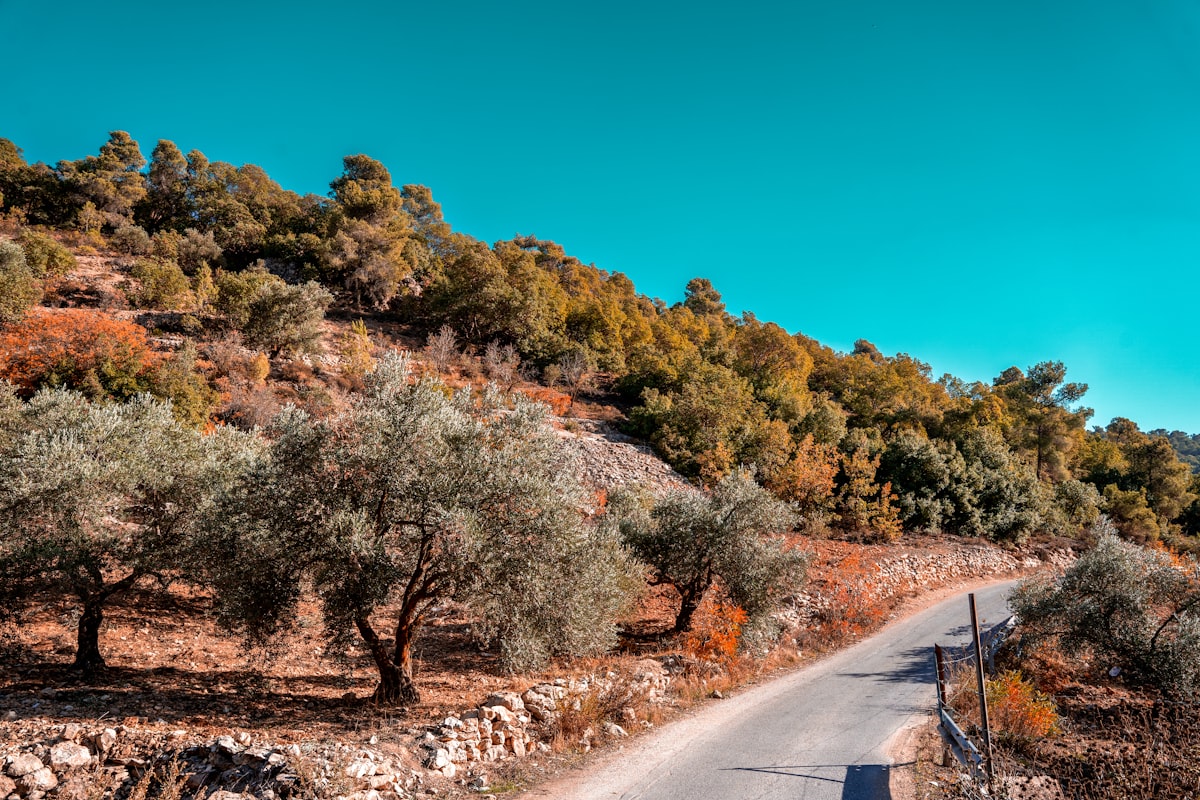
Ajloun’s position in the northern highlands makes it a natural staging point for exploring the cluster of ancient and natural sites scattered across this corner of Jordan. Jerash is the most obvious pairing - 30 minutes south by road - but the region also holds Umm Qais, the Jordan Valley viewpoints, and the forest reserve itself, which has walking trails that function as a quiet counterpoint to the ruin-heavy sites nearby.
Most combinations work best with a private car or chartered taxi. Public transport covers the main routes but not the gaps between them.
Jerash
Jerash - ancient Gerasa - is 30 km southeast of Ajloun through the hill country, a 30 to 40 minute drive. It is one of the best-preserved Roman provincial cities in the world: the Oval Plaza, the colonnaded Cardo Maximus, two theatres, and the triumphal Hadrian’s Arch are all in sufficient condition to read as buildings rather than as rubble.
Entry costs approximately JOD 10 per person as of 2026, or is covered by the Jordan Pass (unlimited entries). The Roman Army and Chariot Experience (RACE) - a staged re-enactment of chariot racing and Roman legionary drills - runs at roughly 10:30 and 12:00 most days; the schedule varies seasonally. Allow 2.5 to 3 hours for the main site; a full exploration including the southern theatre and the museum extension takes 3.5 hours.
Getting there from Ajloun: A private taxi costs approximately JOD 10 to 15 one way. There is no scheduled bus between the two towns. If you are visiting both sites in a single day, the most common sequence is Jerash first (the ruins are best in morning light and the RACE show runs midday), then Ajloun Castle in the afternoon before closing time.
Umm Qais
Umm Qais (ancient Gadara) is 60 km northwest of Ajloun - roughly 1 hour by car - and is one of the least-visited Decapolis cities in Jordan. The black basalt ruins occupy a plateau above the Yarmouk River gorge with views that extend across into Syria to the northeast, Israel and Palestine to the west, and the Sea of Galilee below. On clear winter days the water of the lake is visible from the colonnaded terrace.
The ruins include a North Theatre constructed in dark basalt, colonnaded streets, a museum housed in the restored Ottoman governor’s residence, and the remains of a Byzantine church with geometric mosaic floors. The stone here is darker and heavier than the limestone of Jerash, and the site is quieter - expect significantly fewer visitors than at the major southern sites.
Entry costs approximately JOD 3 per person as of 2026. The Otto restaurant adjacent to the site is a well-known lunch stop with a terrace view over the Galilee basin.
Getting there from Ajloun: No direct route. The practical options are a private taxi from Ajloun (approximately JOD 20 to 30 one way, 45 to 60 minutes), or a two-stage public transport journey via Irbid. A full-day northern Jordan loop from Ajloun - Ajloun Castle → Irbid → Umm Qais → return - is feasible but works more smoothly with a private car.
The Jordan Valley
From the Ajloun highlands the land drops sharply westward to the Jordan Valley - a 30 to 40 minute drive bringing you from the cool hill oak woodland down to the subtropical valley floor at 200 metres below sea level. The valley road passes through farmland and small towns with little formal tourism infrastructure, which is precisely the point. The drive offers a cross-section of northern Jordan’s agricultural landscape - olive groves, citrus farms, banana plantations - that the ruins do not.
Pella (Tabaqat Fahl) is the most significant archaeological site in the valley: a tel with occupation layers stretching from the Chalcolithic period through the Byzantine era. It is approximately 35 km from Ajloun. There is no entry fee; the site is unfenced and unguided. A 4WD is not required but the access road is rough in places.
Organising a Day from Ajloun
The standard northern Jordan circuit - Jerash, Ajloun, Umm Qais - works as a single long day from Amman (approximately JOD 80 to 100 for a private driver covering all three). From Ajloun itself, the sites are closer, but transport between them still requires a private car or negotiated taxis.
For the two-site Jerash and Ajloun combination, guided day tours from Amman typically cost JOD 30 to 50 per person including entry fees and a shared vehicle. These are a practical option for solo travellers or pairs who do not want to manage the taxi logistics independently. Browse northern Jordan day tours including Ajloun and Jerash to compare current options.
If you are staying overnight at the RSCN cabins in the forest reserve, the morning walk at dawn - before the castle opens - is worth setting the alarm for. The light across the valley from the reserve trails at 6am to 7am is exceptional in spring and autumn.
Practical Notes
The Ajloun Forest Reserve closes earlier than the castle - confirm trail access times with the RSCN visitor centre before combining a hike with an afternoon Jerash visit. The road between Ajloun and Jerash is well-paved; the drive is straightforward in a rental car. Carry cash for taxi fares and site entries - card payment is not reliably available at smaller sites.
Need a base? Search hotels in Ajloun on Booking.com