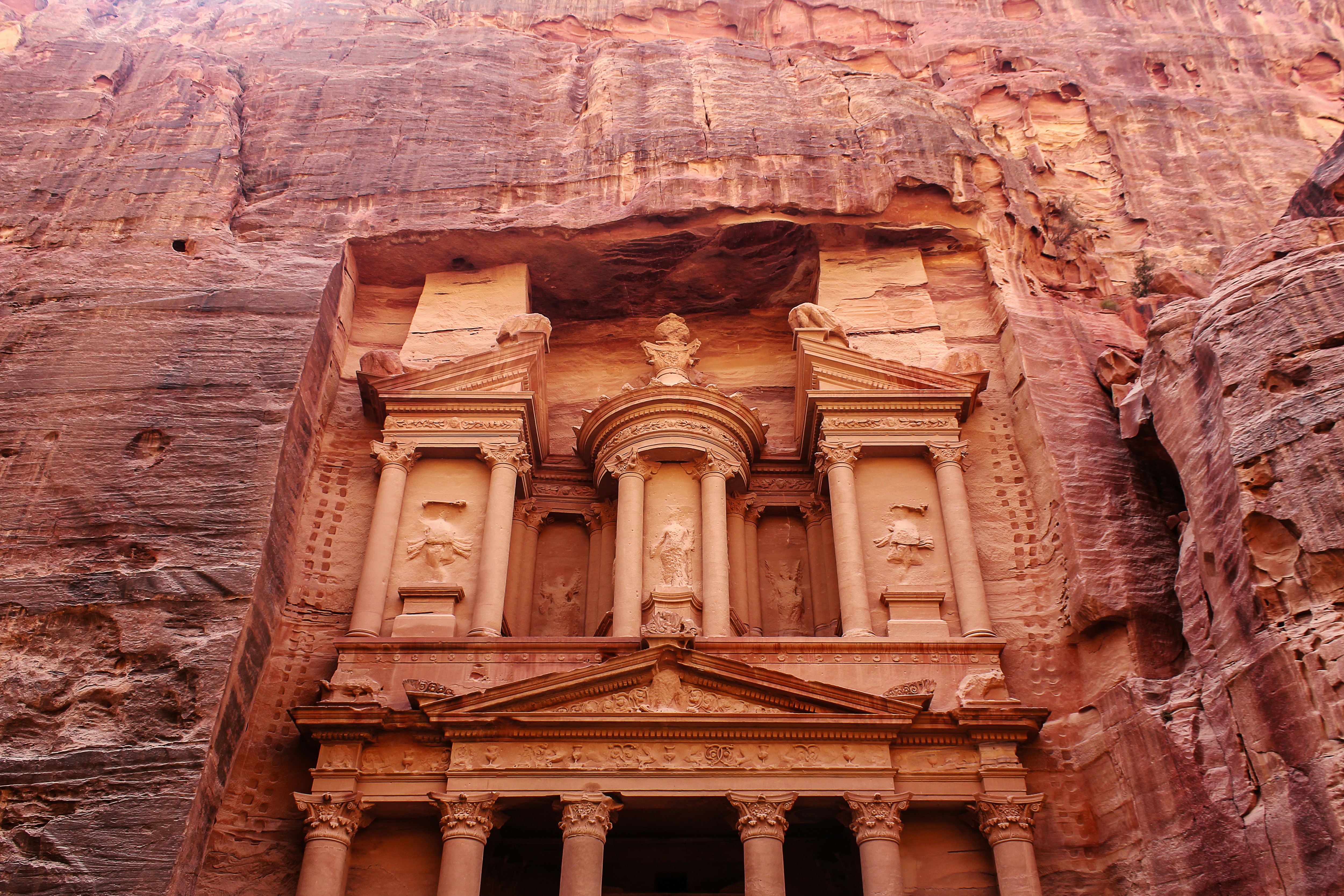
Petra is one of those places that earns its reputation. The rose-red canyon, the carved temples, the scale of what the Nabataeans built into living rock - all of it lands differently in person than in any photograph. But getting the most from Petra requires planning: the site covers around 264 square kilometres, the main trails demand solid footwear and real time, and the difference between arriving at 06:00 and 09:00 is the difference between near-silence at the Treasury and a wall of tour groups. Here is everything you need to know before you arrive.
Entry Fees and Ticket Types
Petra’s entry fees as of 2026 are approximately:
- One-day ticket: JOD 50 per person
- Two-day ticket: JOD 55 per person
- Three-day ticket: JOD 60 per person
Children under 12 enter free. Tickets are purchased at the Visitor Centre in Wadi Musa, just outside the main entrance. Cash (JOD) and card are both accepted, though card terminals occasionally go offline during peak hours so carry cash as backup.
Jordan Pass holders do not pay separately - Petra admission is bundled into the pass at all tier levels. If you are entering Jordan on a tourist visa and planning to spend at least three nights in the country, the Jordan Pass almost always saves money. Our Jordan Pass guide has the full break-even calculation and current pass prices.
Petra by Night is a separate experience running Monday, Wednesday, and Thursday evenings from approximately 20:30 to 22:30. The Siq and Treasury are lit by thousands of candles and lanterns for a fixed-price ticket of around JOD 17 per person as of 2026, which includes tea and a short Bedouin music performance at the Treasury. This is booked independently from the day entry. See our Petra by Night page for current timings.
Opening Hours
Petra is open daily. Summer hours (approximately April to October): 06:00 to 18:00. Winter hours (November to March): 06:00 to 16:00.
Gates close at the times above, but you can remain inside until 18:30 in summer. Staff begin moving visitors toward the exit around 30 minutes before closing.
The practical implication of these hours: if you want the Treasury to yourself, arrive at 06:00. By 08:30 the first wave of day-tripping tour groups from Amman and Aqaba reaches the Treasury, and the Siq goes from tranquil to busy within minutes.
Trail Routes: Distances and Difficulty
Petra rewards walkers who plan their route. The five main areas below can be combined differently depending on your energy and the number of days you have.
1. The Siq to the Treasury - 1.2 km (easy)
The Siq is the narrow sandstone gorge that serves as Petra’s main entrance. The walk from the entrance gate to the Treasury takes around 20–25 minutes at an easy pace, with the gorge narrowing from 16 metres to under 3 metres at points. The path is mostly flat gravel and stone, fully accessible for most fitness levels. Exit the Siq and the Treasury (Al-Khazneh) appears ahead - the most-photographed view in Jordan.
2. The Colonnaded Street and Royal Tombs - add 1–2 km (easy)
From the Treasury, continue through the Street of Facades and down into the Colonnaded Street - the ancient commercial heart of Petra. The Royal Tombs on the eastern cliff above are a short steep climb from the main path. This section is mostly flat and manageable, adding around 1–2 km to a Treasury-focused walk.
3. High Place of Sacrifice - approximately 3 km round trip (moderate)
This stairway route climbs to a Nabataean altar at around 1,035 metres above sea level, reached by a well-marked path of around 800 carved stone steps. Allow 45–60 minutes up, less coming down via the alternative descent through the Wadi Farasa valley, which passes the Lion Fountain, the Garden Tomb, and the Renaissance Tomb before emerging near the Colonnaded Street. This loop is around 3–4 km total and takes approximately 2.5–3 hours. The views from the top are the best panoramic perspectives in Petra.
4. The Monastery (Ad Deir) - approximately 4 km round trip (moderate to strenuous)
The Monastery is Petra’s second-greatest monument and arguably more impressive than the Treasury in sheer scale. The path from the Basin Restaurant climbs around 850 rock-cut steps, gaining roughly 200 metres of elevation over 2 km. Allow 45–60 minutes up. The Monastery itself is 47 metres wide and 48 metres tall. Many visitors find this the highlight of a two-day visit precisely because the climb deters casual day-trippers.
5. Little Petra (Siq al-Barid) - free, separate site
Located approximately 8 km north of the main entrance, Little Petra is a smaller Nabataean settlement with its own carved facades and a short canyon walk of around 400 metres. Entry is free. Getting there requires a car, taxi, or pre-arranged transport. It is most practically combined with a full-day visit by arranging pickup at the main gate around 15:30, visiting Little Petra on the way out.
What to Wear and Pack
Footwear: This is the single most important decision. The trails are uneven rock, carved steps, loose gravel, and sandy paths. Trainers with grip are the minimum - hiking sandals or proper hiking shoes are better. Several kilometres of steep stone steps await if you tackle the Monastery or High Place of Sacrifice. Flip-flops are strongly inadvisable.
Sun protection: Petra’s canyon walls offer shade in the morning, but most trails above the canyon floor are fully exposed from mid-morning onward. Hat, sunscreen SPF 50+, and UV-protective clothing matter here, especially in summer (June–August).
Water: Carry at least 2 litres per person for a full-day visit; 3 litres if you are doing the Monastery trail in summer. Water is sold inside Petra at the Basin Restaurant and from vendors on the main routes, but prices increase the further you go from the gate and sellers are absent on the High Place of Sacrifice descent.
Layers: Mornings (especially from October to March) are genuinely cold in the canyon. A light fleece or jacket is worth packing even in spring - the Siq is shaded and cool at 06:00 and can feel significantly colder than Wadi Musa town.
Cash: Vendors inside Petra - tea sellers, trinket stalls, Bedouin horse and donkey handlers - are cash only (JOD). Bring small denominations.
Best Time to Visit
March to May is the most comfortable period: temperatures are 18–26°C during the day, trails are dry, and the spring light is excellent for photography. This is peak season, particularly around Easter, so accommodation books up fast.
September to November offers similar conditions at lower visitor volumes. October is particularly good - temperatures drop after the summer, crowds thin after the school holidays end, and the light in the canyon is warm and raking in the late afternoon.
June to August is the most popular period globally but the least comfortable for walking. Midday temperatures regularly exceed 35°C in the canyon. If you visit in summer, start at 06:00, reach the Monastery before 10:00, and retreat to shade by noon. Early morning visits in summer are genuinely beautiful; afternoon visits are punishing.
December to February is the quietest period. Some days are grey and cool; occasional rain can make stone trails slippery. However, a clear winter day in Petra with no crowds is among the best experiences the site offers.
Getting to Petra from Amman
The Petra Visitor Centre in Wadi Musa is approximately 240–250 km from central Amman via the Desert Highway. Journey time is 2.5–3 hours.
- JETT bus: The most budget-friendly option. Jordan’s national tourist bus service runs a daily direct service from the JETT terminal at Amman’s 7th Circle, departing typically at 06:30, arriving Wadi Musa around 09:30–10:00. Return departs Petra at approximately 17:00. Fare is approximately JOD 11–13 per person as of 2026. Book seats in advance - the bus fills quickly in high season.
- Private transfer / pre-booked car: JOD 60–90 one way depending on vehicle type and booking source. Offers door-to-door pickup and flexibility on departure time. The better option if you want an early start or are travelling with luggage.
- Rental car: Self-drive is straightforward on the Desert Highway. Journey time is 2.5–3 hours. Parking at the Visitor Centre is free. The Kings Highway alternative (via Madaba, Kerak, Shobak) takes 4–5 hours but passes significant historical sites and is worth considering if you have a full day.
Our Amman to Petra guide covers every transport option in detail, including the scenic Kings Highway route and shared taxi logistics.
Getting to Petra from Aqaba
Aqaba is approximately 120–130 km south of Wadi Musa via the Desert Highway - around 1.5–2 hours by car.
- Shared taxi (service taxi): The most common option for independent travellers. Shared taxis leave from Aqaba’s main taxi hub near the central bus station when seats fill. Fare is approximately JOD 8–12 per person. Journey time is 1.5–2 hours depending on the vehicle. Departure times are not fixed - you wait for the car to fill.
- Private taxi: JOD 30–50 one way for the whole vehicle, negotiated in advance. The more reliable option if you want to leave at a specific time, particularly for an early-morning Petra start.
- JETT bus from Aqaba: JETT operates limited services from Aqaba, but the Amman-Petra route is more reliable and better served. Check current schedules with the JETT office directly, as timings change seasonally.
- Rental car: If you already have a car in Aqaba, the drive is simple and fast. The road between Aqaba and Wadi Musa is well-signed.
Where to Stay Near Petra
All accommodation for Petra is in Wadi Musa, the town immediately above the archaeological site. Properties range from JOD 10 backpacker dorms to JOD 200+ resort rooms. The practical consideration is proximity to the Visitor Centre gate: the Mövenpick Resort and Petra Guest House are within two minutes’ walk; most other properties require a 15–25 minute downhill walk or a shuttle transfer.
Budget (JOD 10–30/night):
- Valentine Inn - long-running guesthouse on the hill above Wadi Musa town, popular with solo travellers. Basic rooms, reliable wifi, good communal kitchen. Around JOD 12–20/night.
- Rocky Mountain Hotel - close to the Visitor Centre, basic rooms with clean bathrooms. Around JOD 20–30/night.
Mid-range (JOD 40–90/night):
- La Maison Hotel - solid mid-range choice with a pool, around 10 minutes’ walk from the gate. JOD 45–70/night.
- Petra Moon Hotel - well-reviewed, central Wadi Musa location, JOD 50–85/night.
- Petra Guest House Hotel - immediately adjacent to the Visitor Centre entrance, making 06:00 starts effortless. JOD 60–90/night.
Luxury (JOD 130–250+/night):
- Mövenpick Resort Petra - the only five-star property within walking distance of the gate (roughly one minute). Pool, multiple restaurants, full-service spa. JOD 150–250/night depending on season. Pre-booking essential March–May.
All prices as of 2026 and subject to seasonal variation. See our full Petra accommodation guide for zone-by-zone comparisons.
Search hotels in Petra on Booking.com
Where to Eat in Wadi Musa
The restaurants of Wadi Musa serve a captive audience of tired walkers, but several are genuinely worth seeking out.
- Basin Restaurant - inside Petra near the Monastery trail junction. Buffet lunch only, around JOD 14–16 per person including a range of Jordanian hot dishes, salads, and desserts. The only dine-in option inside the archaeological site. Worth it for the location.
- Al Qantarah Restaurant - centrally located in Wadi Musa town, solid local menu, JOD 5–10 per person. Good mansaf and grilled meats.
- Red Cave Restaurant - popular with independent travellers, casual atmosphere, JOD 6–12 per person. Reliable mezze and grilled chicken.
- Al Wadi Restaurant - local Jordanian spot with strong value. JOD 4–8 per person. No tourist-menu framing, just straightforward food.
- Petra Kitchen - cooking class format rather than straight restaurant, JOD 25–35 per person. Run four or five evenings per week; you cook Jordanian dishes alongside a local host and eat what you make.
For a full breakdown with honest notes on tourist traps and what to avoid, see our Wadi Musa restaurant guide.
Practical Notes
Horses, donkeys, and carriages: These are offered throughout the site. The short horse ride from the entrance gate to the top of the Siq is included in your entry fee - negotiate nothing, the horse is free. Carriage rides along the main valley floor are a separate cost (around JOD 20–40 for the round trip to the Basin). Donkey rides up the Monastery steps are offered at JOD 15–25 return. These services are not regulated uniformly; prices are negotiable.
Guided tours: Hiring a licensed guide at the Visitor Centre costs approximately JOD 50–80 for a half-day, JOD 80–120 for a full day, depending on group size and itinerary. Pre-booked guided tours from Amman or Aqaba often include transport, guide, and entry fee in a single price. See our Petra tours page for curated options.
Mobile signal and wifi: Signal inside the Siq and deeper canyon areas is patchy. Download offline maps (Maps.me covers Petra’s trails well) before you arrive. The Visitor Centre and Basin Restaurant have wifi.
Accessibility: The flat section from the entrance through the Siq to the Colonnaded Street is navigable by wheelchair and pram on good conditions. All major secondary trails (High Place of Sacrifice, Monastery) involve significant stepped terrain and are not accessible to mobility-impaired visitors.
Toilets: Available at the Visitor Centre gate, the Basin Restaurant, and at a handful of points along the main valley. Beyond the main route, facilities are limited.