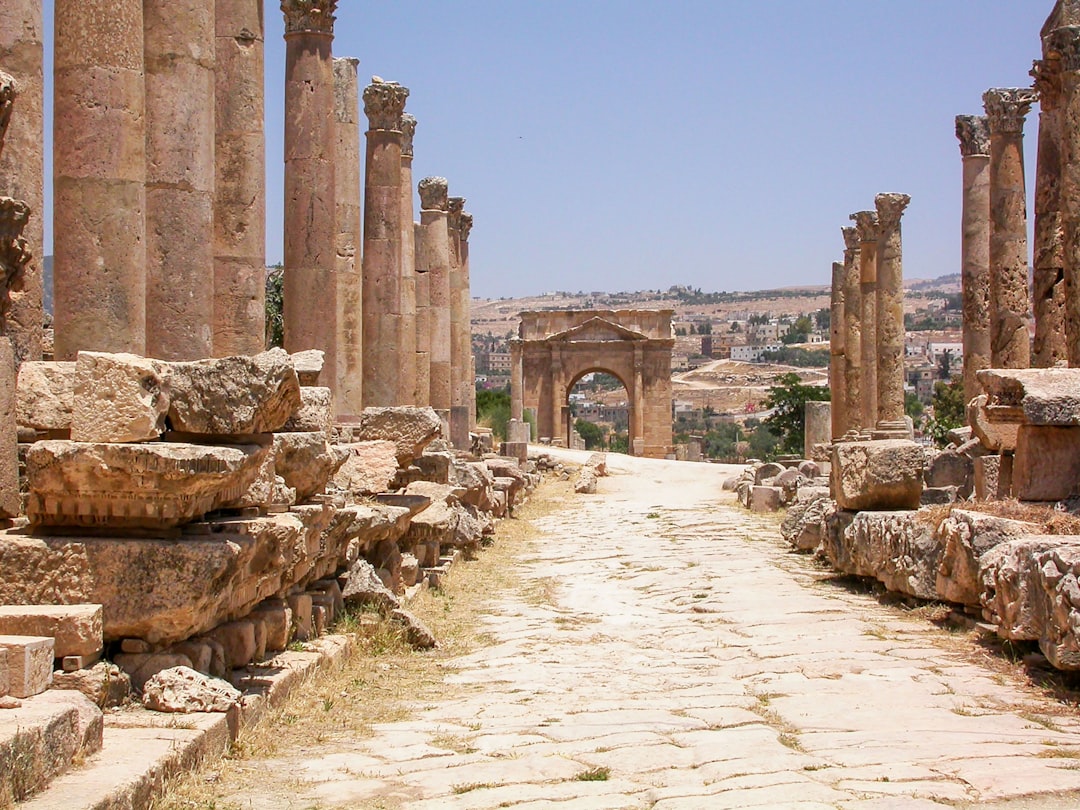
Jerash’s location in northern Jordan’s highlands makes it a natural base for exploring the region’s other Roman-era and Crusader sites. Amman is 48 km to the south, but the more interesting day-trip targets are the sites scattered through the hills to the west and northwest - particularly Ajloun Castle and the remote ruins at Umm Qais. The towns are small and transport is limited, so most combinations work best with a private driver or rental car.
Ajloun Castle
Ajloun (Qal’at ar-Rabad) is the most popular pairing with Jerash, and for good reason: the two sites complement each other well, covering nearly a thousand years of history across 22 km of hill road.
The castle was built by Izz al-Din Usama, a nephew of Saladin, in 1184. Its strategic purpose was to control the Jordan River crossings and block Crusader movement from the coast into the interior. From the upper ramparts on a clear day, you can see the Jordan Valley and the hills of Palestine across the river. The castle was later expanded by the Ayyubids and used by the Mamluks before falling into gradual disuse.
Getting there: Taxis between Jerash and Ajloun cost approximately JOD 10 to 15 one way (30 minutes). There is no regular public bus between the two. If you have a rental car, the drive through the Ajloun Forest Reserve on the way to the castle is worth taking slowly - the reserve is one of the few patches of woodland surviving in this part of Jordan, with oaks and pines on the hillsides.
Entry and timing: Ajloun Castle entry costs approximately JOD 3 per person as of 2026. The site is open daily; winter hours close earlier than summer. Allow 1.5 to 2 hours to walk the ramparts and interior. Audioguides are available at the ticket office.
Umm Qais
Umm Qais (ancient Gadara) is a less obvious choice but one of Jordan’s most atmospheric sites - partly because so few visitors make the detour. The ruins of this ancient Decapolis city sit on a basalt plateau above the Yarmouk River gorge, and the view from the colonnaded terrace covers the Sea of Galilee, the Golan Heights plateau, and on clear days the northern Jordan Valley far below.
The ruins include a black basalt theatre, colonnaded streets, a baths complex, and a Byzantine church. The stone is dark and heavy compared to Jerash’s limestone, giving Umm Qais a more sombre quality. The modern village adjacent to the ruins has a popular restaurant - the Otto restaurant is a regular recommendation for lunch with the view - and small shops selling local olive oil.
Getting there: Umm Qais is 60 km northwest of Jerash, roughly an hour by car. Public transport between Jerash and Umm Qais involves multiple connections through Irbid - a private car or taxi is strongly recommended. A private driver from Jerash to Umm Qais and back costs approximately JOD 40 to 60 depending on waiting time. Many visitors combine Jerash, Ajloun, and Umm Qais into a single full day from Amman with a private driver (JOD 80 to 100 for the day).
Entry and timing: Approximately JOD 3 per person as of 2026. Allow 2 to 2.5 hours for the site and lunch. The site is quieter than Jerash - you may well have sections to yourself.
Irbid and the North
Irbid is Jordan’s second-largest city, 28 km northwest of Jerash on the main road toward Umm Qais. It is primarily a transit and university city rather than a destination in its own right, but the Yarmouk University Museum of Jordanian Heritage is worth a stop if you are driving through. The museum covers Jordan’s history from pre-history through the Islamic period and includes a particularly strong Nabataean section.
Service taxis from Jerash to Irbid run regularly and cost approximately JOD 1.50 to 2 per seat. The journey takes 45 minutes to an hour.
Combining Sites in Northern Jordan
A well-planned day from Amman can cover Jerash and Ajloun in full, or Jerash alone at a slower pace. The triple combination of Jerash, Ajloun, and Umm Qais is genuinely a full day and works better with a local guide who can manage the logistics between sites.
Several tour operators in Amman run scheduled day trips covering Jerash with optional Ajloun add-ons for approximately JOD 30 to 50 per person including entry fees and transport. Private driver arrangements for the day from Amman run JOD 60 to 90 depending on the number of stops. Browse Jerash and northern Jordan day tours on GetYourGuide for guided options that include Ajloun and Umm Qais.
If you have a car, the northern Jordan loop - Amman → Jerash → Ajloun → Umm Qais → back to Amman via the Jordan Valley highway - covers about 160 km and makes a logical one-day circuit without retracing your route.
Practical Notes
North Jordan’s hill towns are cool in winter (December to February can drop to 5°C or below, with occasional frost at Ajloun). Carry a layer even in spring. Summer is warm but significantly more bearable than Amman, Petra, or Aqaba. The Ajloun Forest Reserve has walking trails if you want a short hike between the castle visit and the drive back.
No Jordan Pass discount applies at Umm Qais. Jordan Pass does cover Jerash (unlimited days), so using it at Umm Qais would mean paying the JOD 3 fee separately regardless.
Need a base? Search hotels in Jerash on Booking.com